What Is the Correct Office Chair Height?
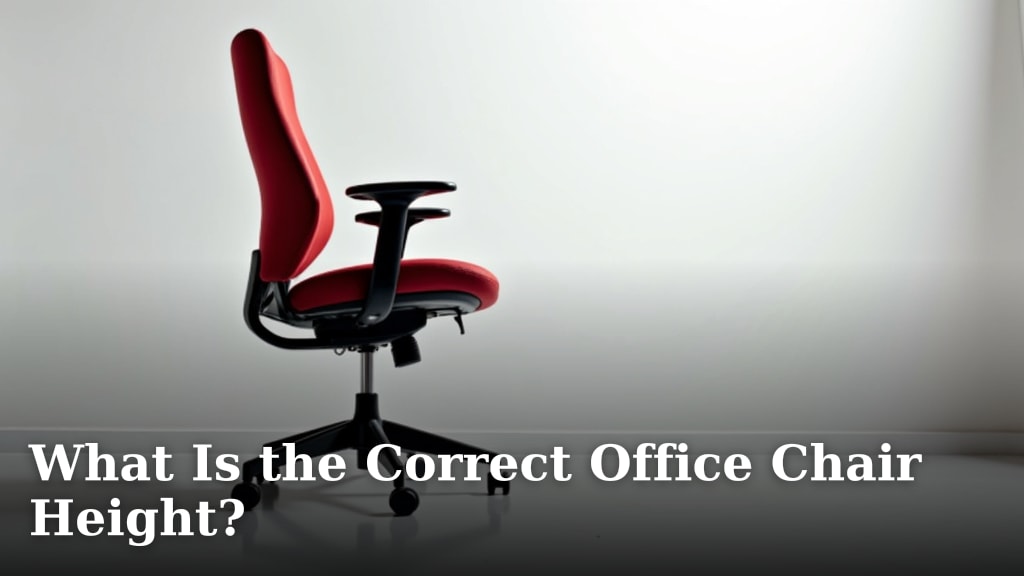
For most people, the correct office chair height means your feet are flat on the floor and your knees form a 90-degree angle. This setup allows for good posture and comfort, preventing strain on your back and neck. It’s all about creating a natural, supportive seated position.
Finding the right chair height might seem small, but it makes a big difference in your daily comfort and long-term well-being. An incorrectly adjusted chair can lead to muscle pain and fatigue. We found that simple adjustments can vastly improve your work experience.
- Proper chair height keeps your feet flat.
- Your knees should be at a 90-degree angle.
- This posture supports your back and neck.
- Incorrect height can cause discomfort.
- Small changes make a big difference.
So, ready to dial in your perfect sitting setup? Let’s walk through exactly how to adjust your office chair for optimal comfort and support, step by step.
Perfecting Your Office Chair Height for Comfort and Health
The right office chair height is more than just comfort; it's about protecting your body. We’ll show you how to find that sweet spot.
Understanding the Core Principles of Ergonomic Chair Height
Ergonomics might sound like a fancy word, but it just means making things fit people. For office chairs, it means finding a height that supports your natural body posture. This prevents strain and discomfort throughout your workday.
Think of it like this: your body wants to be in a neutral position. When you sit, you want your joints to be relaxed. That's why the 90-degree rule for knees and feet flat on the floor is so important. It helps maintain this neutral alignment.
The “90-Degree Rule” Explained
You've probably heard of the 90-degree rule, but what does it really mean? When you sit, your knees should form roughly a right angle. Also, your hips should be at about a 90-degree angle, or slightly higher than your knees. This open hip angle helps your back stay aligned.
We found that keeping your feet flat on the floor is crucial for this. If your feet dangle, it puts pressure on your thighs. This can hurt circulation and cause discomfort. If your feet are tucked too far under, it also throws off your posture.
Why Foot Support Matters So Much
Your feet are your foundation, even when sitting. When they are flat on the floor, your weight distributes evenly. This takes pressure off your lower back and legs. It helps stabilize your entire seated position.
If your feet can't reach the floor, a simple footrest can make a huge difference. It helps you achieve that natural, supported feeling. Many experts say that proper foot support is a key part of an ergonomic setup (Occupational Safety and Health Administration).
Step-by-Step Guide to Adjusting Your Chair Height
Ready to get comfortable? Adjusting your chair isn't hard. Most office chairs have a lever under the seat. This lever controls the pneumatic cylinder that raises or lowers the chair.
You want to move slowly. Small adjustments can make a big impact. Don't be afraid to experiment until it feels just right. Your body will thank you later.
- Sit Down and Find the Lever: Place yourself firmly in your chair. Locate the height adjustment lever, usually on the right side under the seat.
- Lower the Chair Completely: Push the lever up while remaining seated. Let the chair sink to its lowest position. This gives you a fresh start.
- Raise Slowly to the Right Height: Lift your weight slightly off the seat (or stand up) and push the lever up. Let the chair rise. Do this in small increments.
- Check Your Feet and Knees: As the chair goes up, sit fully back. Are your feet flat on the floor? Are your knees forming that 90-degree angle?
- Fine-Tune Your Position: If your knees are too high, lower the chair. If your feet can't touch, raise the chair or consider a footrest. Remember, your hips should be slightly above your knees.
- Assess Your Forearms: Once your lower body is set, check your arms. Your forearms should be parallel to the floor when typing. Your elbows should also be at about a 90-degree angle. This means your keyboard and mouse should be at about elbow height.
It takes a moment, but setting it up right can save you hours of discomfort. We often overlook these small things, but they add up.
Signs Your Chair Height Is Incorrect
How do you know if your chair isn’t at the right height? Your body will tell you. Listen to it. Ignoring these signals can lead to bigger problems down the road.
Many people experience subtle aches that they don't attribute to their chair. But often, the chair is the culprit. We found that recognizing these signs early helps prevent chronic issues.
- Lower Back Pain: If your chair is too low, your back might round. Too high, and you might slouch. Both create pressure on your lumbar spine.
- Neck and Shoulder Stiffness: If your keyboard is too high or low relative to your chair, you might hunch or reach. This strains your neck and shoulders.
- Feet Falling Asleep or Swelling: This often happens if your thighs are pressed against the seat edge. It restricts blood flow, typically from a chair being too high.
- Discomfort in Your Hips or Knees: If your knees are bent too sharply or your hips feel jammed, your height is off.
- Carpal Tunnel-like Symptoms: Incorrect chair height can lead to improper wrist positioning. This increases your risk for wrist pain and repetitive strain injuries.
If you experience any of these regularly, it's a clear sign to re-evaluate your setup. Don't just live with the pain. You deserve to be comfortable while you work.
Considering Your Desk Height and Monitor Position
Your chair doesn’t exist in a vacuum. It works with your desk and monitor. All three need to be aligned for a truly ergonomic workstation. It’s like a team: they all have to work together.
Once your chair is perfectly set, you might need to adjust your desk or monitor. Many modern desks are height-adjustable, which makes this easier. If yours isn't, you might need risers for your monitor or a keyboard tray.
Your monitor should be at arm's length. The top of the screen should be at or slightly below eye level. This prevents neck strain from looking up or down too much.
The Importance of a Footrest for Different Body Types
Not everyone can achieve the "feet flat on the floor" position, even with an adjustable chair. This is especially true for shorter individuals. That's where a footrest becomes your best friend.
A good footrest supports your feet and maintains the 90-degree knee angle. It ensures proper circulation and takes pressure off your lower limbs. It's not just for small people, though!
Some people simply find a footrest more comfortable. It can help vary your posture slightly throughout the day. We found that even slight changes in position can reduce static load on your body.
When to Consider a New Chair
You've tried adjusting everything. Your feet are flat, your knees are at 90 degrees, and your monitor is perfect. But you still feel uncomfortable. When is it time to consider a new chair?
If your specific chair doesn't allow for enough adjustment, it might be the problem. Some chairs have a limited range for height, especially older models. Or, the chair might simply not fit your body type.
A good ergonomic chair offers a wide range of adjustments. It will allow you to customize not just the height, but also the armrests, backrest, and seat pan. Investing in a quality chair can be an investment in your health.
We often find people trying to make do with a chair that simply isn't designed for them. While adjustments help, sometimes the equipment itself is the limiting factor. Don't be afraid to upgrade if your current chair is holding you back from comfort.
The Benefits of Proper Chair Height
Why go through all this trouble? The benefits are numerous and impactful. It's about creating a sustainable work environment for your body.
| Benefit Category | Specific Advantages |
|---|---|
| Health & Wellness | Reduces back, neck, and shoulder pain. Improves circulation to legs and feet. Prevents repetitive strain injuries. |
| Comfort & Productivity | Increases overall comfort while working. Reduces fatigue throughout the day. Allows for better focus and concentration. |
| Long-Term Impact | Contributes to better posture over time. Minimizes risk of chronic musculoskeletal issues. Supports overall physical well-being. |
Imagine finishing your workday without those nagging aches. That's the promise of proper ergonomics. It’s not just about one day, but about setting yourself up for years of healthier work.
Checklist for Your Ideal Office Chair Setup
Here’s a quick recap to ensure your setup is truly optimized. Go through this checklist after you make your adjustments. Think of it as your final quality check.
- Are your feet flat on the floor or firmly on a footrest?
- Do your knees form a 90-degree angle, or slightly more open?
- Are your hips slightly higher than your knees?
- Are your forearms parallel to the floor when typing?
- Is your monitor at arm's length, with the top of the screen at eye level?
If you answered yes to all of these, congratulations! You've nailed your office chair height. If not, make those small adjustments until everything aligns. You've got this!

Conclusion
You’ve learned that getting your office chair height right is about more than just avoiding aches. It’s about creating a healthy foundation for your entire workday. We’ve shown you the importance of the 90-degree rule, why foot support matters, and how to spot signs your setup is off.
By taking a few moments to correctly adjust your chair, you can dramatically improve your comfort and long-term well-being. Don’t underestimate the power of a proper ergonomic setup. Implement these steps today and feel the difference for yourself.
Frequently Asked Questions
What if my office chair doesn’t go low enough for my feet to be flat?
If your chair’s lowest setting still leaves your feet dangling, don’t worry. This is a common issue for shorter individuals. We recommend using a footrest to bridge the gap and provide the necessary support for your feet and knees.
Should my office chair armrests be at a specific height?
Yes, your armrests should support your arms without causing you to hunch your shoulders. They should be set so your elbows form a comfortable 90-degree angle when your hands are on your keyboard. This helps prevent shoulder and neck strain.
Can my desk height affect my chair height?
Absolutely, your desk height is a major factor. Your chair height should be adjusted first to achieve the correct leg and foot position. Then, your desk should ideally be at a height where your forearms are parallel to the floor when typing, often requiring a height-adjustable desk or keyboard tray.
How often should I check my chair height settings?
It’s a good idea to periodically check your chair height, especially if you share your workspace or feel new discomfort. We recommend doing a quick check weekly, or whenever you feel any nagging aches, to ensure your ergonomic setup remains optimal.
Is it better to sit higher or lower if I can’t quite get to the perfect 90-degree knee angle?
If you can’t achieve the perfect 90-degree knee angle, it’s generally better to sit slightly higher rather than too low. Aim for your hips to be at or slightly above your knees. This “open hip angle” position is typically better for your spine and circulation than having your knees pushed too high.