Why Does My Office Chair Hurt My Legs?
Your office chair hurts your legs because of a poor fit or improper posture. When your chair doesn’t support your body correctly, it can put pressure on your thighs and restrict blood flow, leading to discomfort and pain.
Many people experience leg pain from their office chair due to common issues. These often include a chair that’s too high or too deep, or an unsupportive seat cushion. We found that even a slight misalignment can cause noticeable problems over time.
- Poor Chair Fit: Your chair might be too tall or too deep.
- Incorrect Posture: You might be slouching or perching on the edge.
- Pressure Points: Edges of the seat can dig into your thighs.
- Restricted Blood Flow: This can lead to numbness or tingling.
- Lack of Movement: Sitting still for too long also contributes.
Let’s dive into the common reasons why your office chair might be hurting your legs and what you can do about it.
Common Reasons Your Office Chair Is Causing Leg Pain
Leg pain from your office chair usually stems from how you sit and how your chair fits you. It’s like wearing shoes that are the wrong size; discomfort is inevitable. Let’s break down the main culprits.
Your Chair’s Height and Depth Are Off
Think of your chair as a custom-fitted suit. If it’s too big or too small, it just won’t feel right. The same goes for your office chair, especially regarding its height and seat depth. These two factors are often the biggest contributors to leg discomfort.
Chair Height Too High or Too Low
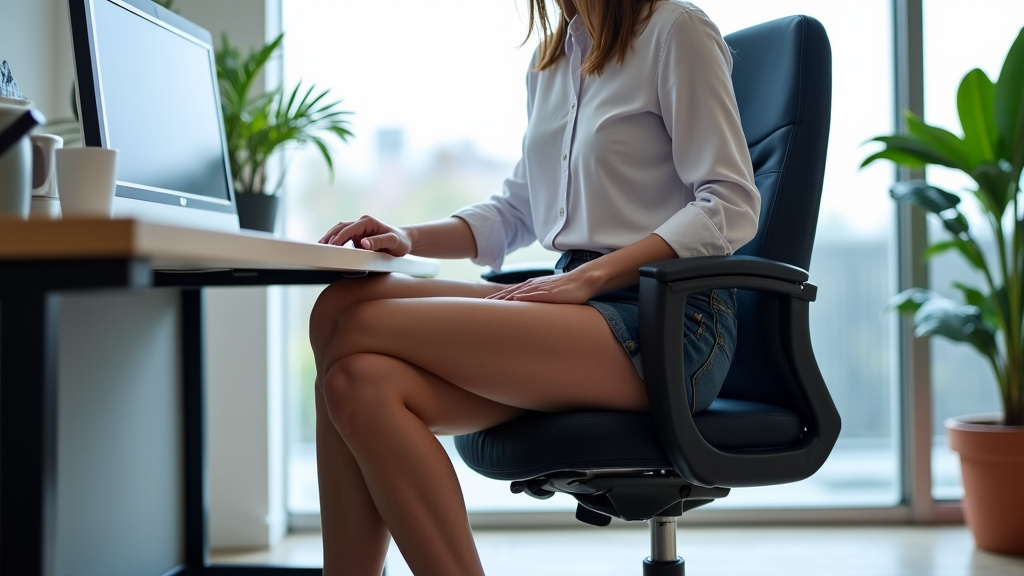
If your chair is too high, your feet might dangle. This puts pressure on your thighs, right where they meet the edge of the seat. We found that this can compress blood vessels and nerves. It’s like having a constant tourniquet on your upper legs. On the flip side, if your chair is too low, your knees will be too high, pushing your weight back onto your sit bones unevenly and causing different kinds of strain. Your feet should be flat on the floor, or on a footrest, with your knees forming a roughly 90-degree angle (Mayo Clinic).
Seat Depth Isn’t Right for You
Seat depth refers to how far the seat extends from the backrest to the front edge. If your seat is too deep, you might find yourself sliding forward or leaning back too much. This means the front edge of the seat can dig into the back of your knees, again restricting blood flow. It’s a common issue we’ve seen, often leading to numbness or tingling. Ideally, you should have about two to four fingers’ width between the edge of your seat and the back of your knees when you sit all the way back.
Poor Posture Habits While Sitting
Even with the perfect chair, poor posture can sabotage your comfort. Your body isn’t designed to stay still for hours on end, especially in awkward positions. Bad habits creep in easily, and they can really take a toll on your legs.
Slouching and Leaning Forward
Do you ever catch yourself slouching, or leaning way forward towards your monitor? When you slouch, your pelvis tilts backward, and your lower back rounds. This can shift your weight unevenly, putting extra pressure on your thighs and hamstrings. Leaning forward also often means you’re not using the backrest, which can strain your lower back and, indirectly, affect how your legs feel.
Perching on the Edge of Your Seat
Sometimes, we perch on the edge of the seat, perhaps to reach something or just out of habit. This position means you’re not using the full support of the chair. It puts a lot of pressure on a small area of your thighs and can cut off circulation. Plus, it often forces your feet into an unnatural position, adding to leg fatigue.
The Seat Cushion and Its Impact
It’s not just about how you sit; it’s also about what you’re sitting on. The quality and design of your seat cushion play a huge role in leg comfort. A bad cushion can be just as problematic as a poorly adjusted chair.
Too Hard or Too Soft?
A seat that’s too hard offers little give. It can create pressure points on your sit bones and thighs, leading to discomfort and even bruising over time. On the other hand, a seat that’s too soft might feel great for the first few minutes, but then you “bottom out.” This means your body sinks in, leading to improper support and often placing pressure on the edges of your thighs as you sink into the cushion.
Lack of Contouring and Support
Many basic office chairs have flat, unsupportive seat cushions. We found that a good seat cushion should have some contouring, often with a slight waterfall edge or a gentle curve down at the front. This design helps distribute your weight more evenly and reduces pressure on the back of your thighs. A flat seat can create a sharp edge that digs into your legs.
Restricted Blood Flow and Nerve Compression
This is where the real pain often comes from. When your chair or posture restricts blood flow or compresses nerves, you start feeling those unpleasant sensations like numbness, tingling, or even sharp pain. It’s your body’s way of telling you something is wrong.
- Numbness and Tingling: Often a sign of nerve compression or reduced blood flow. It’s like your leg “falling asleep.”
- Swelling in Ankles or Feet: Can occur when blood isn’t circulating back up the legs efficiently, especially if your thighs are pressed against the seat.
- Varicose Veins: While many factors contribute, prolonged sitting with poor circulation can exacerbate the problem for some individuals (National Heart, Lung, and Blood Institute).
Lack of Movement and Prolonged Sitting
Even if your chair is perfectly adjusted and your posture is impeccable, sitting for too long without breaks is still detrimental. Your body needs movement. Stagnation is a silent enemy of leg comfort and overall health.
When you sit still for extended periods, your muscles aren’t engaged, and blood flow can become sluggish. We found that this can lead to stiffness, fatigue, and even chronic pain over time. Think of it like a car that sits in the garage for too long – things start to seize up. Your body is no different.
Taking Action: Adjustments and Solutions
The good news is that many leg pain issues from office chairs are fixable. A few smart adjustments and habit changes can make a world of difference. It’s about being mindful and making your workspace work for you.
Chair Adjustment Checklist
Here’s a quick checklist to help you dial in your chair for better leg comfort. Go through these one by one and see what changes you can make today:
- Can your feet be flat on the floor, or comfortably on a footrest, with your knees at about a 90-degree angle?
- Is there a gap of 2-4 fingers between the front edge of your seat and the back of your knees when you sit all the way back?
- Does your seat tilt slightly forward to open up your hip angle, or can you adjust the tilt to reduce pressure on your thighs?
- Is your lower back supported by the chair’s lumbar support, encouraging you to sit upright?
- Are your armrests adjusted so your shoulders are relaxed and not hunched up?
- Does your seat cushion feel supportive without being too hard or too soft?
Considering a New Chair or Accessories
Sometimes, no matter how much you adjust, an old or basic chair just won’t cut it. If you’ve tried everything and still experience leg pain, it might be time to think about upgrading. An ergonomic chair designed for adjustability and support can be a game-changer. Alternatively, accessories like a footrest or a specialized seat cushion can provide immediate relief and improve your setup without a full chair replacement.
| Problem | Common Cause | Potential Solution |
|---|---|---|
| Thigh Pain / Numbness | Seat too high, too deep, or hard edge | Adjust height, use footrest, check seat depth, add cushion |
| Calf / Ankle Swelling | Restricted circulation from seat edge | Ensure gap behind knees, take walking breaks |
| Achy Hips / Glutes | Poor posture, unsupportive seat | Adjust lumbar support, try a contoured cushion |
| Overall Leg Fatigue | Prolonged sitting, lack of movement | Incorporate regular standing/stretching breaks |
The Importance of Movement Breaks
No matter how perfect your chair is, movement is crucial. Think of short breaks as mini-resets for your body. Many experts recommend getting up and moving for at least 5-10 minutes every hour (CDC). This doesn’t mean a full workout; even a quick walk to the water cooler, a few stretches, or standing up during a phone call can make a significant difference. It helps reactivate your muscles, improves blood circulation, and prevents stiffness. Your legs will thank you for it!
Conclusion
You don’t have to live with leg pain from your office chair. By understanding the causes, you can take control. Small adjustments to your chair, a better posture, and mindful movement breaks can make a huge difference. Your comfort and long-term health are worth investing in. Start by checking your chair’s fit today and see how much better your legs can feel. You deserve a pain-free workday!
Frequently Asked Questions
Can a bad office chair cause long-term leg problems?
Yes, prolonged sitting in a poorly fitted chair can contribute to long-term issues. It can exacerbate conditions like varicose veins, lead to chronic nerve compression, and cause persistent muscle stiffness. Prioritizing proper ergonomics now can prevent future discomfort.
What kind of footrest should I use if my chair is too high?
Look for an adjustable footrest that allows your feet to be flat and your knees at a 90-degree angle. Some footrests also offer a rocking or tilting feature, which can encourage subtle movement and improve circulation throughout the day. Avoid fixed, non-adjustable models.
How often should I get up and move to prevent leg pain?
Aim to stand up and move for at least 5-10 minutes every hour. Even short breaks like walking to get water or stretching at your desk can significantly improve blood flow and reduce stiffness in your legs. Consistency is key for preventing pain.
Is it better to sit on a firm or soft cushion for leg comfort?
Neither extreme is ideal. A cushion that is too firm creates pressure points, while one that is too soft offers little support and can cause you to “bottom out.” The best option is a supportive cushion with some contouring that distributes your weight evenly without digging into your thighs.
My legs feel numb; what should I do immediately?
If your legs feel numb, it’s a sign of restricted blood flow or nerve compression. Immediately stand up, walk around for a few minutes, and gently stretch your legs. Then, re-evaluate your chair’s height and seat depth to ensure there’s no pressure on the back of your thighs. If numbness persists, consult a healthcare professional.