How to Fix Office Chair That Leans Back Too Far?
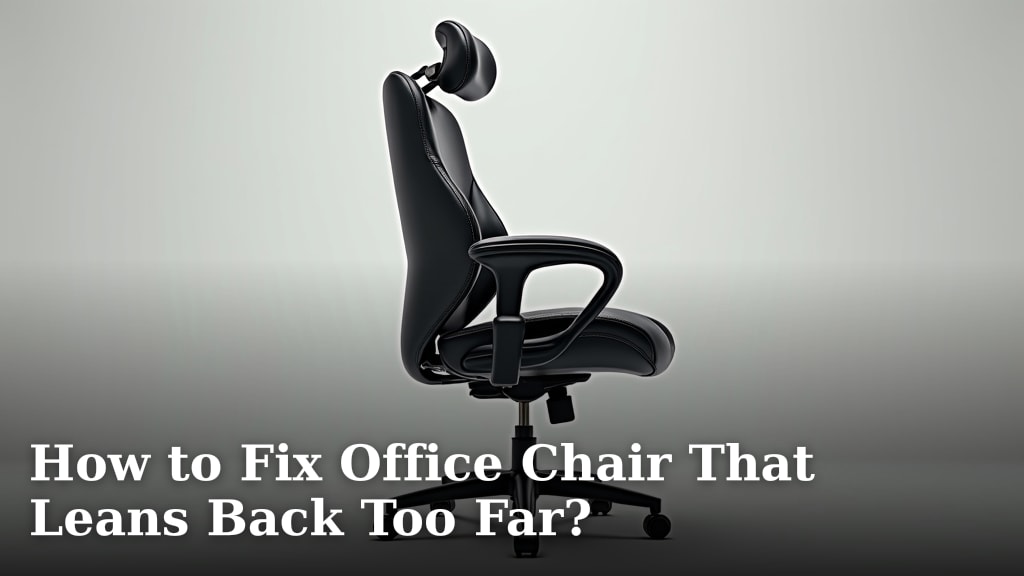
To fix an office chair that leans back too far, you typically need to adjust the tilt tension knob located under the seat, or re-engage the tilt lock mechanism. This usually tightens the chair’s recline, bringing it back to an upright position.
Your office chair shouldn’t feel like a lounge chair unless you want it to. A chair that constantly leans back can cause discomfort and poor posture, making long workdays much harder. We found that most leaning issues are easy to fix with a few simple adjustments, often involving a tension or lock control.
- Check the tilt tension knob.
- Engage the tilt lock.
- Inspect the chair’s mechanism.
- Consider professional help if needed.
Let’s walk through exactly how to troubleshoot and fix your leaning office chair, step by step, so you can get back to comfortable working.
Resolving Your Office Chair’s Excessive Recline
If your office chair is leaning back too far, the good news is that most common causes are simple to fix yourself. You don’t usually need a professional to get it back to a comfortable, supportive position. We’ve found that the primary culprits are often related to the chair’s tilt mechanisms.
Understanding Your Chair’s Recline Controls
Before we dive into fixes, let’s briefly go over the common parts of an office chair that affect how it reclines. Think of these as your chair’s “command center” for posture control. Most chairs, especially ergonomic ones, have several adjustable features. Knowing what each knob and lever does is half the battle.
The Tilt Tension Knob Explained
This is often the hero of our story. The tilt tension knob controls how much force it takes to recline your chair. It’s usually a large, round knob found directly underneath the seat, often at the very front. Turning it changes the resistance. Imagine it like tightening or loosening a spring that pushes back against your lean.
If your chair leans back too easily, almost like there’s no resistance, it’s a strong sign this knob is too loose. Many people accidentally loosen it without realizing, or it might just vibrate loose over time with regular use.
The Tilt Lock Mechanism
Your chair likely has a way to lock its tilt in an upright position, or sometimes at a specific angle. This is your tilt lock. It might be a lever you push in or pull out, or perhaps one that moves up and down. When engaged, it should prevent your chair from reclining at all. If your chair is leaning back but you thought it was locked, it’s possible the lock mechanism isn’t properly engaged or has failed.
We’ve seen cases where a quick flick of this lever is all it takes to solve the problem. It’s a common oversight, like leaving your car’s parking brake slightly on.
Step-by-Step Fixes for a Leaning Chair
Let’s get down to business. We recommend trying these solutions in order, from the simplest to the more involved. You might find your fix in the first step!
Adjusting the Tilt Tension
This is almost always the first thing you should check. Think of it as your primary adjustment. To tighten the tilt tension, you’ll want to turn the large knob clockwise. Go slowly, and test the recline after every few turns. You want to find that sweet spot where you can recline with a bit of effort but the chair springs back easily when you sit upright.
If you turn it all the way and it still leans back too easily, don’t worry, there are other potential issues. But for many, this simple adjustment is the key. The Mayo Clinic often highlights proper ergonomic adjustments as critical for preventing discomfort.
Engaging or Resetting the Tilt Lock
Is your chair supposed to stay upright but keeps falling back? Check that tilt lock! Most commonly, this is a lever on one side of the chair. You might need to push it all the way in towards the chair’s center or pull it down, depending on your model. Make sure it’s fully engaged. Sometimes, it might feel locked but isn’t quite there.
If it was engaged and the chair still leans, try disengaging it completely and then re-engaging it firmly. It’s like turning a computer off and on again – sometimes that reset is all it needs to function correctly.
Checking for Obvious Damage or Dislodged Parts
Sometimes, the problem isn’t just an adjustment. It could be a physical issue. Flip your chair over carefully or tilt it back so you can see the underside. Look for anything that seems loose, broken, or out of place. Are there any springs that look stretched or disconnected? Any levers that are bent?
Pay close attention to the main mechanism that connects the seat to the chair base. This is where the tilt mechanisms are housed. Sometimes, a small spring or a pin can come out of place. We’ve seen situations where a quick visual inspection reveals a simple problem that’s easily put back together.
Here’s a quick checklist for your inspection:
- Inspect the tilt mechanism for visible damage or wear.
- Check if any springs are unhooked or broken.
- Look for loose screws around the main control plate.
- Ensure all levers move smoothly and click into place.
- Feel for any excessive play or wobbling in the recline mechanism.
When Your Chair Still Won’t Cooperate
You’ve adjusted, you’ve locked, you’ve inspected – and it’s still leaning? Don’t give up yet. There are a few more avenues to explore before considering a new chair or professional help.
The Role of the Recline Limiter (If Applicable)
Some advanced office chairs come with a recline limiter. This feature allows you to set a maximum recline angle. If your chair is leaning back too far, check if this limiter is set to a wide-open position. You might need to adjust it to restrict the backward movement. This is less common than the tension knob but worth checking if your chair has this extra control.
Often, these are smaller levers or buttons near the main tilt controls. Consult your chair’s manual if you’re unsure if you have this feature or how to adjust it.
Lubricating Moving Parts
Sometimes, the issue isn’t broken parts but simply friction. Over time, dust and grime can build up in the moving parts of your chair’s mechanism. This can make adjustments sticky or prevent components from engaging fully. A little lubrication can go a long way.
Use a silicone-based spray lubricant (not WD-40, which can attract more dust) on any visible moving parts of the tilt mechanism. Work the tilt back and forth a few times after applying. This might free up a stuck spring or lever. We’ve found that this step is often overlooked but can be surprisingly effective.
Understanding Different Chair Mechanisms
Not all chairs are built the same. The type of mechanism can influence how you adjust the recline. Most office chairs fall into a few main categories:
| Mechanism Type | Typical Controls | Common Recline Fix |
|---|---|---|
| Conventional Tilt | One lever (height), one large knob (tension) | Tighten tension knob (clockwise). |
| Knee Tilt | Two levers (height, lock), one knob (tension) | Tighten tension, engage tilt lock. |
| Synchro-Tilt | Multiple levers (height, tilt lock, tension), sometimes depth | Check all levers, tighten tension, ensure lock engaged. |
| Multi-Functional | Many levers and knobs for various adjustments | Refer to manual, systematically check all tilt-related controls. |
If you’re unsure what type of mechanism your chair has, a quick search for your chair’s brand and model number online can often yield a user manual. This manual is your best friend for understanding specific adjustments.
Considering Professional Help or Replacement
You’ve tried everything. The tension knob is tight, the lock is engaged, and you’ve given it a good cleaning and inspection. If your chair still leans back too far, it might be time to consider professional help or, in some cases, a replacement. We’ve found that sometimes a key component within the mechanism can be internally broken, making DIY repairs difficult or impossible.
Some office chair manufacturers offer replacement parts or repair services. It’s worth reaching out to their customer service, especially if your chair is still under warranty. They might be able to guide you to a specific fix or offer a solution. Remember, a chair that doesn’t support you properly isn’t just annoying; it can lead to long-term ergonomic issues (National Institutes of Health).

Conclusion
Don’t let a leaning office chair ruin your workday or your posture. Most issues, from a loose tilt tension knob to an unengaged lock, are straightforward to fix. You have the power to restore your chair’s comfort and support with just a few simple adjustments. We’ve walked through the common culprits and their solutions, step by step.
By understanding your chair’s mechanisms and making these practical checks, you can significantly improve your ergonomic setup. Take a moment now to try these fixes; your back will thank you for it!
Frequently Asked Questions
Why does my office chair suddenly lean back too far?
Your office chair likely leans back too far because the tilt tension knob has loosened over time, reducing resistance. It could also be that the tilt lock mechanism isn’t fully engaged, or a component within the recline system is worn or dislodged.
Can a leaning office chair be bad for my posture?
Yes, an office chair that constantly leans back can be detrimental to your posture. It encourages slouching, puts strain on your lower back and neck, and can lead to discomfort or even pain during long periods of sitting.
How do I find the tilt tension knob on my office chair?
The tilt tension knob is usually a large, round knob located directly underneath the seat of your office chair. It’s often found at the very front of the chair’s underside, centered between the arms.
What if my chair doesn’t have a visible tilt lock or tension knob?
If you can’t find these controls, your chair might have a simpler mechanism or they could be integrated differently. We recommend checking your chair’s user manual, or searching online for your specific chair model to find adjustment instructions.
When should I consider replacing my office chair instead of fixing it?
You should consider replacing your office chair if, after trying all the suggested fixes, it still doesn’t provide proper support, or if there’s significant structural damage. If the frame is bent, the gas lift is failing, or key mechanisms are broken beyond simple repair, a new chair is often the best investment for your health and comfort.