Why Is My Office Chair Leaning Backward?
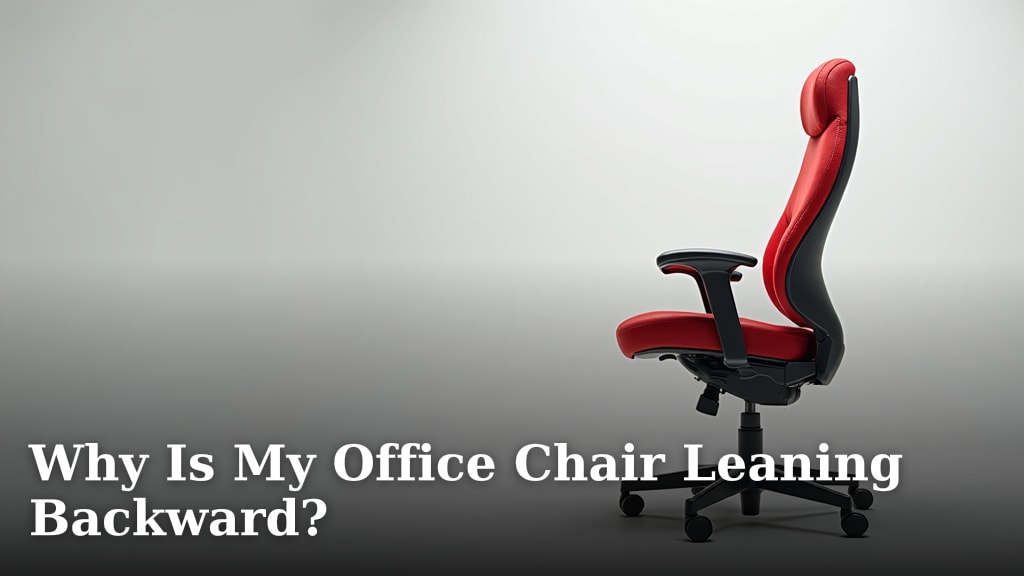
Your office chair is leaning backward because of worn-out components, a faulty tilt mechanism, or simply incorrect settings. It’s a common problem that makes sitting uncomfortable and unhealthy for your back.
A chair that won’t stay upright can disrupt your focus and cause discomfort during your workday. We’ve all been there, feeling like we’re constantly fighting against a chair that has a mind of its own. It’s often due to small adjustments or parts that need a little attention.
- Check your tilt tension knob first.
- Look for worn-out springs or cylinders.
- Inspect the chair’s tilt mechanism.
- Consider if parts need replacing.
Let’s walk through how to diagnose and fix this common office chair issue, step by step. Our guide on how to fix a leaning office chair provides a comprehensive walkthrough of common issues and solutions.
Why Your Office Chair Keeps Leaning Back
Your office chair leaning backward often points to issues with its mechanical parts or incorrect adjustments. We found that the main culprits are usually related to the tilt mechanism, gas cylinder, or structural wear and tear.
Understanding Your Chair’s Tilt Mechanism
Most office chairs use a tilt mechanism to allow you to recline. This system lets you lean back and then return to an upright position. When it malfunctions, your chair might struggle to stay put.
What is the Tilt Mechanism?
The tilt mechanism is the assembly of springs, levers, and plates under your seat. It controls how much your chair reclines and how easily it moves. Think of it as the chair’s brain for posture adjustments.
Common Tilt Mechanism Problems
If your chair is leaning, the tilt mechanism might be stuck, loose, or broken. We found that a common problem is a spring that loses its tension. Or, parts can become stripped over time.
The Role of Tilt Tension in Your Chair’s Recline
The tilt tension knob is often the simplest fix for a leaning chair. This knob controls the resistance you feel when you lean back. If it’s too loose, your chair will recline easily, sometimes unexpectedly.
- Tightening the tension: Turn the knob clockwise to increase resistance. Your chair will require more effort to lean back.
- Loosening the tension: Turn the knob counter-clockwise to decrease resistance. The chair will recline with less effort.
You want to find a sweet spot where you can recline comfortably but the chair still supports you. Many experts say to adjust it so that you can lean back with a little effort, but not too much (Cleveland Clinic).
Inspecting the Gas Lift Cylinder
The gas lift cylinder allows you to adjust your chair’s height. While not directly responsible for leaning, a failing cylinder can sometimes affect overall stability. It might cause a wobble that feels like leaning. You can learn more about how to replace office chair gas cylinder if you suspect this is the issue.
Signs of a Failing Gas Cylinder
If your chair slowly sinks throughout the day, that’s a sign of a failing gas cylinder. If it feels wobbly or unstable, the cylinder might be losing its seal. A compromised cylinder can sometimes affect the chair’s upright posture.
Wear and Tear: When Parts Just Give Up
Over time, chair components simply wear out. This is especially true for chairs used heavily every day. Springs lose their bounce, bolts loosen, and plastic parts can crack.
What Parts Wear Out Most Often?
We’ve seen that the most common culprits for wear are the main springs in the tilt mechanism. Next are the adjustment levers and the connections where the seat meets the base. Even the seat plate itself can bend or warp.
Think of it like an old car; after years of use, some parts just need replacing. It’s a natural part of any mechanical device’s lifecycle.
Common Reasons for Leaning Backwards: A Quick Checklist
Let’s quickly go over the usual suspects. Use this checklist to guide your investigation.
- Is the tilt tension knob too loose? (Turn it clockwise to tighten.)
- Is the tilt lock lever disengaged? (Push it in or down to lock the upright position.)
- Are any springs in the tilt mechanism visibly broken or stretched?
- Are bolts or screws under the seat loose? (Tighten them carefully.)
- Is the gas lift cylinder slowly sinking or wobbly?
- Are any parts of the seat plate or frame bent or cracked?
Often, a simple adjustment is all you need. But sometimes, a repair or replacement might be necessary.
Adjusting Your Chair: Step-by-Step Solutions
Before you think about replacing parts, try these adjustments. You might be surprised how often they fix the problem.
Adjusting the Tilt Tension
Locate the large, round knob underneath your seat. It’s usually at the front. Turn it clockwise to make it harder to lean back, or counter-clockwise to make it easier. Keep adjusting until the chair holds its position comfortably.
Engaging the Tilt Lock
Most office chairs have a lever to lock the tilt. This lever often sticks out from the side or front of the chair, near the height adjustment. Push it in or pull it down to engage the lock. If it’s disengaged, your chair will always want to recline.
When to Repair vs. Replace Chair Components
Sometimes, an adjustment isn’t enough. You might need to repair or replace a part. How do you know which route to take?
| Problem Description | Recommended Action | Complexity |
|---|---|---|
| Loose tilt tension knob | Adjust knob | Easy |
| Broken or missing spring | Replace spring/mechanism | Medium |
| Wobbly gas cylinder | Replace gas cylinder | Medium |
| Bent seat plate/frame | Replace chair or seat plate | Hard |
| Stripped adjustment lever | Replace lever/mechanism | Medium |
Replacing a gas cylinder or tilt mechanism can be done at home, but it does require some tools and a bit of patience. We’ve found many helpful guides online for specific chair models.
Seeking Professional Help or Considering a New Chair
If you’ve tried everything and your chair still leans, it might be time for an expert. Or, perhaps, a new chair altogether.
Some office furniture stores offer repair services. They have the tools and expertise to diagnose deeper issues. A professional can quickly tell you if your chair is salvageable or if it’s past its prime.
If your chair is old, constantly giving you trouble, or causing back pain, a new chair might be the best investment. Your health and comfort at work are incredibly important. Don’t compromise on them just to save an old, unreliable chair.

Conclusion
Dealing with an office chair that leans backward can be really frustrating, but you now have the tools to tackle it. We’ve shown you that it often comes down to simple adjustments or a few worn-out parts. By methodically checking your tilt tension, tilt lock, and inspecting for wear and tear, you can often bring your chair back to life.
Don’t let a wobbly chair impact your comfort or productivity. Take the time to diagnose the issue using our steps. If a repair seems too complex or your chair is past its prime, remember that investing in a new, supportive chair is an investment in your well-being. Your back will thank you!
Frequently Asked Questions
How can I stop my office chair from leaning back permanently?
To permanently stop your chair from leaning back, you need to identify the root cause. Start by ensuring your tilt tension is tightened and the tilt lock is engaged. If parts are worn, replacing them, like a broken spring or gas cylinder, provides a lasting fix. Regular maintenance can also prevent future issues.
Can a leaning office chair cause back pain?
Yes, a leaning office chair absolutely can contribute to back pain. When your chair constantly reclines without proper support, your back muscles work harder to keep you upright. This sustained effort can lead to strain, discomfort, and even chronic pain over time. Proper posture support is essential for back health.
Is it worth repairing an old office chair that leans?
It depends on the chair’s overall condition and original cost. If it’s a high-quality chair with easily replaceable parts like a gas cylinder or tilt mechanism, then repairing it can be a cost-effective solution. However, if the frame is bent or multiple complex parts are broken, buying a new chair might be a better investment for your comfort and long-term use.
How do I know if my tilt mechanism is broken?
You can tell your tilt mechanism is likely broken if adjusting the tilt tension knob has no effect, the chair always flops backward, or you hear grinding noises when trying to recline. Visually inspect under the seat for broken springs, stripped gears, or cracked metal plates within the mechanism assembly.
Can I fix a wobbly gas lift cylinder myself?
Yes, you can often fix a wobbly gas lift cylinder yourself by replacing it. It requires some basic tools like a rubber mallet and a wrench, and a bit of patience to remove the old cylinder. Many online tutorials can guide you through the process, and replacement cylinders are readily available for purchase.