
How to Fix Office Chair Headrest That Won’t Stay Up?
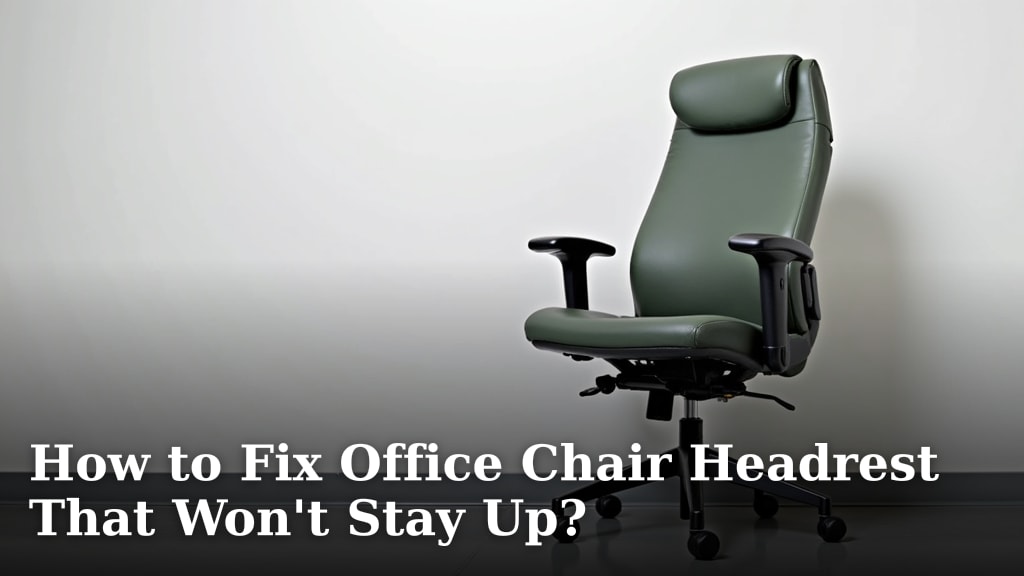
If your office chair headrest keeps slipping down, you’re likely dealing with a loose adjustment mechanism. Often, this means you need to tighten a specific screw or the headrest’s locking component. Don’t worry, this is a common issue many people face with their ergonomic chairs.
It’s frustrating when your headrest doesn’t support you. A headrest that won’t stay up defeats its purpose. We found that this problem usually stems from simple wear and tear or incorrect initial setup. Fixing it can restore your chair’s comfort and your posture.
- Tighten screws on the adjustment post.
- Check the locking mechanism for debris.
- Ensure the headrest is properly seated.
- Sometimes, a part might need replacement.
Let’s walk through the most common fixes to get your office chair headrest holding strong again.
Troubleshooting Your Office Chair Headrest: Getting It to Stay Put
Is your office chair headrest constantly deciding to take a nap when you need it most? You’re not alone! Many of us experience this common annoyance. It’s like having a helpful friend who keeps leaning on you. We found that the root of this issue is often something simple. It’s usually related to the way the headrest attaches or adjusts. Let’s get your headrest back to doing its job of supporting your neck and head.
First Steps: The Quick Checks and Easy Fixes
Before we dive into more involved repairs, let’s try the simplest solutions. Sometimes, a quick adjustment is all it takes. These steps are like checking if your shoelaces are tied before assuming your shoe is broken.
Ensuring the Headrest is Properly Seated
This might sound obvious, but we often overlook it. Is the headrest fully inserted into its mount? Sometimes, it might just feel like it’s in place. You need to make sure it’s clicked or locked in securely. We found that chairs often have a specific slot or connection point for the headrest. Push it in firmly. You might even hear a subtle click. This ensures a solid connection, preventing wobbling or slipping.
Clearing Obstructions from the Mechanism
Dust, tiny debris, or even a stray crumb can interfere with moving parts. If the adjustment feels stiff or uneven, this could be the culprit. We recommend a quick inspection. Look for anything visible that shouldn’t be there. Sometimes, a simple puff of compressed air can work wonders. If you have a small brush, like a toothbrush, gently try to dislodge any visible particles. We found that keeping these connection points clean helps the mechanism move freely.
Checking for Obvious Damage
Take a moment to visually inspect the headrest and its mounting. Are there any cracks in the plastic? Is any part bent or misshapen? If you spot visible damage, it might be difficult to fix without replacing the part. However, minor cosmetic issues usually don’t affect function. We found that most functional problems stem from looseness rather than breakage.
Tightening the Adjustment Mechanism: The Most Common Fix
When your headrest won’t stay up, the most frequent cause is a loose screw or bolt in the adjustment system. This is often located where the headrest connects to the chair back. Think of it like a bolt on a bicycle that’s come loose. You need to snug it up to make it stable again.
Locating the Adjustment Screws
Most office chair headrests adjust up and down, and sometimes tilt. The mechanism for this is usually hidden. You’ll likely need to look on the underside or the sides of the headrest where it attaches to the chair’s vertical post. Some chairs have a panel that can be removed for better access. We found that often, a single bolt or screw is responsible for holding the headrest at your desired height. Keep an eye out for anything that looks like it could be tightened.
What Tools Will You Need?
The tools required depend on the type of screw or bolt used. We found that most commonly, you’ll encounter a Phillips head screw. This is the one with the cross-shaped tip. Occasionally, you might find a hex bolt, which requires an Allen wrench (also known as a hex key). Most chairs come with a basic Allen wrench if one is needed. If not, you can find these tools at any hardware store. Having a small toolkit handy is always a good idea for chair maintenance.
The Tightening Process: Small Adjustments are Key
Once you’ve found the screw, don’t just crank on it! We recommend tightening it just a little at a time. Turn the screw clockwise to tighten. After each small turn, test the headrest’s position. Does it feel more secure? Is it holding its height? Continue this process until the headrest stays put. Overtightening can strip the screw threads or damage the plastic. We found that a gentle, firm snug is usually all that’s needed. Patience here prevents potential bigger problems.
Dealing with a Wobbly Post
Sometimes, the issue isn’t just the headrest itself, but the post it slides into. If the headrest moves up and down freely but still slips, the post might be loose within the chair back. Look for screws or bolts where the vertical post meets the main chair back. Tighten these as you would the headrest screws. This can provide the stability your headrest needs.

Understanding the Locking Mechanism
Many headrests use a locking mechanism to keep them in place. This is more than just a screw; it’s a system designed to hold tension. When this mechanism fails, the headrest loses its grip.
How Does the Locking Mechanism Work?
Think of it like a clamp. When you adjust the headrest, you might be engaging a lever or turning a knob. This action usually tightens a clamp around the vertical adjustment post. This friction is what keeps it from sliding down. We found that these mechanisms can be internal, meaning you can’t see them directly. However, their external controls are usually quite obvious.
Checking for Worn-Out Parts
Over time, the parts inside the locking mechanism can wear down. The friction material might become smooth, or a spring could lose its tension. If tightening screws hasn’t helped, this is a likely culprit. Unfortunately, worn internal parts are often not easily repaired without specific replacement components. We found that this is more common in chairs that are used heavily.
The “Wiggle Test” for Loose Components
Gently wiggle the headrest. Does it feel loose at the point of adjustment? Try to see if you can move it up or down by hand with minimal effort, even when you think it’s locked. If it moves too freely, the locking mechanism might be compromised. This is a sign that the internal parts might be worn. We found this quick test can help diagnose if the issue is with the locking system.
When to Consider Replacement Parts
Sometimes, no amount of tightening or cleaning will fix a worn-out part. It’s like trying to fix a flat tire with a hole; you need a new tube. If the adjustment or locking mechanism is clearly broken or excessively worn, replacement might be your best option.
Identifying the Specific Part Needed
Before you start searching, try to identify exactly which part is failing. Is it the entire headrest unit? Is it just the adjustment knob or lever? Knowing this will help you find the right replacement. We found that often, the manufacturer’s website or customer support can help identify part numbers. Take clear photos of the damaged area if you need to contact them.
Where to Find Replacement Parts
Your first stop should be the chair manufacturer. Many offer replacement parts for their products. If the chair is older, you might need to look at third-party parts suppliers. Online marketplaces and specialized office furniture parts stores are good places to search. We found that availability varies greatly depending on the chair brand and model.
DIY vs. Professional Repair for Parts
For most headrest issues, the repair is DIY-friendly. Replacing a screw or a visible adjustment knob is usually straightforward. However, if the issue is with a complex internal mechanism that requires disassembling the entire chair back, it might be worth consulting a professional. We found that simple fixes are very achievable for most users.
Here’s a quick checklist to guide you:
- Inspect the headrest for proper seating.
- Clean any visible dust or debris from the adjustment area.
- Check for obvious cracks or damage.
- Locate and gently tighten adjustment screws.
- Test the headrest after each small adjustment.
- If needed, research manufacturer replacement parts.
Conclusion
It can be really frustrating when your office chair headrest won’t cooperate. You’ve learned that most common issues stem from simple problems like a loose screw or a bit of debris. We found that often, a quick tightening of an adjustment screw or clearing out the mechanism can get your headrest back in working order. If those steps don’t solve it, checking for worn parts and considering replacements is the next logical move. Before you buy a new chair, take a moment to try these simple fixes. Your neck and back will thank you for it!
Frequently Asked Questions
How often should I check my office chair headrest?
We recommend a quick check about once a month. This helps catch minor issues before they become bigger problems. Simply wiggle the headrest and ensure it stays put after adjustment.
My headrest is still loose after tightening the screw. What else could it be?
If tightening the main adjustment screw didn’t work, the issue might be with the vertical post itself. Check if the post is loose where it connects to the chair back and tighten any visible bolts there.
Can I fix a worn-out locking mechanism myself?
For most chairs, replacing worn internal parts of the locking mechanism can be tricky. It often requires specific replacement parts from the manufacturer. If it’s a simple external lever that’s broken, that might be DIY-friendly.
My headrest just slides down no matter what I do. Is it broken?
If it slides down consistently, even after tightening, it suggests the locking mechanism or the friction surface is worn out. This is a common issue with heavy use and might mean you need replacement parts.
What if I can’t find replacement parts for my specific chair model?
If the manufacturer doesn’t offer parts, look for universal office chair parts online. Sometimes, a bit of DIY ingenuity with common hardware can also work for minor issues, but always prioritize safety.
