
Can You Use a Regular Chair with a Standing Desk?
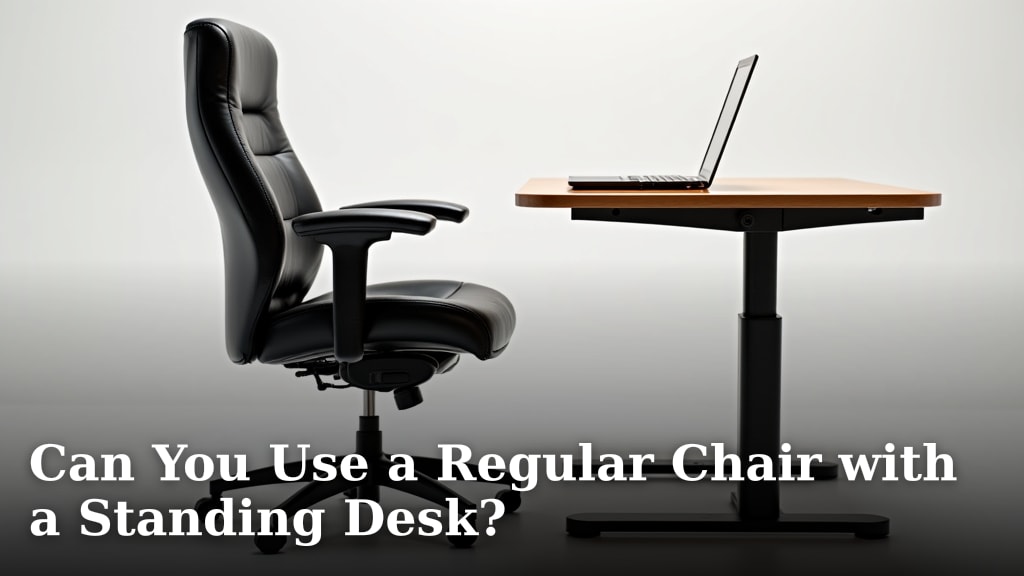
Yes, you can absolutely use a regular chair with a standing desk. In fact, it’s a very common setup, and often the most practical way to go. You don’t need a special chair; your current office chair or even a dining chair can work. Just make sure it allows you to sit comfortably at a proper height when you transition from standing.
When you get a standing desk, the goal is to have more movement throughout your workday. This means switching between sitting and standing. Your regular chair becomes essential for those sitting periods. It’s important to ensure your chair supports you well and can be adjusted so your feet are flat on the floor while sitting. This helps you maintain good posture.
- You can use your existing chair with a standing desk.
- The key is adjusting your chair for comfortable sitting.
- Ensure your feet are flat on the floor when seated.
- This setup promotes alternating between sitting and standing.
Let’s break down how to make this work perfectly for you, ensuring comfort and ergonomics.
Your Existing Chair and the Standing Desk Equation
So, can you pair your trusty regular chair with a new standing desk? The short answer is a resounding yes! Think of it like this: a standing desk isn’t about ditching your chair forever. It’s about giving yourself options for movement throughout the day. Your regular chair plays a vital role in that mix.
You see, the real magic of a standing desk isn’t just standing. It’s about the ability to switch. You stand for a bit, then you sit for a bit. This natural alternation is what brings the health benefits. So, your existing chair becomes your designated sitting companion.
Making Your Current Chair Work for You
The most important thing is how your chair fits into your standing desk setup. It needs to be adjusted correctly for when you’re in sitting mode. If your chair is too high or too low when you’re sitting, it can cause discomfort. This can also lead to poor posture, defeating some of the purpose of the standing desk.
When you sit, your feet should rest comfortably flat on the floor. Your knees should be at about a 90-degree angle. Your arms should also be able to rest at a comfortable height on your desk or armrests. We’ll talk more about specific adjustments in a moment.
The Ergonomic Imperative: Sitting Smart
Ergonomics is all about making your workspace fit you. This applies whether you’re standing or sitting. When you choose to sit, you want to ensure your chair supports your body properly. This means your spine should maintain its natural curve. Your shoulders should be relaxed, not hunched.
Many office chairs are designed with adjustability in mind. This is a huge plus when working with a standing desk. You might have height adjustments, lumbar support, and armrest controls. Even simpler chairs can often work if you pay attention to how they position you.
Assessing Your Current Chair’s Capabilities
Take a good look at the chair you already have. Does it offer any adjustments? If you have an office chair, you likely have a lever for seat height. Some have knobs for backrest tilt or lumbar support. These features are your best friends when setting up for sitting periods.
What if you only have a dining chair or a simple stool? These can still work, but you might need to be more mindful of desk height. The goal is to achieve that 90-degree knee bend and flat feet position. Sometimes, a footrest can be a lifesaver if your chair is too low and can’t be adjusted.
The Desk Height Connection to Your Chair
Your standing desk’s height is not just for standing. It also impacts how your chair works. When you’re sitting, the desk should be at a height that allows your arms to rest comfortably. Your elbows should be bent at roughly 90 degrees when your hands are on your keyboard.
If your desk is too high for comfortable sitting, it can force you to raise your shoulders. This can lead to neck and shoulder pain. Conversely, if it’s too low, you might slouch. Finding that sweet spot is key. This is why adjustable standing desks are so popular; they adapt to both your standing and sitting needs.
Achieving Optimal Sitting Posture with Your Chair
Now, let’s get down to the nitty-gritty of how to sit comfortably and ergonomically. It’s not just about plopping down; it’s about setting yourself up for success. Remember, you’ll be transitioning between standing and sitting, so each posture needs to be comfortable and supportive.
The ideal sitting posture is often described as sitting “tall.” Imagine a string pulling you up from the crown of your head. Your back should be straight but relaxed, with support for your lower back (lumbar support). Your feet should be firmly planted on the floor.
The Foot-on-the-Floor Rule
This is a simple but critical rule we found experts stressing. Your feet should be flat on the floor. If your feet dangle, it means your chair is too high. This can put pressure on your thighs and affect circulation. It also makes it harder to maintain good posture.
Many people find a footrest incredibly helpful. This is especially true if your desk doesn’t go low enough or your chair doesn’t adjust low enough. A footrest provides that stable surface your feet need. It helps maintain the correct leg angle and promotes better posture.
The 90-Degree Angle: Knees and Elbows
We often talk about the 90-degree angle
Conclusion
You absolutely can use your regular chair with a standing desk. The goal is more movement, not ditching your favorite seat. Your current chair is your partner for sitting periods, offering comfort and support. The key is adjusting your chair and desk heights correctly. This ensures your feet are flat, knees at 90 degrees, and arms comfortably positioned. You’ve got this! Now, go set up your ergonomic dream space and start enjoying your new workday rhythm.
Frequently Asked Questions
Will my dining chair work with a standing desk?
Yes, a dining chair can work, but you might need to be more mindful of desk height. Ensure the chair allows your feet to be flat on the floor and your knees at a 90-degree angle when you’re seated at the desk. A footrest can be a great help if your desk is too high or your chair doesn’t adjust low enough.
What if my current chair doesn’t adjust height?
If your chair lacks height adjustment, you can still make it work with a standing desk. The most important factor is your standing desk’s height adjustability. You’ll need to ensure the desk can be lowered sufficiently so that when you sit, your feet are flat on the floor and your elbows are at the right height.
How do I know if my chair is at the right height for sitting?
When sitting, your feet should rest flat on the floor. Your knees should form roughly a 90-degree angle. Your arms should also be able to rest comfortably on the desk or armrests with your elbows bent at about 90 degrees. If your feet dangle or your knees are too high, your chair is likely too high.
Can I use a stool with my standing desk?
A stool can be used with a standing desk, similar to a chair. Just like with any seating option, the primary concern is achieving proper ergonomic posture. You need to ensure the stool allows you to sit with your feet flat on the floor and maintain good back support while you’re working.
Should I get a special chair for my standing desk?
It’s generally not necessary to buy a special chair. Your existing office chair or even a regular chair can work perfectly well with a standing desk. The focus should be on proper adjustability and ensuring you can achieve correct ergonomic sitting posture when you choose to sit down.
