
How to Use an Under Desk Footrest Correctly?

To use an under desk footrest correctly, adjust its height and angle so your feet are flat and your knees are bent at a comfortable 90-degree angle. This simple adjustment helps improve your posture and reduce strain on your legs and lower back. Think of it as giving your feet a well-deserved break while you work.
Many people find that an under desk footrest can make a big difference in their workday comfort. When used properly, it supports your feet, promotes better circulation, and can even help you feel more energized. We found that getting the right fit is key to experiencing these benefits. It’s about finding that sweet spot for your body.
- Adjust height for a 90-degree knee bend.
- Ensure feet are flat on the rest.
- Experiment with angles for comfort.
- Use it consistently for best results.
Ready to get the most out of your footrest? Let’s walk through exactly how to set it up for maximum comfort and support.
Getting Your Under Desk Footrest Positioned Just Right
So, you’ve got yourself an under desk footrest. That’s fantastic! Now, let’s make sure you’re using it to its full potential. Getting the positioning perfect can make a world of difference in your daily comfort and overall well-being while you work.
Many people just shove a footrest under their desk and hope for the best. But we found that a little attention to detail can turn a good idea into a great one. It’s about tailoring it to your unique body and how you sit.
The Ideal Angle and Height for Your Feet
What’s the magic formula for the perfect footrest setup? It all boils down to a few key physical alignments. Your goal is to create a natural, supported posture.
Achieving the 90-Degree Knee Bend
This is the golden rule, and it’s a simple one. When your feet are comfortably resting on the footrest, your knees should ideally be bent at roughly a 90-degree angle. Think of it like sitting on a sturdy chair without any support underneath your feet. If you’re taller, you might need to adjust the footrest higher. If you’re on the shorter side, you might need to lower it.
Why 90 degrees? Research suggests this angle helps distribute your body weight evenly. It prevents pressure points from building up. It also allows for better blood flow to your legs. Poor circulation can lead to fatigue and discomfort. Many ergonomic guidelines highlight this angle as a standard for healthy sitting posture (Cleveland Clinic).
What if My Knees Are Too High or Too Low?
If your knees are bent much more than 90 degrees (meaning your feet are too high), you’ll feel pressure in your thighs. This can cut off circulation. Your thighs should be relatively parallel to the floor. If your knees are straighter than 90 degrees (feet too low), your legs might feel unsupported. You could end up slouching forward. Adjusting the footrest’s height is your primary tool here. Many models offer adjustable height settings, making this easy.
Ensuring Your Feet Stay Flat
Another critical aspect is keeping your feet flat on the surface of the footrest. You shouldn’t be balancing on your toes or resting the back of your heels. Your entire foot should make contact with the rest. This provides a stable base. It allows your leg muscles to relax.
When your feet are flat, your ankles are in a neutral position. This is important for preventing strain. Imagine standing for a long time. You’d want to stand with your weight distributed evenly, right? Your feet on the footrest should feel just as stable and supported. This might mean experimenting with the depth of the footrest. Some footrests are deeper than others, accommodating different leg lengths.
The Role of the Footrest Angle
Most adjustable footrests allow you to change the angle of the surface. This is where you fine-tune the comfort. Some people prefer a slightly steeper angle, which can feel like a gentle stretch. Others find a flatter angle more comfortable for long periods. The key is to find an angle that doesn’t force your ankles into an awkward position.
We found that tilting the footrest can help mimic the natural arch of your foot. This reduces pressure. If you have any existing foot pain or conditions, like plantar fasciitis, the angle can be especially important. Experimentation is your best friend here. Try different angles for a few minutes each. See which one feels the most natural and supportive for your arches and heels.
Common Pitfalls to Avoid When Using a Footrest
Even with the best intentions, it’s easy to misuse an under desk footrest. Let’s look at a few common mistakes and how to steer clear of them. Avoiding these will ensure you reap all the benefits.
Not Adjusting for Your Chair Height
Your chair height plays a big role. If your chair is too high, you’ll naturally want to put your feet up. This can lead to your knees being too high. If your chair is too low, you might feel like you have to push yourself away from your desk to use the footrest comfortably. The ideal setup has your chair at a height that allows your arms to rest comfortably on your desk while your feet are properly supported by the footrest.
Think of it as a system. Your chair, your desk, and your footrest all need to work together. If one piece is out of alignment, the whole system suffers. Many office chairs have adjustable height settings. Make sure yours is set correctly before you finalize your footrest position. It’s about achieving a balanced posture throughout your upper and lower body.
Using It Only Sometimes
This might sound obvious, but consistency is key. If you only use your footrest for short bursts, you won’t experience the full range of benefits. Many experts recommend keeping your feet supported throughout your workday. This can help maintain good posture and reduce fatigue over time. Make it a habit, like taking short breaks to stand up and stretch.
We found that people who integrated the footrest into their daily routine reported greater improvements in comfort. If you find yourself forgetting, perhaps try placing a small sticky note on your monitor as a reminder. Or, set a gentle reminder on your phone. The goal is to make it a natural part of your work environment.
Choosing the Wrong Type of Footrest
Not all footrests are created equal. Some are simple, flat surfaces. Others have raised bumps or massage rollers. Some are highly adjustable, while others are fixed. The best type for you depends on your needs and preferences. If you’re looking for basic support, a simple, adjustable-angle footrest might be perfect. If you experience foot fatigue, a model with some contouring could be beneficial.
We researched various models and found that adjustable ones offer the most flexibility. This is especially true if you share a workspace or if your seating arrangement changes. Features like non-slip surfaces are also important. You don’t want your feet sliding off unexpectedly! Consider what features will best support your specific needs. Think about ergonomics and personal comfort (NIOSH).
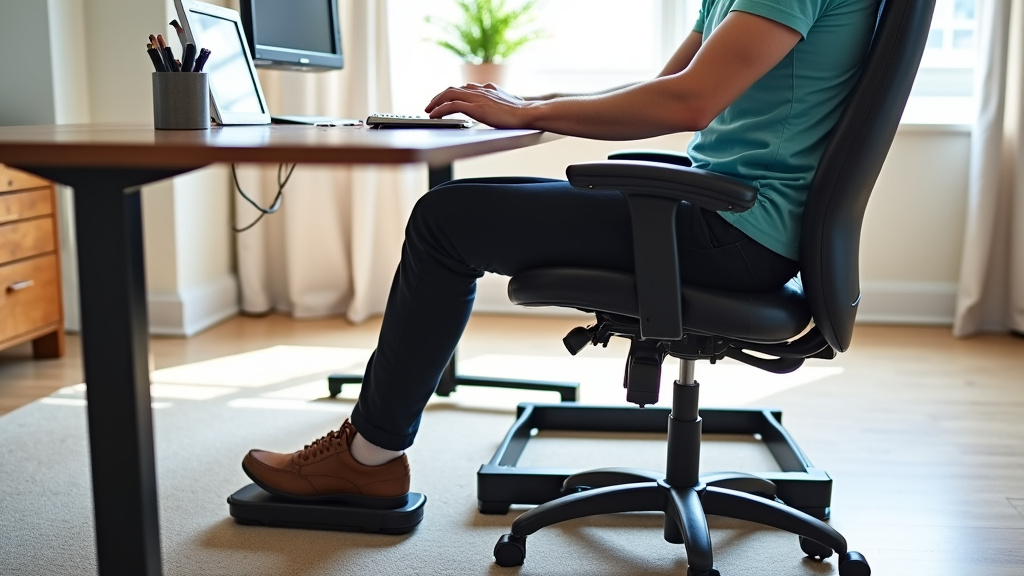
A Quick Checklist for Perfect Footrest Placement
Ready to put it all together? Here’s a simple checklist to ensure you’ve got your under desk footrest set up correctly:
- Check Your Knee Angle: Are your knees bent at roughly 90 degrees when your feet are flat?
- Verify Foot Flatness: Is your entire foot resting comfortably and evenly on the footrest surface?
- Assess Chair Height: Does your chair height allow for proper foot support without making you slouch?
- Test the Angle: Is the tilt of the footrest comfortable for your arches and ankles?
- Consider Your Desk Height: Can you comfortably reach your keyboard and mouse?
- Commit to Use: Are you planning to use it consistently throughout your workday?
Getting this right is more than just a comfort tweak. It’s an investment in your physical well-being while you’re at your desk. By taking a few minutes to position your footrest correctly, you’re setting yourself up for a more comfortable and productive day. Think of it as giving your legs and feet the support they deserve!
Conclusion
You’ve learned how to properly position your under desk footrest for maximum comfort and support. Remember, the 90-degree knee bend and flat feet are your guiding principles. Adjusting both height and angle ensures your body maintains a healthy posture, reducing strain on your back and legs. Don’t underestimate the power of consistent use!
Make it a habit to check your setup regularly. Investing a few minutes in this adjustment can lead to a more productive and pain-free workday. Take that small step to improve your daily well-being at your desk.
Frequently Asked Questions
How do I know if my footrest is the right height?
Your knees should be bent at about a 90-degree angle, and your thighs should be roughly parallel to the floor. If your feet are too high, your knees will be bent too much. If they’re too low, your legs might feel unsupported.
Can I use my footrest if I have plantar fasciitis?
Yes, a footrest can be beneficial, but pay close attention to the angle. Experiment to find a tilt that supports your arch without causing discomfort. A textured surface might also provide gentle massage.
What if my desk is too low or too high for a footrest?
Your chair height is the primary adjustment in this scenario. Adjust your chair so your arms rest comfortably on your desk. Then, position the footrest to support your feet at the correct 90-degree knee bend. You might need to adjust your desk or chair setup.
Is it okay to have my heels or toes elevated on the footrest?
No, it’s best to keep your feet flat. This ensures even weight distribution and allows your leg muscles to relax. Balancing on your toes or heels can create new pressure points and strain.
How often should I adjust my footrest?
You should initially adjust it to find your perfect position. After that, check it periodically throughout the day, especially if you notice any discomfort. Your posture can shift as you work, so a quick readjustment might be needed.
