
Can a Footrest Fix Feet Not Touching Ground?
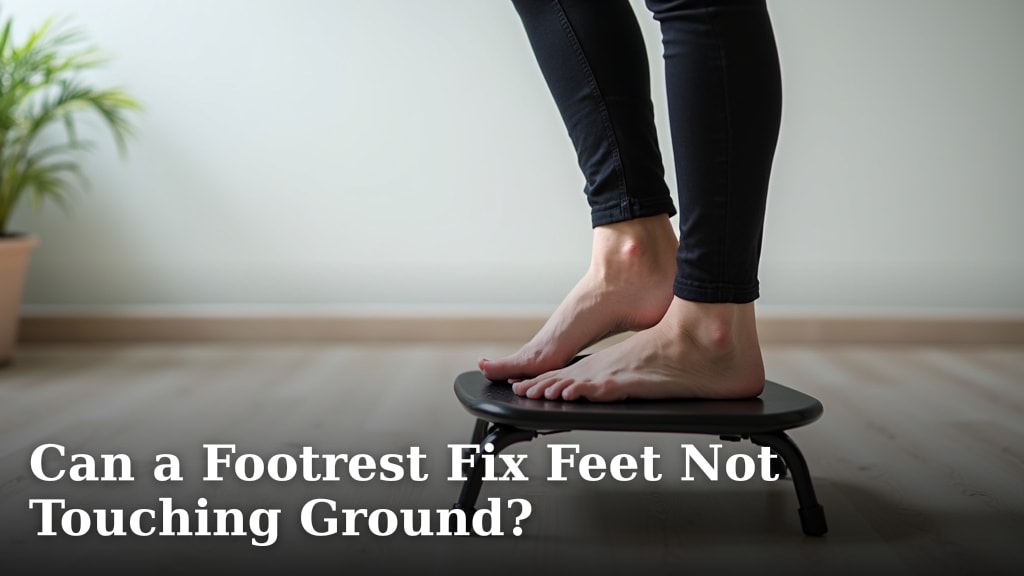
Yes, a footrest can absolutely help if your feet aren’t touching the ground while sitting. It provides the necessary support to achieve a comfortable and ergonomic posture. This can prevent discomfort and strain in your legs and back.
When your feet dangle, it often leads to poor circulation and pressure points. Finding the right height is key for proper leg alignment. A footrest helps you maintain a stable base, which is vital for good posture throughout your day.
- Yes, a footrest can solve the problem.
- It provides much-needed support.
- Proper foot support improves posture.
- It helps prevent leg and back strain.
- Look for a footrest at the right height.
Let’s take a closer look at how a footrest can make a difference for you.
Why Your Feet Dangling Matters: It’s More Than Just Comfort
So, you’re sitting at your desk, and your feet just don’t reach the floor. It’s a surprisingly common issue for many of us, especially if you’re on the shorter side or using a standard-height desk. You might think, “It’s just my feet, no big deal!” But trust us, it can be a bigger deal than you realize for your overall well-being throughout the day.
When your feet aren’t supported, they tend to dangle. This can lead to all sorts of discomfort. You might find yourself shifting around a lot, trying to find a more comfortable position. This constant movement isn’t ideal for productivity or for your body. It’s like trying to build a sturdy house on a wobbly foundation – things just don’t work as well.
The Real Problems with Unsupported Feet
Let’s break down why letting your feet dangle is not your body’s best friend. It’s not just about a fleeting feeling of awkwardness. There are actual physical consequences that can develop over time.
One of the most immediate issues is poor circulation. When your feet hang unsupported, the weight of your legs can put pressure on the blood vessels. This can make it harder for blood to flow efficiently back up to your heart. You might notice your feet feeling cold, tingly, or even a bit numb after a while. It’s your body sending out a little distress signal!
Another common problem is increased pressure on your thighs. When your feet can’t rest on the floor, you might lean forward or adjust your seating in a way that puts a lot of weight on the back of your legs. This can create uncomfortable pressure points and impede circulation even further. It’s like sitting on a chair that’s too high – you’re constantly trying to find relief.
This lack of proper support can also lead to tension and strain in your lower back and hips. Without a stable base, your body tries to compensate. Your back muscles might have to work harder to keep you upright, leading to fatigue and soreness. Think about it: if you were carrying a heavy box, you’d want to stand with your feet firmly planted, right? Your body works similarly when you’re sitting.
We found that many people experience reduced focus and productivity when they’re physically uncomfortable. If you’re constantly fidgeting or trying to alleviate leg pain, it’s tough to concentrate on your work. A stable sitting posture is really the first step to staying focused and productive.
The Benefits of Having Your Feet Firmly Planted
Now, let’s flip the script. What happens when you solve the dangling feet problem? It’s like giving your body a much-needed upgrade!
Having your feet flat on a surface, whether it’s the floor or a footrest, provides a stable base. This stability is key for maintaining good posture. When your feet are supported, your legs can rest at a comfortable angle, usually around 90 degrees. This allows your pelvis to be in a neutral position, which is great for your spine.
Better posture means less strain on your back muscles and ligaments. It helps align your spine correctly, reducing the risk of developing chronic back pain. Many ergonomic experts, like those at the Cleveland Clinic, emphasize that proper leg and foot support is a foundational element of a healthy sitting posture.
Improved circulation is another significant win. When your feet are supported, there’s less pressure on your leg veins. This promotes better blood flow back to your heart, which can help prevent swelling and that uncomfortable tingly sensation. You’ll likely feel more energized and less fatigued in your legs.
And let’s not forget about comfort! When your body is properly aligned and supported, you simply feel better. Less discomfort means you can sit for longer periods without feeling the urge to constantly shift. This leads to a more pleasant and productive work or relaxation experience.
How a Footrest Becomes Your New Best Friend
So, you’ve heard why unsupported feet are a problem and why supported feet are great. Now, how does a footrest actually come into play? It’s like providing the missing puzzle piece for your seated comfort.
A footrest is essentially an elevated surface placed in front of your chair. Its primary purpose is to give your feet a place to rest when they can’t comfortably reach the ground. Think of it as a mini-staircase for your feet. It allows you to achieve that ideal 90-degree angle in your knees, even if your chair is a bit too high or your legs are a bit too short for the desk setup.
The Mechanics: How it Works for Your Body
When you place your feet on a footrest, several good things happen biomechanically. First, it takes the strain off your legs. Instead of your muscles constantly working to hold your feet up or your hips taking all the weight, your feet can relax. This is especially helpful if you’re sitting for extended periods.
Secondly, it promotes better spinal alignment. A stable base, provided by the footrest, helps anchor your lower body. This stability then allows your core and back muscles to maintain a more neutral and supported posture. Many physiotherapists suggest that having your feet firmly on the ground (or a footrest) is the first step to a healthy seated posture.
Thirdly, it can improve blood flow. By elevating your feet slightly, you are helping to reduce the pooling of blood in your lower extremities. This can make a difference in preventing that heavy, tired feeling in your legs. It’s a simple adjustment that can have a noticeable impact on your comfort levels.
Footrest Features to Consider for Your Needs
Not all footrests are created equal, and the “perfect” one for you depends on a few things. Here’s what to keep an eye out for:
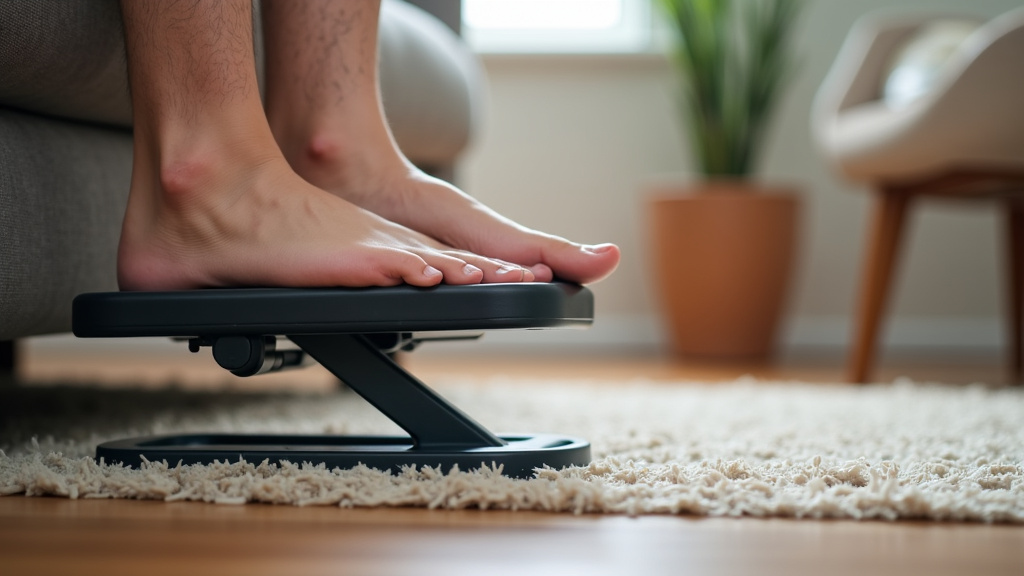
- Adjustability: This is probably the most important feature. Can you change the height and angle? Your needs might change throughout the day, or you might want to fine-tune it for the perfect fit. Look for models that offer a good range of adjustment.
- Surface Texture: Some footrests have a smooth surface, while others have a textured or even a massaging-type surface. A textured surface can prevent your feet from sliding off and can also offer a nice foot massage during the day – a little bonus!
- Stability: You want a footrest that stays put. If it slides around on your floor every time you move your feet, it’s more of a nuisance than a help. Check for non-slip bases.
- Size and Shape: Consider the space you have available and how you like to position your feet. Some are wide and flat, while others might have a more contoured design.
- Portability: If you work in different locations or need to move it often, a lightweight and easily portable option might be best.
We found that many users appreciate footrests that are easy to clean, especially if you tend to have pets or kids around. A simple wipe-down surface can be a lifesaver.
Finding the Right Height: The Key to Success
The magic of a footrest isn’t just in having one; it’s in having one that’s adjusted to the correct height for you. Too high or too low, and you might find yourself in an awkward position again.
The Ideal Angle: Aiming for 90 Degrees
The golden rule of seated ergonomics is often cited as maintaining a 90-degree angle at your knees and hips. This position distributes your body weight evenly and reduces stress on your joints and spine. When your feet are supported at the right height on a footrest, you can achieve this angle naturally.
Think of it like this: if your feet are dangling, your knees are bent more than 90 degrees, and your thighs are angled upwards. If your feet are on a footrest that’s too high, your knees might be bent less than 90 degrees, or your hips might be pushed forward out of your chair. Neither is ideal.
How to Test and Adjust Your Footrest
Getting it right is straightforward. Here’s a simple way to test if your footrest is at the optimal height for you:
- Sit back in your chair as far as you comfortably can.
- Allow your legs to hang naturally for a moment, then place your feet on the footrest.
- Adjust the footrest’s height until your feet are flat on its surface.
- Check your knee angle. It should be close to a 90-degree bend.
- Ensure your thighs are roughly parallel to the floor or sloping slightly downwards.
- You should feel supported without any pressure points or discomfort.
It might take a few tries to get it just right. Don’t be afraid to experiment! What feels perfect on Monday might need a slight tweak by Friday, depending on how you’re sitting or what you’re wearing.
Footrest vs. Other Solutions: What’s Best for You?
Sometimes, people wonder if there are other ways to solve the dangling feet problem. While a footrest is often the most direct and effective solution, let’s briefly look at some alternatives and why a footrest usually comes out on top.
Adjusting your chair height: If your chair can go lower, this is a great option. However, many office chairs have limitations, or you might be using a chair that’s already at its lowest setting. Also, lowering the chair might make it harder to type if the desk is fixed height.
Using a box or stack of books: This is a DIY approach. It can work in a pinch, but it often lacks stability and adjustability. It can be awkward to set up and might not provide the ergonomic benefits of a dedicated footrest. We found that many people who start with DIY solutions eventually upgrade to a proper footrest for better comfort and support.
Getting a height-adjustable desk: These are fantastic for overall ergonomics, allowing you to raise or lower your desk. However, they are a significant investment. If your primary issue is just feet not touching the ground, a footrest is a much more budget-friendly solution.
Different chair types: Some chairs are designed with shorter users in mind, or have specific ergonomic features. But if you’re stuck with your current setup, a footrest is the best way to improve it. Many experts agree that a footrest is a highly effective and affordable way to correct leg and foot support issues.
Here’s a quick checklist to help you find your ideal footrest solution:
- Assess your current desk and chair height.
- Measure the distance from your seat to the floor.
- Consider if you need height and/or angle adjustments.
- Think about the space under your desk.
- Prioritize stability and a non-slip surface.
- Look for materials that are easy to clean.
Conclusion
So, there you have it! If your feet aren’t reaching the floor, a footrest is a simple yet effective solution. It provides the stability your body needs to maintain good posture. This support can prevent leg strain and improve circulation. Don’t underestimate the power of proper foot placement for your overall comfort and productivity.
Your next step is to find a footrest that fits your needs. Look for one with adjustable height and a stable, non-slip surface. Try it out and adjust it until your knees and hips are at a comfortable 90-degree angle. You’ll feel the difference!
Frequently Asked Questions
Will any footrest work, or do I need a specific type?
While any elevated surface can help, an adjustable footrest is best. This allows you to fine-tune the height and angle for your perfect ergonomic fit. Look for stability and a non-slip surface to prevent it from sliding around under your desk.
How high should my footrest be if my feet don’t touch the ground?
The goal is to achieve a 90-degree angle at your knees and hips. Adjust the footrest so your feet rest flat on its surface. Your thighs should be parallel to the floor or slope slightly downward. You should feel supported without any pressure.
Can a footrest help with back pain caused by not reaching the floor?
Yes, it can significantly help. When your feet dangle, your posture can become uneven, putting strain on your lower back. A footrest provides a stable base, allowing your spine to align properly and reducing back discomfort.
How often should I adjust my footrest?
You might need to make minor adjustments periodically. Your body position can shift throughout the day, and your needs might change. It’s good practice to check your posture and footrest height every so often to ensure continued comfort.
Is a footrest really better than just lowering my chair?
Lowering your chair is a good option if it solves the problem and you can still comfortably reach your desk. However, if your chair is at its lowest setting, or lowering it makes typing difficult, a footrest is the ideal solution to achieve proper leg and foot support.
