
Is It Bad to Sit without an Ergonomic Chair?
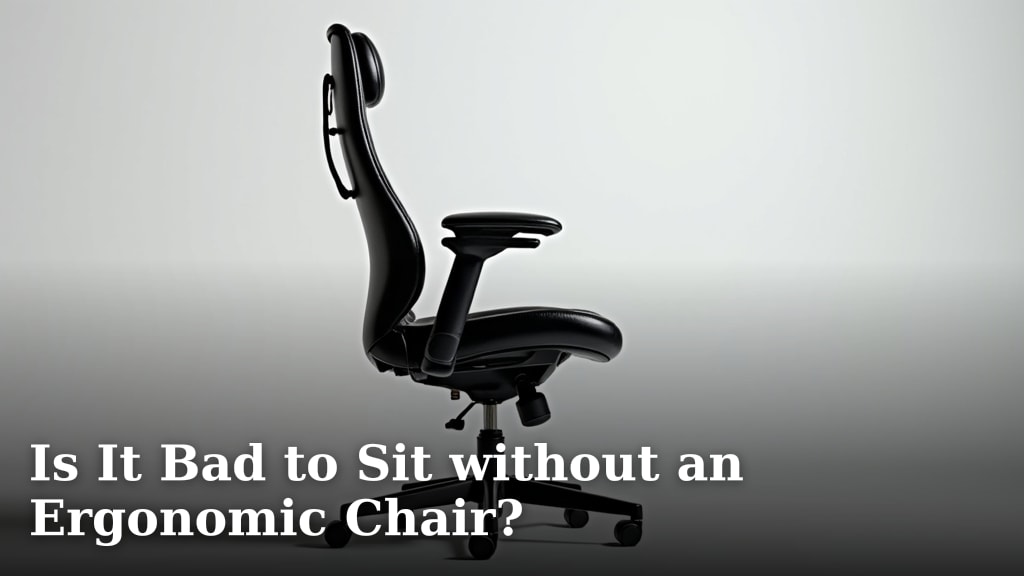
Yes, it can be bad to sit without an ergonomic chair, especially for long hours. You might experience discomfort, pain, and even long-term health issues if your seating isn’t supportive.
That standard office chair or kitchen stool might seem fine at first. But over time, it can lead to poor posture and strain on your back, neck, and shoulders. We found that a lack of proper support can really take a toll on your body.
- Non-ergonomic chairs can cause back and neck pain.
- Poor posture is a common side effect of unsupportive seating.
- Long-term use can lead to muscle strain and discomfort.
- Ergonomic chairs are designed to support your body’s natural curves.
- Ignoring seating can impact your overall well-being.
So, what exactly happens when you skip the ergonomic upgrade? Let’s take a closer look at the potential impacts of sitting without proper support.
The Risks of Skipping an Ergonomic Chair
You might wonder, “Is it really that bad?” We found that sitting without proper support can lead to a cascade of problems. Your body is designed for movement, not for static, unsupported sitting. When you sit in a non-ergonomic chair, your body tries to compensate. This compensation often means your muscles work harder than they should, leading to strain and discomfort. Think of it like constantly holding a small weight; eventually, your arm will get tired.
Ignoring these signals can create a cycle of pain. What starts as a minor ache can become a chronic issue. Many experts agree that prolonged sitting in unsupportive chairs contributes to various musculoskeletal problems (National Institutes of Health).
Back Pain: The Most Common Complaint
When we talk about bad seating, back pain is usually the first thing that comes to mind. And for good reason. Your spine has natural curves. A good ergonomic chair helps maintain these curves. A standard chair, however, often flattens your lumbar spine. This puts extra pressure on your discs and ligaments.
Imagine your spine as a stack of building blocks. When they’re aligned correctly, they’re stable. If you push the bottom blocks inward, the whole stack becomes unstable. That’s what happens to your spine without proper lumbar support.
Understanding Lumbar Support
What exactly is lumbar support? It’s the part of a chair that supports the inward curve of your lower back. This support helps your spine maintain its natural S-shape. Without it, your lower back tends to round, leading to slumping. This slumping posture can compress your spinal discs and strain your back muscles.
A chair without proper lumbar support forces your muscles to work constantly. They try to hold your spine in a natural position. Over time, these muscles become fatigued and sore. This can manifest as a dull ache or even sharp pain in your lower back.
Neck and Shoulder Strain
It’s not just your back that suffers. Your neck and shoulders are also at risk. When you hunch over in a chair without proper support, your head often juts forward. This posture increases the load on your neck muscles. For every inch your head moves forward, the effective weight on your neck can double (Cleveland Clinic).
Picture carrying a bowling ball close to your body versus holding it out at arm’s length. The latter is much harder. That’s what your neck muscles are doing when your head is forward. This added strain can lead to stiff necks, headaches, and tension in your shoulders.
Your shoulders also round forward when you slump. This can compress nerves and blood vessels. You might notice tingling, numbness, or pain radiating down your arms. We found that this is a common complaint among those who spend long hours at a desk without an ergonomic setup.
Beyond Discomfort: Long-Term Health Consequences
The immediate aches and pains are just the beginning. We found that prolonged sitting in unsupportive chairs can contribute to more serious health issues over time. Your body is interconnected. One problem can lead to another. These long-term consequences highlight why investing in your seating is so important.
Poor Posture and Its Effects
One of the most visible effects is poor posture. You might start slouching without even realizing it. Over time, your muscles and ligaments adapt to this new, incorrect posture. This can become a difficult habit to break. We often see people with rounded shoulders and a forward head posture, even when they’re standing.
Poor posture isn’t just about how you look. Understanding the best sitting posture for back pain can help mitigate these issues even without an ergonomic chair. It can impact your breathing. Your lungs have less space to expand when you’re hunched over. This can lead to shallower breaths. It can also affect your digestion. Compressed organs don’t function as efficiently. You might experience heartburn or indigestion more often.
Here’s a quick checklist of common posture issues from non-ergonomic chairs:
- Rounded shoulders
- Forward head posture
- Flattened lumbar curve
- Pelvic tilt
- Uneven weight distribution
- Tight hip flexors
Circulation and Digestive Issues
Sitting in an unsupportive chair can also hinder your circulation. When you slouch, you can compress blood vessels in your legs and torso. This restricts blood flow. Poor circulation can lead to swollen ankles, leg cramps, and a general feeling of fatigue. It also increases your risk for conditions like deep vein thrombosis (DVT) over time.
Your digestive system can also suffer. Slouching puts pressure on your abdominal organs. This can slow down digestion and contribute to issues like constipation. Many experts suggest that maintaining an upright posture aids in better organ function (Mayo Clinic).
The Differences: Ergonomic vs. Standard Chairs
So, what makes an ergonomic chair different? It’s all about adjustability and support. Standard chairs are often one-size-fits-all. But your body is unique. An ergonomic chair allows you to customize it to fit your specific needs. This customization is key to preventing discomfort and promoting good posture.
| Feature | Ergonomic Chair | Standard Chair |
|---|---|---|
| Lumbar Support | Adjustable, supports natural curve | Often fixed or absent |
| Armrests | Adjustable height and width | Fixed or no armrests |
| Seat Depth | Adjustable, fits thigh length | Fixed, may cause pressure |
| Headrest | Often adjustable, supports neck | Fixed or no headrest |
| Material | Breathable, supportive foam | Basic foam, less ventilation |
Why Adjustability Matters
The magic of an ergonomic chair lies in its ability to adapt to you. You can adjust the seat height, seat depth, and backrest angle. You can also fine-tune the lumbar support to perfectly match your lower back curve. This means the chair supports your body in its most natural and relaxed position.
Adjustable armrests are also important. They should allow your arms to rest comfortably with your elbows at a 90-degree angle. This reduces strain on your shoulders and neck. We found that even small adjustments can make a big difference in comfort and support.

Taking Action: Protecting Your Body
It’s clear that sitting without an ergonomic chair can have negative impacts. But what can you do if you’re not ready to buy a new chair immediately? There are steps you can take to mitigate some of the risks. These actions focus on improving your posture and incorporating movement into your day.
Tips for Better Sitting Posture
Even in a standard chair, you can improve your posture. Be mindful of how you’re sitting. Try to keep your feet flat on the floor or a footrest. Your knees should be at about a 90-degree angle. Keep your back straight, but don’t force it. Use a rolled towel or small pillow for lumbar support if your chair lacks it.
Ensure your computer screen is at eye level. This prevents you from craning your neck. Your wrists should be straight when you type. Make sure your arms are close to your body. These small adjustments can reduce strain significantly.
The Importance of Movement Breaks
No matter how good your chair is, prolonged sitting is still not ideal. Your body needs to move. We recommend taking frequent breaks. Stand up, stretch, and walk around for a few minutes every hour. Even short breaks can make a big difference in circulation and muscle fatigue.
Set a timer if you need a reminder. Go get a glass of water, walk to a colleague’s desk, or just do some simple stretches. These micro-breaks help reset your posture and keep your blood flowing. They are a crucial part of a healthy work routine.
Conclusion
Sitting without an ergonomic chair can certainly be detrimental to your health, especially over time. You’ve learned how unsupportive seating can lead to back and neck pain, poor posture, and even long-term circulatory and digestive issues. While an ergonomic chair offers the best solution, even small adjustments and frequent movement breaks can make a big difference.
Your body deserves support. Prioritize your well-being by optimizing your sitting environment. Start by assessing your current setup and consider making a change for a healthier you.
Frequently Asked Questions
Can I use cushions or pillows to make a regular chair ergonomic?
Yes, you can use cushions or rolled towels to add some lumbar support to a standard chair. A seat cushion can also help with pressure distribution. While these won’t fully replicate an ergonomic chair, they can significantly improve comfort and support for your back and hips.
How often should I take breaks from sitting?
We recommend taking a short break every 30-60 minutes. Stand up, stretch, or walk around for at least 1-2 minutes. This helps improve blood flow, reduces muscle fatigue, and gives your body a chance to reset its posture.
What’s the most important feature to look for in an ergonomic chair?
The most important feature is adjustable lumbar support. This allows you to maintain your spine’s natural curve. After that, look for adjustable seat height and depth to ensure your feet are flat and your thighs are supported.
Will poor posture from a bad chair become permanent?
While prolonged poor posture can lead to muscle imbalances and changes in your body, it’s rarely permanent. With conscious effort, ergonomic adjustments, and regular stretching/strengthening exercises, you can often correct your posture and alleviate associated discomfort.
Is standing all day better than sitting all day?
Neither extreme is ideal. Prolonged standing can also lead to foot pain, leg fatigue, and circulatory issues. The best approach is a balance of sitting, standing, and moving throughout your day. Consider a sit-stand desk for varied positions.
