
Why Do My Feet Not Touch the Ground in Office Chair?
Your feet not touching the ground in an office chair is often a sign of a chair that’s too high for your desk setup, or a chair that’s not ergonomically adjusted for your body. Many people experience this, and it’s usually a simple fix to get your posture feeling just right. It’s not necessarily a bad thing, but it might not be the most comfortable position for long work sessions.
This common office chair situation can happen for a few reasons. It could be related to the chair’s height settings, or even how your desk is positioned. Getting your feet flat on the floor, or supported by a footrest, is key for proper posture and reducing strain. We found that a lot of people overlook the importance of this simple adjustment. Proper foot placement is vital for proper posture and reducing strain.
- Your chair might be set too high for your desk.
- You may need to adjust your chair’s height settings.
- A footrest can help if your feet still don’t reach.
- Proper foot placement is vital for good posture.
Let’s look at why this happens and what you can do to fix it so your office setup is as comfortable as possible.
Understanding Why Your Feet Don’t Reach the Floor in Your Office Chair
It’s a common scenario: you settle into your office chair, ready to tackle the workday, only to find your feet dangling. This often means your chair is either set too high or isn’t adjusted properly for your body and desk. Getting your feet comfortably supported is more than just a comfort issue; it’s key for good posture and overall well-being during long hours at your desk.
The Ergonomic Ideal: Feet Flat and Supported
Why is it so important for your feet to reach the floor? Experts in ergonomics explain that proper foot placement is the foundation of good posture. When your feet are flat on the ground, your legs are at a roughly 90-degree angle. This alignment helps distribute your body weight evenly. It also prevents pressure points from building up in your thighs and lower legs.
When your feet are hanging, you might unconsciously cross your legs or shift your weight. This can lead to discomfort and strain over time. Think of it like building a house: if the foundation isn’t level, the whole structure can become unstable. Your posture works much the same way. Many health and wellness organizations stress the importance of a properly set up workstation (CDC).
Common Culprits Behind Dangling Feet
Several factors can lead to your feet not touching the floor. Understanding these will help you pinpoint the exact reason for your setup.
Chair Height vs. Desk Height Mismatch
The most frequent reason is a simple mismatch between your chair’s maximum height and your desk’s height. If your desk is lower than standard, even a correctly adjusted chair might leave your feet hanging. Desk heights can vary greatly. Standard desk height is typically around 29-30 inches from the floor (Occupational Safety and Health Administration).
If your chair’s lowest setting is still higher than this standard, you’ll find yourself in that dangling situation. You might have a custom-height desk or a very low-profile chair. It’s a common puzzle that many people face in shared office spaces where workstations aren’t personalized.
Incorrect Chair Adjustment
Even with a standard desk, your chair might not be adjusted correctly for your height. Office chairs are designed with adjustable features for a reason. Not using them or not knowing how to use them can cause ergonomic problems. The height adjustment lever is usually located under the seat.
Sometimes, the lever might be stuck or faulty. Or, you might simply not realize how much you can lower the chair. It’s worth giving the adjustment mechanism a good check. We found that many people don’t fully utilize all the ergonomic features their chair offers.
Your Specific Body Proportions
You might be on the shorter side, and that’s perfectly fine! Standard office chairs and desks are often designed for the “average” person. If you don’t fit that average, you might find your feet don’t naturally reach the floor, even when the chair is at its lowest setting. Your leg length relative to your torso length plays a big role here.
This is where understanding your own body and its needs becomes vital. What works for one person might not work for another. Research on anthropometrics, the study of human body measurements, explains these variations (National Institute of Standards and Technology).
The Impact of Not Having Your Feet on the Floor
Letting your feet dangle might seem like a minor inconvenience, but it can have ripple effects on your comfort and health throughout the workday.
Poor Posture and Spinal Alignment
When your feet aren’t supported, your body tries to compensate. You might lean forward, slouch, or tuck your feet under the chair. This disrupts the natural curve of your spine. Instead of sitting upright, you end up with a rounded back. This posture puts extra stress on your vertebrae and surrounding muscles.
Maintaining a neutral spine is crucial for preventing back pain. Experts consistently highlight proper sitting posture as a primary defense against musculoskeletal issues (Mayo Clinic). Dangling feet make this difficult to achieve naturally.
Increased Pressure on Thighs and Hips
If you’re not using a footrest and your feet are dangling, the weight of your legs can press down on the underside of your thighs. This can impede blood circulation. It can also put strain on your hip flexors. You might feel numbness or tingling in your feet and legs.
This pressure can also affect the nerves running down your legs. Prolonged pressure can lead to discomfort and fatigue. Finding a way to support your feet can alleviate these issues, as recommended by many physical therapists.
Strain on Neck and Shoulders
Believe it or not, your feet can affect your upper body. When you’re trying to stabilize yourself with dangling feet, you might unconsciously tense your shoulders and neck. This constant, subtle tension can lead to headaches and shoulder pain over time. It’s a chain reaction that starts from the ground up. This constant, subtle tension can lead to headaches and neck and shoulders pain over time.
Good posture allows your muscles to work efficiently and without unnecessary strain. When one part of your body is out of alignment, other parts have to work harder to compensate. We’ve found that addressing the foot position often leads to surprising relief in the neck and shoulders.
Solutions to Get Your Feet Firmly Planted
The good news is that this is usually an easy fix! You don’t need to buy a whole new desk or chair to solve this problem most of the time.
Adjusting Your Current Office Chair
First and foremost, ensure you’ve fully utilized your chair’s adjustment features. Most office chairs have a lever to raise and lower the seat height. Make sure it’s engaged properly. You should be able to lower it enough so your feet can rest flat on the floor.
Here’s a quick checklist to adjust your chair:
- Locate the height adjustment lever under your seat.
- While seated, lift the lever and gently push down with your feet to lower the chair.
- Release the lever when your feet are flat and your knees are at about a 90-degree angle.
- Test the height by sitting back and checking your posture.
- If the chair doesn’t go low enough, see the next steps.
Considering a Footrest
If even at its lowest setting, your chair is still too high for your desk or your leg length, a footrest is your best friend. A good footrest provides essential support for your feet and lower legs. It helps you maintain that crucial 90-degree angle at your knees.
There are many types of footrests available. Some are simple, stationary platforms. Others are adjustable, allowing you to set the height and angle. Some even have a textured surface for gentle foot massage. We found that a simple, adjustable footrest can make a world of difference in comfort.
When choosing a footrest, consider:
- Adjustability: Can you change the height and tilt?
- Stability: Does it stay put when you rest your feet on it?
- Comfort: Is the surface pleasant to rest your feet on?
- Size: Does it fit well under your desk without being bulky?
Desk Height Adjustments (If Possible)
In some cases, the desk itself might be the issue. If you have an adjustable-height desk, lowering it could be an option. If your desk is fixed, you might consider placing something sturdy and stable underneath the desk legs to slightly raise your setup. However, this is often a less practical solution than adjusting the chair or using a footrest.
Desk Converters and Risers
Another option, especially if you share a desk or have limited control over its height, is a desk converter. These sit on top of your existing desk and provide an adjustable surface for your monitor and keyboard. Some also include a lower section for your keyboard and mouse that is positioned lower, helping to achieve better ergonomics even if your feet don’t perfectly reach the floor.
Creating Your Ideal Ergonomic Workspace
Getting your office chair set up correctly is a fundamental step towards a more comfortable and productive workday. Don’t underestimate the power of proper foot support. It’s the unsung hero of good posture and can prevent a host of discomforts.
We’ve seen many people transform their workday comfort simply by addressing this one common issue. Your body will thank you for taking the time to ensure your feet are properly supported. It’s an investment in your well-being that pays off every single day.
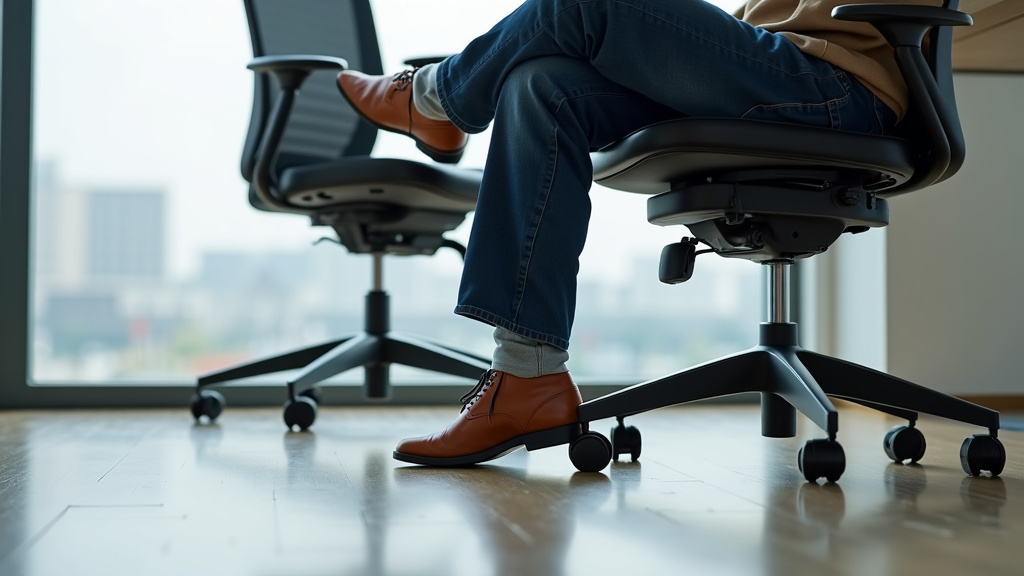
Conclusion
So, your feet dangling isn’t just a minor annoyance; it’s a signal that your office chair setup needs attention. We’ve seen how poor foot support can impact your posture, circulation, and even lead to strain in your neck and shoulders. The good news is that fixing it is often straightforward. By adjusting your chair’s height or adding a simple footrest, you can create a more ergonomic and comfortable workspace.
Take a moment today to assess your setup. Your body will thank you for prioritizing proper support and good posture. Make that adjustment, and you’ll likely feel a noticeable difference in your workday comfort.
Frequently Asked Questions
Can my feet not touching the ground cause back pain?
Yes, they absolutely can. When your feet aren’t supported, your body tries to compensate, often leading to slouching or leaning forward. This disrupts your natural spinal alignment and can put extra stress on your back muscles and vertebrae, potentially causing or worsening back pain.
What’s the ideal angle for my knees when sitting at my desk?
The ergonomic ideal is to have your knees bent at approximately a 90-degree angle when your feet are flat on the floor or a footrest. This position helps distribute your body weight evenly and prevents undue pressure on your thighs and hips.
Do I really need a footrest if my chair goes low enough for my feet to touch?
If your feet can comfortably touch the floor with your knees at about a 90-degree angle, a footrest might not be strictly necessary. However, some people still prefer one for added comfort and to ensure consistent support throughout the day, especially if they tend to shift positions.
Is it okay to tuck my feet under my chair if they don’t reach the floor?
While it might seem like a quick fix, tucking your feet under your chair often leads to poor posture. It can cause you to hunch forward, putting strain on your spine and shoulders. It’s generally better to use a footrest or adjust your chair height to achieve a more neutral sitting position.
What if my desk is too low, even with my chair at its lowest setting?
If your desk is too low relative to your chair’s lowest setting, your best bet is often a footrest. This will allow you to bring your feet up to a comfortable height, ensuring your knees are at that 90-degree angle. You could also explore desk risers if you have control over your desk setup, but a footrest is usually the simplest solution.
