Why Does My Back Hurt After Sitting in Office Chair?
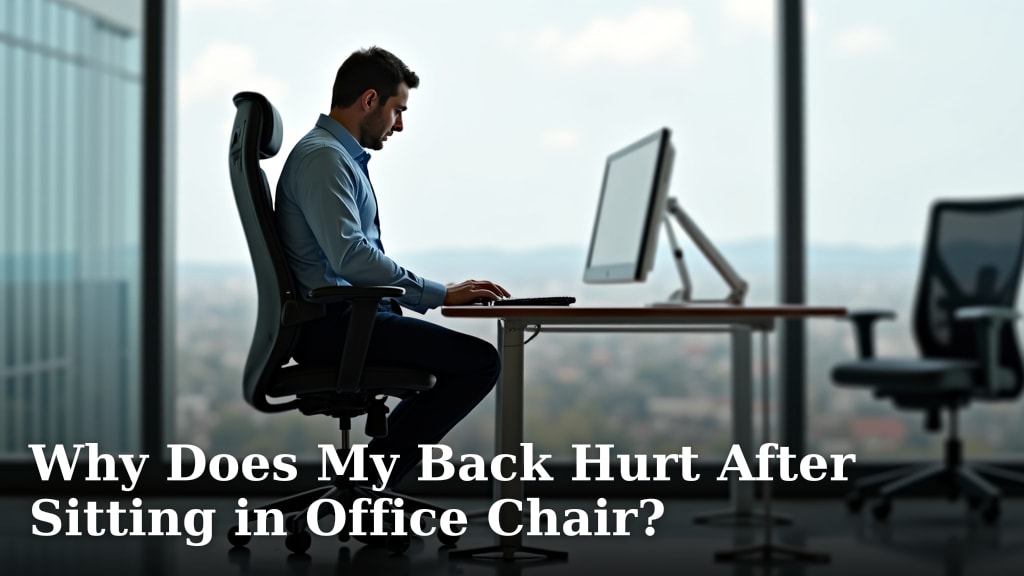
Your back hurts after sitting in an office chair because poor posture, a bad chair, or lack of movement puts stress on your spine and muscles. Over time, this pressure can lead to pain and discomfort.
Many people experience this kind of back pain. We found that it often results from sustained awkward positions, which can strain your ligaments and discs. Understanding the root cause is the first step to feeling better.
- Bad posture is a major culprit.
- Your office chair might not be right for you.
- Sitting too long without breaks hurts your back.
- Muscle weakness can make the problem worse.
- There are simple fixes you can try.
Let’s find out why your back is aching and what you can do about it. We’ll explore common reasons and practical solutions to help you sit comfortably again.
Deciphering Why Your Back Hurts After Sitting
You’re not alone if your back aches after a long day at your desk. We found that the discomfort often comes down to a few key factors, putting stress on your spine and muscles. Understanding these factors is your first step toward relief.
The Posture Predicament: Why How You Sit Matters
Think about how you sit right now. Are you slumped forward? Leaning to one side? These everyday habits can be silently damaging your back. Poor posture is a major player in causing discomfort. We often don’t even realize we’re doing it until it’s too late.
Slouching and Its Spine Strain
When you slouch, your natural spinal curves flatten out. This puts extra strain on your ligaments and discs (Mayo Clinic). Your head, which is surprisingly heavy, then shifts forward. This forward head posture increases the load on your neck and upper back muscles.
Imagine holding a bowling ball an inch from your body versus a foot away. The further out it goes, the harder it is to hold. Your head works the same way. This constant strain leads to muscle fatigue and pain.
Perching on the Edge: The Pelvic Tilt Problem
Do you find yourself perching on the edge of your seat? This often causes your pelvis to tilt backward. We found this position rounds your lower back (National Institutes of Health). It stretches the ligaments and soft tissues in your lumbar spine beyond their normal limits.
Over time, this can contribute to disc issues. Your body wasn’t designed to maintain this position for hours daily. It’s like bending a paperclip repeatedly; eventually, it weakens and breaks.
Your Office Chair: Friend or Foe?
Sometimes, the issue isn’t you; it’s your chair. An ill-fitting or non-ergonomic chair can make even the best posture difficult to maintain. It might actually contribute to your bad habits.
The Non-Ergonomic Nightmare
An ergonomic chair is designed to support your body’s natural curves. If your chair lacks proper lumbar support, it won’t help you maintain the natural inward curve of your lower back. This forces your muscles to work harder, leading to fatigue and pain.
Without adjustable features, your chair might be too high, too low, or too deep for your body. This can cause you to compensate with awkward positions. You might find yourself shrugging your shoulders or leaning forward. These subtle adjustments add up to big problems.
Wear and Tear: When Chairs Age Badly
Even a good chair can go bad. Over time, foam cushioning flattens, and support mechanisms weaken. A worn-out chair can lose its ability to provide proper support. You start sinking into it, forcing your spine into unnatural angles.
We found that replacing an old, saggy chair can make a dramatic difference for many people. It’s like trying to sleep on a mattress with a huge sag; eventually, your back will complain.
The Sedentary Trap: Why Movement Matters
Sitting still for too long, even in a perfect chair with perfect posture, is not good for your back. Your body is designed for movement. Prolonged static positions can lead to stiffness and pain.
Stagnant Blood Flow and Muscle Weakness
When you sit for extended periods, blood flow to your muscles and spinal discs decreases. This can hinder nutrient delivery and waste removal. Your muscles become less efficient and more prone to fatigue.
Sitting also means many important muscles, like your glutes and core, become underutilized. We found that weak core muscles can’t properly support your spine (American Academy of Orthopaedic Surgeons). This places more burden on your back muscles, leading to pain.
Tight Hips and Hamstrings
Think about how your body is positioned when sitting. Your hips are flexed, and your hamstrings are shortened. Over time, these muscles can become tight and inflexible. Tight hip flexors can pull on your lower back, increasing the arch there when you stand.
Tight hamstrings can flatten your lower back, especially when you try to stand up straight. This muscular imbalance contributes significantly to back pain. It’s a chain reaction, where one tight area affects another.
Other Contributing Factors to Back Pain
It’s rarely just one thing causing your back pain. Often, several factors combine to create the problem. Let’s look at a few additional elements that might be playing a role.
Stress and Tension: A Body’s Response
Stress isn’t just in your head; it manifests physically. When you’re stressed, your body often tenses up. Many people hold tension in their neck, shoulders, and upper back without realizing it. This constant muscle contraction can lead to pain and stiffness.
Think of it like clenching your jaw all day. Eventually, your jaw muscles would ache. The same happens in your back muscles when you’re under chronic stress. It’s a vicious cycle that can intensify existing discomfort.
Underlying Health Conditions
Sometimes, back pain after sitting can be a symptom of an underlying medical condition. While rarer, it’s worth considering if your pain is persistent and hasn’t responded to typical ergonomic changes.
- Disc degeneration or herniation
- Sciatica (nerve compression)
- Spinal stenosis (narrowing of the spinal canal)
- Arthritis in the spine
- Muscle imbalances or weakness
If you suspect an underlying condition, or if your pain is severe or accompanied by other symptoms, always consult a healthcare professional. They can provide an accurate diagnosis and guide you to the right treatment.
Quick Check: Is Your Current Setup Harming You?
How does your current sitting situation stack up? Use this quick checklist to evaluate your office chair and habits. We found that even small adjustments can make a big difference.
| Area | Ideal Setup | Potential Issue if Different |
|---|---|---|
| Feet Position | Flat on the floor or a footrest | Dangles or unsupported -> Pressure on thighs, poor circulation |
| Knee Angle | Approximately 90-100 degrees | Less than 90 -> Pressure behind knees; More than 100 -> Slouching |
| Elbow Angle | Approximately 90-100 degrees | Too acute or obtuse -> Shoulder/neck strain |
| Back Support | Lower back supported (lumbar curve) | No support -> Slouching, lower back strain |
| Monitor Height | Top of screen at eye level | Too high/low -> Neck strain (looking up/down) |
This table gives you a visual way to check your setup. Don’t worry if it’s not perfect right now. This knowledge is your first step to improving things.
Making Simple Changes for Back Comfort
You don’t need to completely overhaul your office overnight. Small, consistent changes can lead to significant improvements in your back health. Think of it as a series of mini-revolutions for your well-being.
Your Ergonomic Checklist for a Better Back
We found that implementing these practical tips can dramatically reduce your back pain. It’s all about creating a more supportive and dynamic environment for your body.
- Adjust Your Chair: Ensure your feet are flat on the floor, and your knees are at a 90-degree angle. Use a footrest if needed.
- Lumbar Love: Roll up a small towel or use a lumbar pillow to support the natural curve of your lower back.
- Screen Savvy: Position your monitor so the top of the screen is at eye level, about an arm’s length away. This keeps your neck neutral.
- Take Micro-Breaks: Stand up, stretch, and move around for 1-2 minutes every 30-60 minutes. Even a quick walk to the water cooler helps.
- Stay Hydrated: Water helps keep your discs and joints lubricated (Cleveland Clinic).
- Gentle Stretching: Incorporate simple back and hip stretches into your daily routine to combat stiffness.
These actions can interrupt the patterns that lead to pain. Your body will thank you!

Conclusion
We’ve walked through why your back might be aching after sitting: from your posture to your chair and even your movement habits. Remember, your body is designed for motion, not prolonged stillness. By making conscious adjustments to your setup and incorporating regular movement, you can significantly reduce discomfort.
Don’t just endure the pain. Be proactive. Start by checking your chair, adjusting your posture, and taking those mini-breaks. Your back will thank you for these small but mighty changes. Begin your journey to a pain-free workday today!
Frequently Asked Questions
What’s the best sitting posture to prevent back pain?
The ideal posture involves sitting upright with your back against the chair’s support. Keep your feet flat on the floor and your knees at a 90-degree angle. Ensure your shoulders are relaxed and your head is balanced directly above them.
How often should I get up from my desk?
We recommend getting up and moving around every 30-60 minutes. Even a brief walk or stretch for 1-2 minutes can make a big difference. This helps improve blood flow and prevents muscle stiffness.
Can a standing desk really help with back pain?
Yes, many people find relief with standing desks. They encourage movement and can reduce time spent in static sitting positions. However, remember to alternate between sitting and standing, as standing too long can also cause discomfort.
My company won’t buy me a new ergonomic chair. What can I do?
You can still improve your setup with a few affordable additions. Consider a lumbar support pillow or a rolled-up towel for your lower back. A footrest can also help achieve proper leg positioning and relieve pressure.
When should I see a doctor for back pain from sitting?
If your back pain is severe, persistent, or accompanied by numbness, tingling, or weakness in your legs, it’s wise to consult a healthcare professional. They can rule out any underlying medical conditions and provide personalized advice.