Why Won’t My Office Chair Go Down?
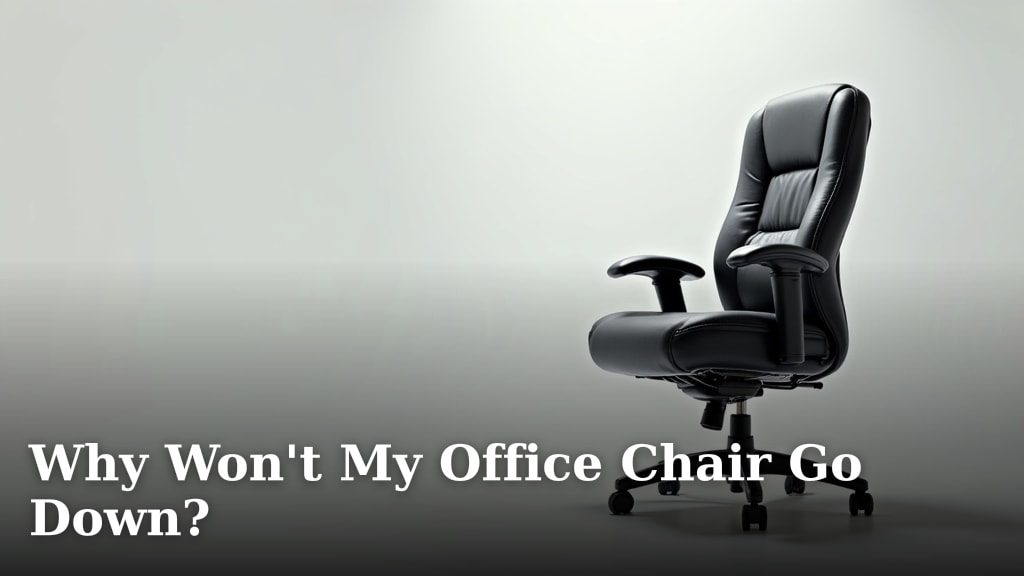
Your office chair won’t go down, most often, because the pneumatic gas lift has failed or is stuck in its current position. This is a very common issue with office chairs as they get older.
You might be wondering if there’s a simple fix. We found that the problem usually involves the gas cylinder, the chair’s main height adjustment component. Sometimes, though, a simple adjustment to the control mechanism is all you need.
- Gas cylinder failure is common.
- Control lever issues can prevent movement.
- Dirt and debris might jam parts.
- Lubrication can sometimes help.
- Replacing the gas lift is often the best solution.
Let’s walk through exactly why your chair is acting stubborn and how you can get it working again, or decide if it’s time for a new one.
Understanding Why Your Office Chair Won’t Lower
The main reason your office chair refuses to go down is usually a problem with its pneumatic gas lift cylinder. This cylinder is the heart of your chair’s height adjustment system.
When this part fails or gets stuck, it can be frustrating. You expect your chair to move, and it just doesn’t cooperate. Let’s look at the common culprits behind this stubborn behavior.
The Usual Suspect: Gas Lift Failure
The gas lift, also known as the gas spring or pneumatic cylinder, is a sealed unit filled with compressed air or nitrogen. It works like a shock absorber, allowing your chair to move up and down smoothly.
Over time, the seals inside this cylinder can wear out. This lets the gas escape, which means the cylinder can no longer hold pressure. Think of it like a tire with a slow leak – eventually, it just can’t do its job.
When the gas leaks, the cylinder can’t support your weight to go down, or it might get stuck in an extended position. We found this is the most frequent cause of chair height issues.
Signs of a Failing Gas Lift
How can you tell if your gas lift is truly the problem? There are some clear signs to look for.
- Your chair slowly sinks on its own throughout the day.
- The chair stays at one height and won’t move up or down at all.
- You hear a hissing sound when you try to adjust the height (gas escaping).
- The chair feels “bouncy” or unstable when you sit on it.
If you notice any of these, it’s a strong indication that the gas lift is nearing the end of its life (Occupational Safety and Health Administration).
Control Mechanism Issues: The Lever and Its Linkages
Sometimes, the gas lift itself isn’t the problem. Instead, the mechanism that controls it might be stuck or broken. This mechanism usually involves a lever, a rod, and a release button on the gas lift.
When you pull the lever, it pushes a small pin on top of the gas lift. This pin releases the pressure, allowing the chair to move. If any part of this system is jammed, bent, or disconnected, your chair won’t adjust.
Diagnosing Lever Problems
First, inspect the height adjustment lever itself. Is it bent? Does it feel loose? Can you move it freely?
Next, look underneath the chair. Follow the lever’s path to see how it connects to the gas lift. You might see a thin metal rod. If this rod is bent, disconnected, or rusted, it won’t be able to engage the gas lift properly.
We found that sometimes the rod simply slips out of its connection point. A quick reattachment can solve the problem instantly. It’s like a simple switch that just needs to be flipped back on.
Obstructions and Dirt: The Unseen Culprits
Office chairs operate in environments where dust, dirt, and even stray paperclips can accumulate. These small items can become big problems if they get into the moving parts.
Over time, grime can build up around the gas lift or the control mechanism. This buildup can create friction, making it hard for the parts to move smoothly. It’s like trying to open a sticky window – sometimes it just needs a good clean.
Checking for Blockages
Carefully tilt your chair over to inspect the underside. Look for any visible debris or gunk around the gas lift and the control assembly. Use a flashlight if needed.
Pay close attention to where the lever rod meets the gas lift’s release pin. Even a small obstruction here can prevent the pin from being depressed, thus keeping the chair from going down.
Cleaning this area with a damp cloth or even a compressed air can might dislodge the blockage. This simple step can sometimes miraculously fix the issue, saving you time and effort.
Lubrication: A Simple Yet Overlooked Solution
Many moving parts benefit from lubrication, and your office chair is no exception. If the control mechanism feels stiff or gritty, a lack of lubrication could be the cause.
Just like a squeaky door hinge, parts that aren’t well-oiled can seize up. This is especially true for the small pin on the gas lift and the rod that pushes it.
Applying Lubricant Safely
If you suspect friction is the problem, try applying a silicone-based lubricant. Avoid oil-based lubricants like WD-40, as they can attract more dust and dirt over time. We recommend a dry lubricant that won’t leave a sticky residue.
Spray a small amount directly onto the pivot points of the control lever and where the rod connects to the gas lift. Then, try to operate the lever a few times to work the lubricant in. This might be all it takes to free things up.
When is it Time for a Replacement Gas Lift?
You’ve tried cleaning, lubricating, and checking the connections. What if your chair still won’t go down? If the gas lift shows signs of leakage or simply won’t budge after all your efforts, a replacement is likely needed.
Replacing a gas lift might sound complicated, but it’s a common repair. Many office chairs are designed for this part to be replaceable. It’s often much cheaper than buying a whole new chair, especially if your chair is otherwise in good condition.
How to Decide: Repair vs. Replace the Chair
When faced with a stubborn chair, you have two main choices: fix the gas lift or get a new chair. How do you decide? Consider a few factors.
| Factor | Consider Repair (Gas Lift) | Consider Replacing Chair |
|---|---|---|
| Chair Age | Less than 5 years old, good condition | More than 5-7 years old, worn out |
| Overall Condition | Upholstery, casters, frame are excellent | Torn fabric, wobbly base, broken armrests |
| Cost | Replacement gas lift is inexpensive | New gas lift cost is high percentage of new chair price |
| Personal Attachment | Comfortable, custom fit, hard to find similar | Uncomfortable, no special features, ready for an upgrade |
If your chair is an expensive, ergonomic model and only the gas lift is bad, replacing the cylinder is a smart move. But if it’s an old, wobbly chair, a new one might be a better investment in your comfort and posture.
Your Troubleshooting Checklist
Before you throw in the towel, go through this quick checklist. You might find a simple fix just around the corner!
- Inspect the lever: Is it connected and moving freely?
- Check the connecting rod: Is it straight, attached, and pushing the pin?
- Look for obstructions: Any dirt, debris, or foreign objects jamming the mechanism?
- Try lubrication: Apply silicone spray to pivot points and the gas lift pin.
- Test the gas lift: Does it feel soft? Does the chair sink on its own?
- Consider a replacement gas lift: If all else fails, this is likely the next step.
Going through these steps methodically will help you figure out exactly why your office chair won’t go down. Most of the time, the solution is fairly straightforward once you pinpoint the problem.
Conclusion
Dealing with a stubborn office chair that won’t go down can certainly disrupt your workday. As we’ve explored, the issue usually boils down to a problem with the gas lift, the control mechanism, or a simple obstruction. You now have a clear checklist to diagnose the problem, from inspecting the lever to checking for debris.
Remember, a little troubleshooting can often save you from buying a brand new chair. Whether it’s a quick clean, some lubrication, or investing in a new gas lift, fixing your chair is often straightforward. Take the time to identify the exact cause, and you’ll likely have your chair back in working order, supporting you comfortably once again.
Frequently Asked Questions
How long do office chair gas lifts typically last?
Office chair gas lifts generally last between 2 to 5 years, though higher-quality chairs might have lifts that last longer. Their lifespan depends on factors like how often you adjust the chair, the user’s weight, and the overall quality of the components.
Can I temporarily fix a sinking office chair without replacing the gas lift?
Yes, you can often implement temporary fixes. Some people use a hose clamp around the base of the gas lift to prevent it from sinking past a certain point. This isn’t a permanent solution, but it can buy you time until you can replace the lift.
Is it safe to use an office chair with a faulty gas lift?
It’s generally safe, but it can be uncomfortable and inconvenient. If the chair slowly sinks, it might compromise your posture and productivity. A completely stuck chair that won’t adjust to the proper height can also lead to ergonomic issues.
Where can I buy a replacement gas lift for my office chair?
Replacement gas lifts are widely available online through retailers like Amazon, eBay, or specialized office chair parts websites. You’ll need to measure your existing gas lift’s dimensions (cylinder length and diameter) to ensure you get a compatible replacement.
Can a dirty environment really cause my office chair to get stuck?
Absolutely. Dust, hair, food crumbs, and other debris can accumulate around the control mechanism and the gas lift’s release pin. This buildup can create enough friction or blockage to prevent the chair from lowering properly. Regular cleaning can prevent this.