Why Does My Office Chair Scratch the Floor?
Your office chair scratches the floor primarily because its wheels are made from hard materials like plastic. These hard wheels can drag across surfaces, especially hard floors, creating unsightly marks and damage over time.
Many chairs come with basic plastic casters. We found that these casters don’t glide smoothly on
Understanding Why Your Office Chair Damages Floors
Your office chair can be a silent villain, leaving its mark on your beautiful floors. The main culprits are often the casters, those little wheels that help you glide around your workspace.
These casters, especially the hard plastic ones that come standard with many chairs, are not designed for all floor types. They can scratch, scuff, and even gouge your flooring over time.
The Problem with Standard Casters
Many office chairs come equipped with basic, inexpensive casters. We’ve all seen them: black plastic, hard, and sometimes noisy. They might be fine for carpet, but on hard surfaces, they become problematic.
Imagine dragging a hard plastic block across your hardwood floor. You wouldn’t do it, right? Your chair’s hard casters do something similar every time you move it.
Hard Casters vs. Hard Floors
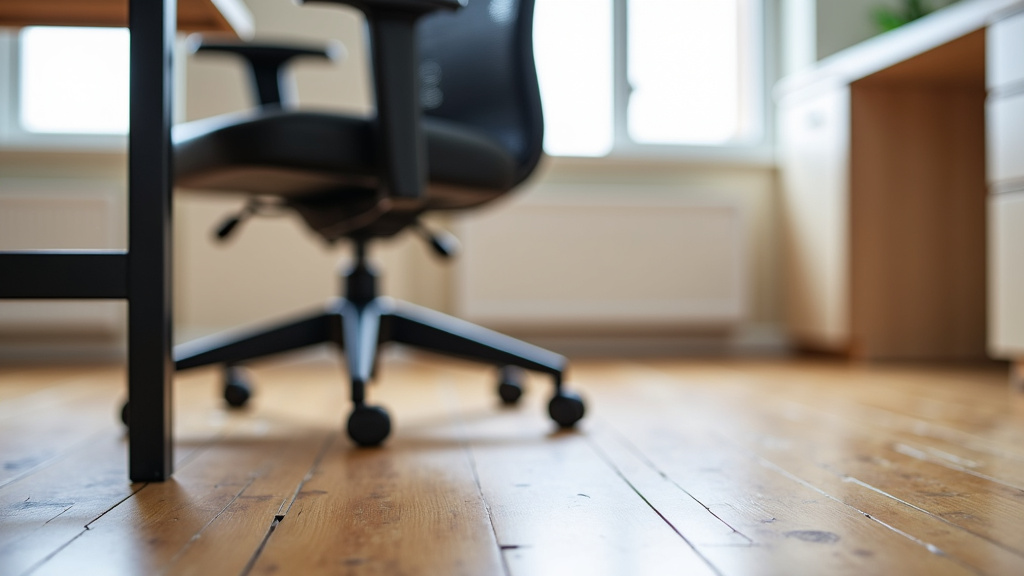
The materials simply don’t mix well. A hard plastic wheel rolling on a hard surface like hardwood, laminate, or tile creates friction and pressure points. This can lead to unsightly damage.
Think of it like sandpaper. Over time, that constant friction will wear down and scratch the protective layers of your floor. This is especially true if any dirt or debris gets caught in the wheels.
Accumulated Dirt and Debris
Casters are excellent at picking up tiny bits of dirt, dust, and grit from your floor. Once trapped, these particles act like tiny pieces of sandpaper under your chair’s wheels.
Every roll then becomes a potential scratching incident. This is why even chairs with softer casters can sometimes cause marks if they aren’t kept clean.
Different Floor Types and Their Vulnerabilities
Not all floors are created equal when it comes to resisting chair damage. Some are far more delicate than others. Understanding your floor type helps you choose the right protection.
We found that certain flooring materials are particularly susceptible to damage from office chair casters. It’s like some floors have a natural Achilles’ heel.
Hardwood and Laminate Floors
Hardwood floors are known for their beauty but are quite vulnerable. They can be easily scratched, dented, or scuffed by hard chair wheels.
Laminate floors mimic hardwood but have a protective wear layer. However, this layer can still be compromised by repeated friction, leading to visible damage (National Wood Flooring Association).
Tile and Concrete Floors
Tile floors, while very durable, can still show wear. Hard plastic casters can scratch the grout or even the tile’s glaze over time. Heavy chairs on tile can also cause micro-fractures.
Concrete floors are tough, but they aren’t immune. Scuff marks from hard wheels are common. Plus, trapped grit can still grind against the surface, dulling its finish.
Vinyl and LVT (Luxury Vinyl Tile)
Vinyl and LVT are popular for their resilience and waterproof properties. However, they can be susceptible to indents or pressure marks from hard casters.
Over time, the friction can also wear away the protective top layer, leaving your floor looking dull or damaged. We found this is a common issue with chairs lacking appropriate wheels.
The Weight Factor: How Your Chair’s Load Impacts Floor Damage
It’s not just the casters; the overall weight bearing down on those small wheels plays a big role. The heavier the chair, or the person in it, the more pressure is exerted on your floor.
Think about walking in high heels on a soft floor – the small point of impact creates significant pressure. Your chair’s wheels do something similar, especially under a heavy load.
Concentrated Pressure Points
Your body weight, combined with the chair’s weight, is distributed across those few tiny points of contact: the casters. This creates immense pressure per square inch on your floor.
This concentrated pressure, especially when combined with hard casters, is a recipe for floor damage. It’s like having multiple tiny, persistent hammers at work on your floor.
Finding the Right Solution for Your Floors
Don’t despair! Protecting your floors from office chair damage is entirely possible. It often comes down to choosing the right casters or using effective floor protection.
A little bit of prevention goes a long way. You can save yourself the headache and expense of floor repair by making some simple changes.
The Caster Upgrade: A Game Changer
The simplest and often most effective solution is to replace your chair’s standard hard plastic casters with softer, floor-friendly wheels. Look for options like “rollerblade style” casters.
These casters typically have a softer, rubberized coating that glides smoothly over hard surfaces without scratching. They act like tiny, forgiving tires for your chair.
Here’s a quick comparison of common caster types:
| Caster Type | Material | Best For | Floor Vulnerability |
|---|---|---|---|
| Standard Hard Plastic | Nylon, Hard Plastic | Carpet | High (hard floors) |
| Soft/Rubberized | Polyurethane, Rubber | Hardwood, Laminate, Tile, Vinyl | Low (hard floors) |
| Rollerblade Style | Polyurethane with a bearing | All Hard Floors | Very Low |
The Power of Chair Mats
If new casters aren’t an option, or if you want an extra layer of protection, a good chair mat is your best friend. These mats create a barrier between your chair and your floor.
Choose a mat specifically designed for your floor type. There are different mats for carpeted floors versus hard floors, each with unique backing to prevent slippage (OSHA recommends ergonomic accessories).
Regular Cleaning and Maintenance
Even with the best casters or mats, keeping your workspace clean is vital. Regularly clean your casters and the floor underneath your chair.
Removing accumulated dirt and debris ensures nothing gets caught in the wheels that could still cause scratches. It’s a simple habit that makes a big difference.
Your Checklist for Floor Protection
Ready to save your floors? Here’s a quick checklist to help you prevent further damage and keep your workspace looking great:
- Inspect your current chair casters. Are they hard plastic?
- Consider upgrading to soft, rollerblade-style casters for hard floors.
- Invest in a chair mat designed for your specific floor type.
- Regularly clean your chair casters to remove trapped dirt.
- Keep the area under your chair free of debris and grit.
- Lift your chair when moving it significant distances, rather than dragging.
Conclusion
Protecting your floors from office chair damage is easier than you think. You now understand that hard casters, combined with floor type and chair weight, create those annoying scratches. By making a few simple changes, you can preserve your beautiful flooring.
Upgrading your casters to softer, rollerblade-style wheels is often the most impactful step. Adding a chair mat offers another layer of defense. Remember to keep your casters and floors clean too. Take action today to keep your floors looking pristine for years to come!
Frequently Asked Questions
Are chair mats really necessary if I upgrade my casters?
While upgrading to soft casters significantly reduces floor damage, a chair mat provides extra protection. It creates a dedicated zone for your chair, preventing wear and tear in high-traffic areas. This is especially helpful for softer floors or very heavy chairs.
How often should I clean my office chair wheels?
We recommend cleaning your office chair wheels at least once a month. If you work in a dusty environment or have pets, cleaning them more frequently is a good idea. Dirt and pet hair trapped in the casters can act like sandpaper on your floors.
Can any office chair casters be replaced?
Most standard office chair casters use a universal stem size, making them easy to swap out. Simply pull the old ones out and push the new ones in. Double-check your chair’s specifications if you have a unique or older model.
Will softer casters make my chair harder to move on carpet?
Yes, softer casters, especially rubberized ones, are designed for hard floors and can create more friction on carpet. If you have a mix of hard floor and carpet, dedicated carpet casters (hard plastic) or a chair mat might be more suitable for the carpeted area.
What if my floor is already scratched from my office chair?
For minor scratches on hardwood or laminate, you might try scratch repair kits designed for those materials. Deeper gouges might require professional repair or refinishing. Preventing further damage with new casters and a mat is the first step to take.