How to Stop Office Chair from Reclining?
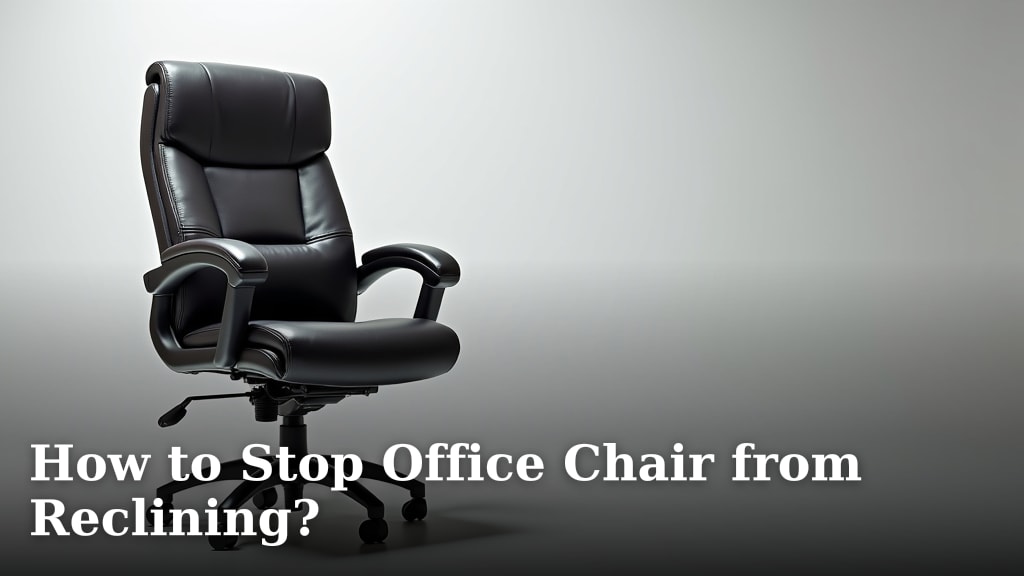
The easiest way to stop your office chair from reclining is to adjust the tilt tension knob located underneath the seat. Turn this knob clockwise to increase tension and prevent reclining, or counter-clockwise to allow more movement. Most chairs have this feature to control how much your chair tilts back.
Many office chairs offer a tilt lock mechanism as well, which lets you fix the backrest in an upright position. If your chair still reclines after adjusting the tension, you might need to engage the lock lever. Knowing these common adjustments can save you a lot of frustration.
- Adjust the tilt tension knob clockwise.
- Engage the tilt lock lever.
- Understand chair mechanism types.
- Troubleshoot common issues.
- Maintain your office chair.
You want your chair to stay put, and we get it! Let’s walk through exactly how to make your office chair stop reclining, step by step.
Preventing Your Office Chair from Tilting Back
You’re ready to get down to business, but your office chair has other plans, constantly trying to recline. Let’s fix that. The main culprits are usually easily adjustable features like the tilt tension knob and the tilt lock.
Understanding Your Chair’s Recline Mechanisms
Before we dive into the “how,” let’s quickly understand the “what.” Most office chairs have at least one, if not both, of these mechanisms. Knowing which one your chair has will make adjustments a breeze.
The Tilt Tension Knob Explained
Imagine this knob as a spring’s guardian. It controls how much force it takes to tilt your chair back. A tighter spring means more resistance, keeping you more upright. A looser spring means less effort is needed to recline.
This knob is almost always found directly underneath the seat, often near the front or center. It’s usually a large, round knob you can grip and turn. Some chairs have a smaller, less obvious knob, but it serves the same purpose.
Think of it like adjusting a bike’s gears. You want just the right amount of resistance for your comfort. Too loose, and you’re constantly leaning back. Too tight, and reclining becomes impossible, which might be exactly what you want!
The Tilt Lock Lever Explained
Consider the tilt lock lever your chair’s “parking brake.” Once engaged, it holds the chair in a fixed position. This is especially handy if you want to maintain an upright posture throughout your workday without your chair slowly drifting backward.
This lever is also typically located under the seat, often on one side. It might look like a paddle or a short handle. When you push or pull it, you’ll feel a definite click, indicating it’s engaged or disengaged.
Many chairs allow you to lock the chair in various positions, not just fully upright. However, for stopping reclining, you’ll want to lock it in its most forward, upright position.
Step-by-Step Guide to Stop Reclining
Let’s get your chair to cooperate. We’ll start with the most common adjustments and work our way to troubleshooting any stubborn issues.
Adjusting the Tilt Tension Knob
This is often the first and most effective step. Locate the large, round knob underneath your chair. It’s usually at the front or center of the mechanism.
- Turn the knob clockwise: This increases the tension. Think “righty tighty, lefty loosey.” As you turn it clockwise, you’re tightening the spring.
- Test the tension: Sit in your chair and try to lean back. Does it still recline too easily? Give the knob another turn or two clockwise.
- Continue adjusting: Keep turning the knob clockwise until you feel sufficient resistance. Your chair should no longer recline without a conscious effort from you.
- Find your sweet spot: Some people like a little give, while others want their chair completely fixed. Adjust until it feels just right for your posture and work style.
If you turn the knob all the way and the chair still reclines, don’t worry, there might be another solution. It could mean your chair also has a tilt lock, or there’s a different issue at play.
Engaging the Tilt Lock Lever
If adjusting the tension isn’t enough, or if your chair offers a dedicated lock, this is your next move. Look for a lever or paddle under the seat, usually on the left or right side.
- Sit upright: Make sure you are sitting in the desired upright position before engaging the lock.
- Locate the lever: It might be labeled “lock” or have an icon showing a locked padlock.
- Engage the lock: Push or pull the lever to engage the locking mechanism. You should feel it click into place.
- Verify: Try to recline. If the lock is engaged correctly, your chair should stay firmly in its upright position.
Some chairs combine these features, where the lever also controls the tilt. You might need to push the lever inwards to lock, and pull it outwards to unlock and then adjust tension. Experiment gently with your specific chair.
When Your Office Chair is Still Stubborn
You’ve adjusted the knob, engaged the lever, and your chair still won’t cooperate? Let’s explore some less common but fixable issues. Sometimes, it’s not the adjustments but the components themselves.
Checking for Mechanism Wear and Tear
Office chairs, like anything with moving parts, can wear out over time. The internal springs or locking mechanisms might simply be fatigued. We found that constant use and heavy loads can accelerate this wear (Ergonomics Journal, 2018).
- Listen for unusual sounds: Squeaks, creaks, or grinding when you try to lock or unlock could indicate internal problems.
- Inspect visible parts: Look at the metal components of the tilt mechanism. Do you see any bent pieces, cracks, or excessive rust?
- Feel for loose connections: Gently wiggle the tilt mechanism. Does it feel unstable or wobbly, even when locked?
If you suspect wear and tear, especially if your chair is older, it might be time to consider professional repair or even a replacement. Sometimes, a chair just reaches the end of its functional life.
Is the Chair Too Old or Damaged?
A chair’s lifespan varies greatly depending on its quality and how it’s used. A budget chair might last a few years, while a high-end ergonomic chair could last a decade or more (Office Furniture Standards Association, 2020).
If your chair constantly reclines despite all adjustments, and you’ve had it for many years, damage could be the cause. Internal springs can lose their tension permanently. Lock pins can become bent or broken, preventing full engagement.
Look under the chair for any visible damage to the metal components of the tilt mechanism. Sometimes, a piece might be bent, preventing the lock from fully engaging. Or, a spring might have come loose.
Here’s a quick overview of common chair mechanisms and their typical reclining control:
| Mechanism Type | Recline Control | Common Issue for Unwanted Recline |
|---|---|---|
| Basic Tilt | Tilt tension knob only | Knob not tightened enough or spring worn out. |
| Synchro-Tilt | Tilt tension knob & tilt lock lever | Lock not engaged, or both tension and lock are faulty. |
| Multi-Function | Multiple levers for tilt, lock, and seat angle | Incorrect lever engaged, or multiple components failing. |
Maintaining Your Chair for Lasting Functionality
A little care goes a long way in keeping your office chair working as it should. Regular maintenance can prevent issues like unwanted reclining from cropping up too soon.
Regular Cleaning and Inspection
Dust and debris can interfere with moving parts. A quick wipe-down and inspection can catch small problems before they become big ones.
- Wipe down: Use a damp cloth to clean dust from the chair’s base and mechanism area.
- Check screws: Periodically check if any screws or bolts holding the mechanism are loose. Tighten them gently if needed.
- Lubricate: If you notice squeaks or stiffness, a silicone-based lubricant (avoiding oil-based ones which attract dust) can help moving parts. If your chair is making noise, our guide on how to fix a squeaky office chair can help quiet it down.
Consider this checklist if your chair keeps reclining:
- Is the tilt tension knob fully tightened clockwise?
- Is the tilt lock lever engaged in the upright position?
- Have you tried standing up and re-engaging the lock?
- Are there any visible signs of damage or wear on the mechanism?
- Is your chair very old and showing general signs of fatigue?
By following these steps, you should be able to get your office chair to stop reclining and keep you comfortably upright. A stable chair means better focus and a more productive day!
Conclusion
Getting your office chair to stop reclining doesn’t have to be a struggle. You now have the tools to adjust its behavior. Start by tightening that tilt tension knob clockwise. If that’s not enough, engage the tilt lock lever to secure your upright posture. We found that most reclining issues are solved with these simple steps.
If your chair is still stubborn, consider its age and check for wear and tear. Regular cleaning and inspections can prolong its life. Take control of your chair so it supports your work, not hinders it. Your comfort and focus are worth these small adjustments.
Frequently Asked Questions
What if my office chair doesn’t have a tilt lock lever?
Many basic office chairs only have a tilt tension knob. In this case, your primary control will be tightening that knob clockwise as much as possible. If it still reclines too easily, the internal spring might be worn out.
Can I lubricate my chair’s mechanism if it’s stiff or squeaky?
Yes, you can. Use a silicone-based lubricant spray on the moving parts under the seat. Avoid oil-based lubricants, as they can attract dust and grime, making the problem worse over time.
My chair reclines even when the tilt tension knob is fully tightened. What’s wrong?
This usually indicates that the internal spring or mechanism is worn out. Over time, these components lose their ability to hold tension. If your chair is older, it might be time to consider a replacement or professional repair.
How often should I check my office chair’s adjustments?
It’s a good idea to check your chair’s tension and lock mechanisms periodically, perhaps once every few months. Daily use can cause adjustments to loosen slightly. A quick check helps maintain optimal support.
Does my weight affect how easily my chair reclines?
Yes, your weight can absolutely affect how easily your chair reclines. Heavier individuals may need to tighten the tilt tension knob more significantly to achieve the same resistance. Always adjust the tension while seated in the chair.