How Much Does a Good Office Chair Cost?
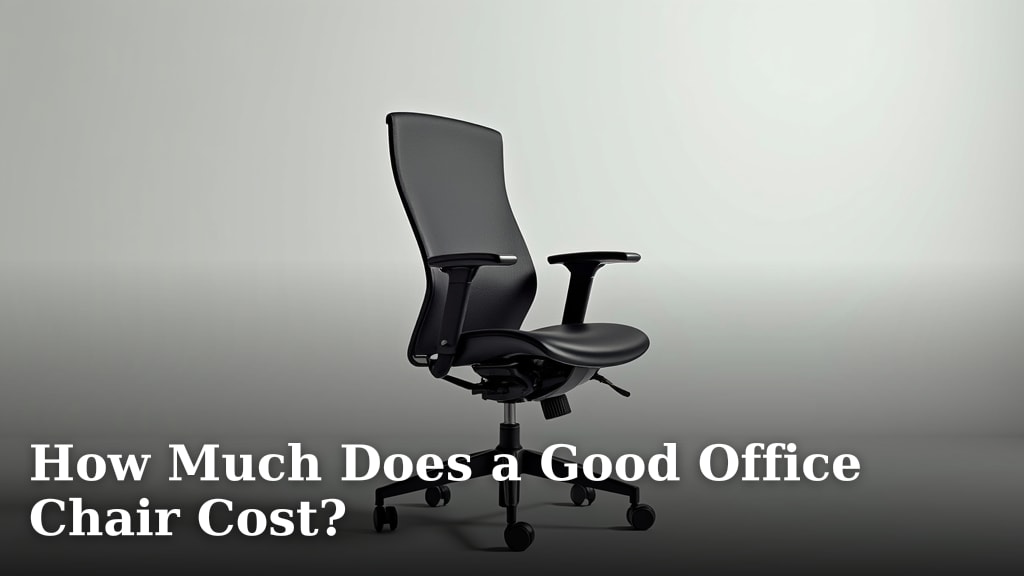
A good office chair can cost anywhere from $300 to $1,000 or more. We found many quality chairs in this range. The price you pay depends heavily on features, materials, and brand name.
You might find budget options for under $200. These chairs often lack the ergonomic adjustments and durability of higher-priced models. For a truly supportive and comfortable experience, be ready to invest a bit more.
TL;DR:
- Good office chairs cost $300-$1,000+.
- Budget chairs under $200 often lack comfort.
- More expensive chairs offer better ergonomics and materials.
- Prioritize support and adjustability for long-term use.
Are you wondering why there’s such a big price difference? Let’s break down where your money goes when buying a good office chair.
The Cost of a Quality Office Chair Explained
Expect to pay at least $300 for an office chair that truly supports your body and lasts for years. We often found that chairs in the $500 to $1,000 range offer the best balance of features, comfort, and durability.
Budget-Friendly Office Chairs: Under $300
Is it possible to find a good office chair for less than $300? Yes, but you need to manage your expectations. You’ll find many options in this range, but they usually come with compromises.
What to Expect from Cheaper Chairs
When you’re looking at chairs under $300, you’re often getting basic designs. These chairs typically offer limited adjustments. You might find height adjustment and perhaps a tilt lock. Don’t expect fancy features or premium materials.
- Basic Ergonomics: Lumbar support might be fixed, not adjustable. Armrests are often static or have very limited movement.
- Materials: Expect plastic frames and lower-grade foam padding. The upholstery is usually mesh or basic fabric. These materials might not breathe as well or stand up to heavy daily use.
- Durability: These chairs are usually designed for occasional use, not for someone sitting 8+ hours every day. Components like casters and gas lifts can wear out faster.
- Comfort: While they might feel okay for short periods, extended sitting can lead to discomfort. You might find yourself shifting around a lot.
We’ve found that budget chairs can be a good temporary solution or for very light use. But for dedicated daily work, they often fall short. They can actually cost you more in the long run if you need to replace them frequently or if poor support leads to back pain. The Mayo Clinic often highlights the importance of ergonomic support for spinal health.
Mid-Range Office Chairs: $300 – $700
This price bracket is where you start seeing significant improvements. Chairs in this range offer a much better balance of ergonomics, materials, and durability. This is often the sweet spot for many people working from home or in a hybrid setup.
Key Features at This Price Point
For $300 to $700, you can expect chairs that are designed for daily use. They prioritize your comfort and support. We found many popular options fall into this category.
- Enhanced Ergonomics: Adjustable lumbar support often appears here. You might get height-adjustable armrests that pivot, allowing you to fine-tune your posture. Seat depth adjustment is also common, which is great for different leg lengths.
- Better Materials: You’ll see higher-density foam that holds its shape longer. Breathable mesh backs are standard, keeping you cool. More robust plastics and even some metal components are used in the frame.
- Increased Durability: These chairs are built to withstand several years of daily use. They often come with better warranties, a sign of manufacturer confidence.
- Improved Comfort: The combination of better adjustments and materials means you can personalize the chair more. This leads to significantly better comfort, even during long work sessions.
Think of it like buying a good pair of sneakers. You could get a cheap pair for $30, but they won’t feel as good or last as long as a $100 pair designed for actual running. The same principle applies to office chairs.
Premium Office Chairs: $700 – $1,500+
Welcome to the top tier! When you invest in a premium office chair, you’re buying a piece of furniture engineered for peak performance and extreme longevity. These chairs are often recommended by ergonomists and used in professional settings where productivity and health are paramount.
What Justifies the Higher Price Tag?
It’s fair to ask why some chairs cost over a thousand dollars. We’ve dug into it, and there are clear reasons. These chairs aren’t just expensive; they’re an investment in your well-being and productivity.
- Advanced Ergonomics: This is where chairs truly shine. Expect a full suite of adjustments: seat height, depth, tilt, tension, tilt limiter, fully adjustable armrests (height, depth, pivot), and highly customizable lumbar support. Some even have dynamic backrests that move with you, providing continuous support.
- Superior Materials: High-quality aluminum frames, cold-cured foam that lasts for decades, premium fabrics, genuine leather options, and advanced composites are common. These materials are not only durable but also offer a sophisticated aesthetic.
- Exceptional Durability and Warranty: These chairs are built like tanks. Manufacturers often offer 10-12 year warranties, reflecting their confidence in the product’s lifespan. They are designed to withstand constant, heavy use without losing their integrity.
- Innovative Design and Engineering: Companies like Herman Miller and Steelcase spend millions on research and development. They use scientific principles to design chairs that actively promote healthy posture and reduce fatigue. It’s not just a chair; it’s an ergonomic instrument.
- Resale Value: Believe it or not, some premium chairs hold their value remarkably well. You can often sell a well-maintained high-end chair for a good portion of its original price.
Imagine the difference between a mass-produced economy car and a luxury performance vehicle. Both get you from A to B, but the experience, engineering, and longevity are vastly different. Premium office chairs offer that kind of difference for your workday.
Factors Influencing Office Chair Prices
Why do prices vary so much? It boils down to a few key areas. Understanding these can help you decide what’s most important for your needs and budget.
- Brand Recognition: Established brands with a reputation for quality and innovation often command higher prices. You’re paying for their research and development, proven designs, and trusted customer service.
- Materials Used: The type and quality of materials make a huge difference. Think about comparing a chair made of cheap plastic and basic foam to one built with recycled aluminum, high-density cold-cured foam, and 고급 breathable mesh.
- Number and Type of Adjustments: Each additional adjustment mechanism adds complexity and cost to manufacturing. A chair with 10 ways to adjust will logically cost more than one with only 3.
- Design and Ergonomic Research: Chairs based on extensive ergonomic research and patented designs cost more because of the intellectual property and development time involved.
- Warranty and Customer Support: A longer, more comprehensive warranty signals a higher-quality product and better customer service, which is reflected in the price.
- Manufacturing Location: Chairs manufactured in countries with higher labor costs and strict quality control standards tend to be more expensive.
Comparing Office Chair Price Ranges
Here’s a quick look at what you generally get at different price points. We hope this helps you visualize where your money goes.
| Price Range | Key Features | Ideal User | Durability Expectation |
|---|---|---|---|
| Under $300 | Basic tilt, fixed lumbar, plastic, limited adjustments | Occasional use, temporary setup | 1-3 years (light use) |
| $300 – $700 | Adjustable lumbar, better materials, armrest adjustability, seat depth | Daily home office, hybrid workers | 3-7 years (daily use) |
| $700 – $1,500+ | Full ergonomic adjustability, premium materials, advanced engineering | Full-time professionals, health-focused individuals | 7-15+ years (heavy use) |
Is a More Expensive Chair Always Worth It?
This is a question we hear a lot. For many people, the answer is a resounding “yes,” especially if you spend many hours sitting. Consider the impact on your health, productivity, and overall well-being. A cheaper chair might save you money upfront, but what if it causes back pain? We found that investing in a good chair can prevent discomfort and even injuries, which can be costly in terms of medical bills and lost productivity (National Institutes of Health). Think of your office chair as a tool for your work, not just a piece of furniture.
Making an Informed Decision
Before you open your wallet, think about your specific needs. How many hours a day will you be sitting? Do you have any existing back issues? What’s your body type? These questions will guide you toward the right investment.
Your Checklist for Buying an Office Chair
Use this short checklist to help narrow down your choices and ensure you’re getting the most value for your money:
- Budget: What’s your absolute maximum spend?
- Sitting Time: How many hours a day will you typically use the chair?
- Adjustments: Which adjustments are non-negotiable for your comfort?
- Materials: Do you prefer mesh, fabric, or leather? Prioritize breathability?
- Warranty: How long is the warranty, and what does it cover?
- Try Before You Buy: Can you test the chair in person, even for a short time?
A Final Word on Value
Value isn’t just the lowest price tag. It’s about how long the chair lasts, how well it supports you, and how it impacts your daily comfort and long-term health. A chair that costs $800 but lasts 10 years might actually be cheaper per year than a $200 chair you replace every two years, not to mention the benefits to your body. Think of it as a long-term relationship, not a fling.

Conclusion
Choosing the right office chair is a significant decision for your comfort and long-term health. We’ve seen that while budget chairs exist, investing between $300 and $700 often provides the best value for daily use, balancing ergonomics and durability. For those spending extended hours at their desk, a premium chair upwards of $700 is a worthy investment, offering unparalleled support and longevity.
Ultimately, the “best” chair depends on your individual needs and how much time you spend sitting. Prioritize adjustability, quality materials, and a good warranty. Don’t view it as an expense, but as an investment in your well-being and productivity. Take the time to evaluate what truly matters for your sitting experience.
Frequently Asked Questions
How can I tell if an expensive office chair is worth the cost?
An expensive office chair is worth it if it offers extensive ergonomic adjustments, uses high-quality, durable materials, and comes with a substantial warranty (often 10+ years). These features contribute to better support, comfort, and a longer lifespan, reducing the need for frequent replacements.
Can a cheap office chair cause back pain?
Yes, a cheap office chair can contribute to back pain. They often lack proper lumbar support, crucial adjustability, and adequate padding, forcing your body into unhealthy postures. Long-term use of such chairs can strain your back muscles and spine.
What’s the minimum I should spend for a truly ergonomic chair?
You should expect to spend at least $300 for a chair with genuinely ergonomic features like adjustable lumbar support, seat height, and armrests. Chairs in the $300-$700 range are often a great starting point for good ergonomics without a premium price tag.
Do premium office chairs come with better warranties?
Yes, premium office chairs typically come with much longer and more comprehensive warranties compared to budget options. It’s common to find warranties of 10-12 years on high-end models, reflecting the manufacturer’s confidence in their product’s durability and quality.
Is it better to buy a used premium chair or a new mid-range chair?
If you find a well-maintained used premium chair, it can be an excellent option, often providing superior ergonomics and materials at a lower cost. However, a new mid-range chair guarantees a full warranty and no prior wear and tear, which can be reassuring.