How to Fix an Office Chair That Keeps Sinking?
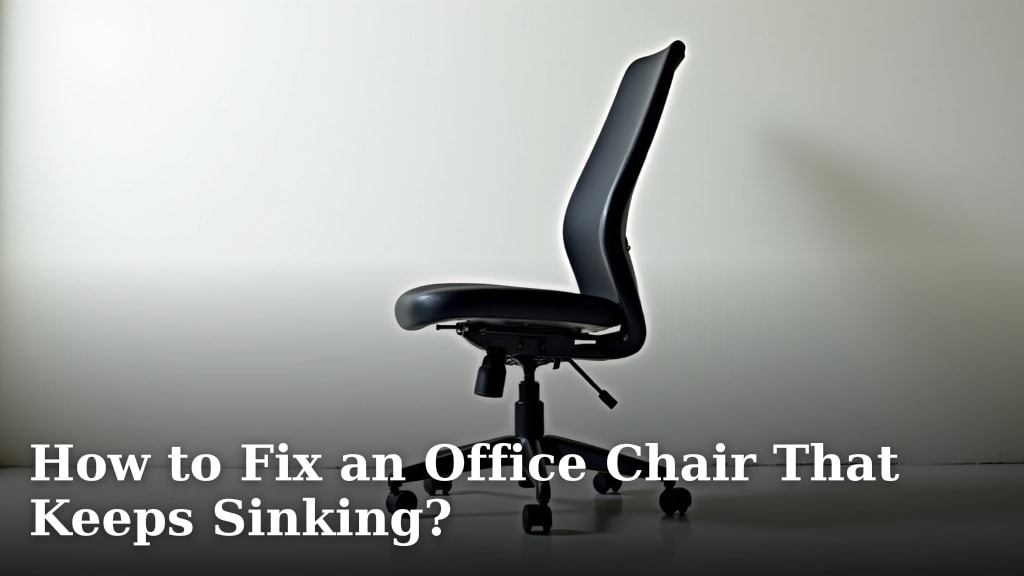
The easiest way to fix an office chair that keeps sinking is to bypass the faulty gas cylinder with a simple PVC pipe or hose clamp hack. This common problem occurs when the gas lift mechanism fails, causing your chair to slowly lower itself over time. Luckily, you can often fix your office chair that keeps sinking without replacing expensive parts.
A sinking office chair is incredibly frustrating and bad for your posture. We hate it when your chair slowly, silently drops you lower and lower. You might even feel like your chair has a mind of its own, constantly battling your ideal seating height. Don’t worry, we’re here to help you get your workstation comfortable again.
TL;DR:
- Sinking chairs are usually due to a bad gas lift.
- PVC pipe can stop an office chair from sinking.
- Hose clamps offer another quick fix.
- You can also repair or replace the gas cylinder.
Below, we’ll walk you through exactly how to stop your office chair from sinking using several straightforward methods. Let’s get your chair, and your productivity, back on track!
Getting Your Office Chair to Stop Sinking
There’s nothing more annoying than a good work session interrupted by a slowly dropping chair. Let’s explore how you can solve this problem and reclaim your ideal seating height.
Understanding Why Your Chair Sinks
At the heart of most sinking office chair problems is the gas lift cylinder. This component uses compressed gas to raise and lower your chair. Think of it like a shock absorber for your car seat, but designed for vertical movement.
How a Gas Lift Cylinder Works
Inside the cylinder, there’s a sealed chamber filled with nitrogen gas, along with a piston and a valve. When you release the lever, the valve opens, allowing gas to move, which then lets the chair go up or down. Over time, these seals can wear out. Tiny amounts of gas can escape, causing the lift to lose its pressure. This means it can no longer hold your weight at a set height.
So, your chair isn’t magically sinking because it dislikes you. It’s simply the gas cylinder failing to maintain pressure. This wear and tear is common, especially with frequent use or heavier individuals (Occupational Safety and Health Administration).
Quick Fixes for a Sinking Office Chair
You don’t always need to be a handyman to fix things. We’ve found several clever, temporary fixes that can stop your chair from sinking without replacing any parts. These are great if you need an immediate solution or want to delay a more involved repair.
The PVC Pipe Method: A Simple Stopper
The PVC pipe method is one of the most popular and effective temporary fixes. It essentially creates a physical barrier that prevents the gas lift from fully collapsing.
- What you need: A piece of PVC pipe (usually 1.5 inches in diameter), a tape measure, and a saw or pipe cutter.
- How it works: Elevate your chair to your desired height. Measure the exposed part of the gas cylinder. Cut your PVC pipe to this length. Then, carefully cut the PVC pipe lengthwise to create a C-shaped channel. Wrap this C-shaped pipe around the exposed cylinder. It will act as a sleeve, preventing the chair from going down past that point. We found this method to be incredibly stable.
This fix is especially helpful if you rarely adjust your chair height. It’s like putting a splint on a broken arm – it holds things in place temporarily.
The Hose Clamp Method: Tighten and Secure
Another clever trick involves using large hose clamps. This method is perhaps even simpler than the PVC pipe, though sometimes less aesthetically pleasing.
- What you need: Several large hose clamps (available at any hardware store), and a screwdriver to tighten them.
- How it works: Raise your chair to your preferred height. Find the exposed portion of the gas cylinder when the chair is elevated. Take one hose clamp and wrap it around the cylinder, just below where the chair connects to the base. Tighten it securely using your screwdriver. Add more clamps, one above the other, until you have a stack that effectively prevents the chair from slipping down. They create a physical stop for the cylinder.
This works by creating a collar that the gas cylinder can’t slip past. It’s a quick and dirty solution, but it gets the job done when you’re in a pinch.
Deciding on a Temporary Fix: Your Checklist
Not sure which quick fix is right for you? Consider these points:
- Do you need an immediate solution?
- How often do you adjust your chair height?
- Are you comfortable with a DIY approach?
- Is appearance a major concern?
- Do you have basic tools available?
If you answered “yes” to needing an immediate fix and “no” to frequent adjustments, these temporary solutions are perfect.
Repairing Your Sinking Office Chair
While temporary fixes are great, you might want a more permanent solution. This usually means repairing the gas lift itself. Don’t worry, it’s often simpler than it sounds!
The Gas Cylinder Replacement: A Permanent Solution
Replacing the gas cylinder is the most effective way to permanently fix a sinking office chair. This restores the chair to its original functionality.
- Step 1: Get the Right Cylinder: First, you’ll need to purchase a replacement gas cylinder. Measure the height of your current cylinder and its diameter. Many cylinders are standard, but double-check to ensure compatibility. You can often find these online or at office supply stores.
- Step 2: Removing the Old Cylinder: This can be the trickiest part. Turn your chair upside down. You’ll see the cylinder connecting the seat mechanism to the chair base. You might need a rubber mallet to gently tap the cylinder out of the chair base. Sometimes a pipe wrench can help grasp and twist the top part of the cylinder from the seat mechanism. Be patient; it might be stubborn!
- Step 3: Installing the New Cylinder: Once the old one is out, simply insert the new gas cylinder into the hole in the chair base. Then, place the seat mechanism onto the top of the new cylinder. Sit on the chair to secure it in place – your weight will help “lock” it.
We found that many people are surprised by how straightforward this process can be. It often takes less than 30 minutes once you have the right parts and tools.
When to Replace Versus Repair
When should you tough it out with a temporary fix, and when should you go for a full replacement? Here’s a quick comparison:
| Option | Pros | Cons | Best For |
|---|---|---|---|
| PVC Pipe/Hose Clamp | Quick, cheap, no special tools, immediate relief. | Bypasses adjustment, less aesthetic, temporary solution. | Infrequent adjustments, budget-conscious, urgent need. |
| Cylinder Replacement | Permanent fix, full adjustability restored, like-new chair. | Requires new part, some tools, minor effort. | Frequent adjusters, long-term use, desire for full function. |
Preventing Future Sinking Issues
While you can’t stop wear and tear completely, you can extend the life of your chair’s gas lift. We’ve seen that regular care makes a difference.
- Avoid sudden drops: Don’t drop into your chair heavily. Gentle seating can reduce stress on the mechanism.
- Don’t constantly adjust: Frequent, unnecessary adjustments wear out the seals faster. Find your height and stick with it.
- Clean the cylinder: Occasionally wipe down the exposed part of the cylinder to prevent dust and debris from entering the seals.
- Respect weight limits: Every chair has a maximum weight capacity. Exceeding this puts undue stress on the gas lift.
- Proper posture: Maintaining good posture reduces overall strain on your chair components, not just the gas lift (Mayo Clinic).
Treating your office chair with care can help you avoid another “sinking feeling” down the road.

Conclusion
Don’t let a sinking office chair ruin your workday or your posture. We’ve shown you how a simple gas lift failure is usually the culprit. Whether you choose a quick fix like the PVC pipe or hose clamp method, or a more permanent gas cylinder replacement, you have clear options. Think about your daily needs and how often you adjust your chair. Your comfort and productivity are too important to ignore this common problem. Take action today and get your chair back to the perfect height!
Frequently Asked Questions
Is it safe to use a sinking office chair?
While not immediately dangerous, a consistently sinking office chair can be bad for your ergonomics and posture. It forces you into an uncomfortable position, which can lead to back pain and fatigue over time. Fixing it protects your body.
How much does it cost to replace a gas cylinder?
The cost to replace a gas cylinder is usually quite affordable. You can often find replacement cylinders online or at office supply stores for around $20 to $40. This is significantly less expensive than buying a brand new chair.
Can I lubricate my gas lift to fix it?
Generally, no. A sinking gas lift means the internal seals have failed and gas is escaping. Lubrication won’t fix this internal pressure loss. It may temporarily make movement smoother, but it won’t restore the lift’s ability to hold height.
How long do office chair gas lifts typically last?
The lifespan of a gas lift varies widely based on quality and usage. A high-quality cylinder in a well-maintained chair can last for many years (5-10+). Cheaper chairs or heavy use might see the cylinder fail within 1-3 years.
Will putting weight on my office chair break the gas cylinder?
Exceeding your chair’s recommended weight limit consistently will certainly shorten the life of the gas cylinder. The extra stress strains the internal components and seals. Always try to match your weight to the chair’s capacity.