9 Best Mesh Office Chair with Adjustable Seat Depth (November 2026)
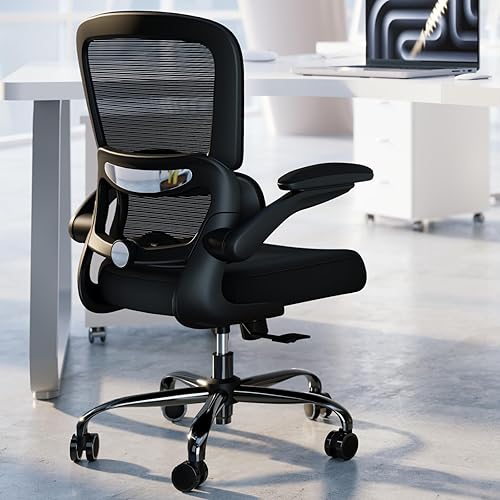
The best mesh office chairs with adjustable seat depth include the SIHOO M18 Ergonomic Office Chair for balanced ergonomic support, the Marsail Ergonomic Office Chair for multi-point adjustment, and the TRALT Office Chair for a firm seat-depth target.
On this page (5 sections)
The best mesh office chair with adjustable seat depth is the ProtoArc EC200 because its 5-position seat pan gives you 1.97 in of travel while the mesh back supports airflow. COLAMY is another strong match, while Marsail offers a longer 20 to 21.6 in range.
A sliding seat pan helps match the chair to your thigh length. It can reduce the chance of a seat edge pressing behind your knees, but the correct setting still depends on your body and desk height.
If you want a broader seat-depth comparison, see our Best Home Office Chair with Seat Depth Adjustment. For mesh options without this feature, compare our guide to the Best Mesh Office Chair.
Our picks at a glance
-
1
 Best for balanced ergonomic support
SIHOO M18 Ergonomic Office Chair
9.7/10 our score
See it on Amazon -
2

-
3
- 4
 Check it
ELABEST X100 Ergonomic Mesh Office Chair with
Best for maximum adjustment range - 5
 Check it
ProtoArc EC200 Ergonomic Office Chair with Adjustable
Best for true sliding seat depth - 6
 Check it
MOLENTS Ergonomic Office Chair
Best for a wide seat - 7
 Check it
COLAMY Office Chair for Long Hours
Best for easy side controls - 8
 Check it
BLISNEST Big and Tall Office Chair 700lbs
Best for very high weight capacity - 9
 Check it
Marsail Mesh Ergonomic Office Chair with Sliding
Best for precise leg-length fitting
The best mesh office chairs with adjustable seat depth
The best choice depends on whether you need confirmed sliding depth, a wider fixed seat, or more support adjustments around the back and arms. ProtoArc, COLAMY and Marsail are the clearest matches because their data confirms sliding seat depth.
Our score weighs specs, features and buyer feedback against the needs of someone shopping for a mesh office chair with adjustable seat depth.
SIHOO M18 Ergonomic Office Chair: Best for balanced ergonomic support
- Mesh back
- Adjustable headrest
- Adjustable lumbar support
- 2D armrests
- Suitable for people 5'6" to 6'2"
The SIHOO M18 combines a breathable mesh back with several support adjustments. Its stated height range makes it a strong general pick, although the data does not confirm sliding seat depth.
Pros
- Breathable mesh back
- Adjustable lumbar and headrest
- Suitable for a stated 5'6" to 6'2" height range
Cons
- Sliding seat depth is not confirmed
- Eight-step assembly required
SIHOO M18 is the strongest general ergonomic pick in this group. Its breathable mesh back works with adjustable lumbar support, seat height, headrest and back support, so you can tune more than one contact point.
The chair is suitable for people 5'6" to 6'2", and SIHOO states support up to 150 kg. That makes the stated height range useful when you are comparing the chair with your desk and leg length.
The M18 does not have confirmed sliding seat depth in the information. Choose it when its height, lumbar and headrest adjustments fit you, and choose a confirmed sliding model when thigh length is the main concern.
Marsail Ergonomic Office Chair: Best for multi-point adjustment
- High-back mesh
- 2D headrest
- 3D armrests
- 90° to 120° recline
- 330 lb capacity
Marsail gives you a high-back mesh design, adjustable lumbar support and 3D armrests. It suits buyers who need broad posture adjustment, but the title does not confirm sliding seat depth.
Pros
- Adjustable lumbar range
- 3D armrests
- High-back mesh design
Cons
- Sliding seat depth is not confirmed
- Assembly required
Marsail suits users who want several upper-body adjustments around a breathable high-back mesh frame. Its lumbar support moves 1.18 in forward and backward and 2.16 in up and down.
The 3D armrests move forward, backward and swivel, while the back reclines from 90° to 120°. A 3.14 in thick high-density foam seat and 330 lb capacity add support for long desk sessions.
This model does not confirm a sliding seat pan. Pick it for lumbar and arm adjustment, then compare its fixed fit with the ideal office chair seat depth before ordering.
TRALT Office Chair: Best for a firm seat-depth target
- 17.3 in seat depth
- 19.7 in seat width
- Adjustable lumbar depth
- Breathable mesh back
- 330 lb capacity
TRALT offers a stated 17.3 in seat depth and adjustable lumbar depth, making fit easier to judge before you buy. Its mesh back adds airflow, but the seat depth itself is not described as sliding.
Pros
- Stated 17.3 in seat depth
- Adjustable lumbar depth
- 330 lb capacity
Cons
- Seat depth adjustment is not confirmed
- No headrest
TRALT is a good option when you prefer a clear seat measurement before choosing. Its seat is 19.7 in wide and 17.3 in deep, with an adjustable lumbar mechanism that changes depth to match your lower back.
The seat uses high-resilience molded foam, and the mesh back promotes airflow. Its 17.7 to 21.7 in seat-height range is intended for users from about 5'4" to 6'2".
The seat depth itself is not confirmed as adjustable. Choose TRALT when the stated 17.3 in depth suits your leg length, or select ProtoArc or COLAMY for a sliding pan.
ELABEST X100 Ergonomic Mesh Office Chair with: Best for maximum adjustment range
- 5D flip-up arms
- 3D lumbar support
- 18 in extendable footrest
- 3-stage recline
- 18.3 to 23 in seat height
The X100 is the most adjustment-heavy option here, with 5D arms, 3D lumbar support and a footrest. Its data does not confirm a sliding seat pan, so check that detail if seat depth is your main need.
Pros
- 5D flip-up arms
- 3D lumbar support
- Footrest and 3-stage recline
Cons
- Sliding seat depth is not confirmed
- Large adjustment set may take longer to tune
ELABEST X100 is the most feature-heavy chair here. Its 5D flip-up arms adjust in several directions, while the 3D lumbar system, 3-stage recline and 18 in footrest support different work and rest positions.
The back uses ventilated mesh, and the chair has an 18.3 to 23 in seat-height range. ELABEST states a 300 lb capacity and tool-free assembly within 15 minutes.
The X100 does not confirm adjustable seat depth. It is better for buyers who value arm, lumbar, recline and footrest adjustment over a documented sliding seat.
ProtoArc EC200 Ergonomic Office Chair with Adjustable: Best for true sliding seat depth
- 5-position sliding seat depth
- 1.97 in seat-depth travel
- High-tension mesh back
- Adjustable lumbar
- Fits users 5'4" to 6'0"
ProtoArc is the clearest match for this roundup because its seat slides through 5 positions with 1.97 in of travel. The chair is designed for users 5'4" to 6'0" and under 220 lb.
Pros
- Confirmed sliding seat depth
- High-tension mesh back
- Adjustable lumbar height and depth
Cons
- Stated user range ends at 220 lb
- 20-minute assembly
ProtoArc EC200 is the best direct match because its 5-position sliding seat depth has 1.97 in of travel. That range lets you bring the seat closer or farther from the backrest while keeping the mesh back and lumbar support in place.
The chair is designed for users 5'4" to 6'0" and under 220 lb. Its lumbar support adjusts 2.36 in in height and 0.8 in in depth, giving you another way to match the chair to your lower back.
Four recline locks at 90°, 105°, 120° and 130° cover upright work, reading, calls and relaxation. Use our guide on How to Adjust Seat Depth on Office Chair? to set the pan after assembly.
MOLENTS Ergonomic Office Chair: Best for a wide seat
- 18.9 in seat depth
- 19.8 in seat width
- 3D armrests
- Adjustable lumbar
- 90° to 120° tilt
MOLENTS gives you a wide 19.8 in seat and a stated 18.9 in depth. It suits shoppers who need a larger fixed seat area, though the depth is not listed as adjustable.
Pros
- Wide seat
- Stated seat depth
- Adjustable lumbar and 3D armrests
Cons
- Sliding seat depth is not confirmed
- Longer seat may not suit shorter legs
MOLENTS suits users who need a wider seat more than a sliding pan. Its seat is 19.8 in wide and 18.9 in deep, with adjustable lumbar support and 3D armrests.
The breathable, high-elastic mesh back helps reduce heat buildup, while the 90° to 120° tilt range supports upright work and reclined breaks. The seat-height range is 19.5 to 23.3 in.
The 18.9 in depth is fixed in the information. Check that measurement against your thigh length before choosing it, especially if you are shorter.
COLAMY Office Chair for Long Hours: Best for easy side controls
- Sliding seat depth
- 4D armrests
- Thick padded lumbar support
- 300 lb capacity
- High-back mesh
COLAMY pairs a sliding seat pan with side-mounted wire controls and a padded lumbar cushion. It is a practical fit for users who want to adjust depth without reaching under the seat.
Pros
- Sliding seat depth
- 4D armrests
- Side-mounted controls
Cons
- Mid-back designation
- Plastic frame material
COLAMY is a strong choice for users who want a confirmed sliding pan and easy-to-reach controls. Its side-mounted wire controls adjust seat height and tilt, while the sliding seat depth changes the distance between the seat and backrest.
The chair also has 4D armrests, padded lumbar support and a mesh back. Its 300 lb capacity and high-back office-chair design suit longer work sessions.
COLAMY's mid-back designation may matter if you want head and neck support from a high back. Choose it for practical seat-depth adjustment and fingertip controls, or choose ProtoArc if you want a stated number of depth positions.
BLISNEST Big and Tall Office Chair 700lbs: Best for very high weight capacity
- 700 lb capacity
- 5.1 in thick W-shaped cushion
- Adjustable lumbar support
- 4D armrests
- Mesh back
BLISNEST is designed around a 700 lb capacity, a thick W-shaped cushion and a mesh back. Choose it for capacity and a larger seat concept, not for confirmed sliding depth.
Pros
- 700 lb capacity
- Thick memory-foam seat
- No assembly required
Cons
- Sliding seat depth is not confirmed
- Dimensions are not presented as a standard office-chair height format
BLISNEST is the capacity-focused option. It supports up to 700 lb and uses a 5.1 in thick W-shaped memory-foam cushion with 28 built-in spring pockets.
Its adjustable lumbar support moves up and down and forward and backward, while the 4D padded armrests support the arms and shoulders. The mesh back adds breathability to the larger chair design.
The seat depth is not confirmed as sliding. Choose BLISNEST when capacity and a thick cushion matter most, and measure your workspace carefully before placing this larger chair.
Marsail Mesh Ergonomic Office Chair with Sliding: Best for precise leg-length fitting
- 20 to 21.6 in sliding seat depth
- 6-level lumbar support
- 6D armrests
- 3D headrest
- 4-position recline
This Marsail gives you a precise 20 to 21.6 in sliding range, plus 6-level lumbar support and 6D armrests. Its longer depth range may suit taller users better than shorter users.
Pros
- Stated sliding range
- 6D armrests
- High-elastic mesh seat
Cons
- 20 in minimum depth may be long for shorter users
- Assembly required
The second Marsail is the best option for a longer, clearly stated sliding range. Its seat depth adjusts from 20 to 21.6 in, giving taller users more room to support their thighs.
The chair adds 6-level lumbar support, a 3D headrest and 6D armrests. Its high-elastic mesh seat has a curved front edge, and the back locks at 90°, 99°, 109° and 121°.
A 20 in minimum depth may be too long for some shorter users. Check your current chair's comfortable depth before choosing this model.
How should you choose adjustable seat depth?
Choose the ProtoArc EC200 if you want the clearest mix of sliding depth, mesh support and lumbar adjustment. Choose COLAMY if side controls and 4D arms matter, or Marsail if a 20 to 21.6 in range suits your longer legs.
Start by measuring the seat depth of a chair that already feels comfortable. Then compare the minimum and maximum settings, not just the chair's overall dimensions.
Your knees should stay clear of the front edge, and your back should remain supported when you sit normally. If you need a wider fixed seat, MOLENTS gives a stated 19.8 in width and 18.9 in depth.
Does a waterfall seat help with thigh pressure?
A waterfall front slopes down at the front edge to reduce a sharp contact point behind your knees. It can be useful when you sit for long periods, but the slope does not replace correct seat depth.
Read What Is a Waterfall Seat on an Office Chair? to compare front-edge shape with sliding adjustment. A chair can have useful seat depth without using the same front-edge design.
What else should you adjust after seat depth?
Set seat height after seat depth so your feet rest flat and your knees stay comfortable. Then position the lumbar support, armrests and recline tension around your normal typing posture.
Our guide to the Best Office Chair With Adjustable Seat Height helps if your desk height and chair height do not line up. Keep your monitor and keyboard close enough that you do not lean forward into the backrest.
Final verdict on mesh chairs with adjustable seat depth
The ProtoArc EC200 is the best mesh office chair with adjustable seat depth for most shoppers because its 5-position, 1.97 in sliding range directly addresses thigh length. Pick COLAMY for easy side controls, Marsail for a longer depth range, or MOLENTS for a wider fixed seat.
Our top 3 picks at a glance
-
1
Best for balanced ergonomic support
SIHOO M18 Ergonomic Office Chair
9.7/10 our score
See it on Amazon -
2
-
3
Frequently asked questions
What is the best mesh office chair with adjustable seat depth?
The ProtoArc EC200 is the clearest match because it has 5 seat-depth positions with 1.97 in of travel, an adjustable lumbar system and a high-tension mesh back. COLAMY and Marsail also confirm sliding seat depth, but their adjustment ranges and support layouts differ.
Why does adjustable seat depth matter in a mesh office chair?
Adjustable seat depth helps you support more of your thighs while keeping your back against the backrest. A seat that is too long can press behind your knees, while one that is too short can leave your thighs unsupported.
How do you adjust seat depth on an office chair?
Sit with your back against the backrest and slide the seat until it supports your thighs without pressing behind your knees. Keep a small gap behind your knees, then check that your feet rest flat and your lumbar support meets your lower back.
What is the ideal office chair seat depth?
The ideal seat depth leaves a small gap behind your knees while supporting most of your thighs. Your height, leg length and posture matter more than one universal number, so a sliding seat pan can be easier to fit than a fixed one.