
Can a Short Person Use a Standard Office Chair?
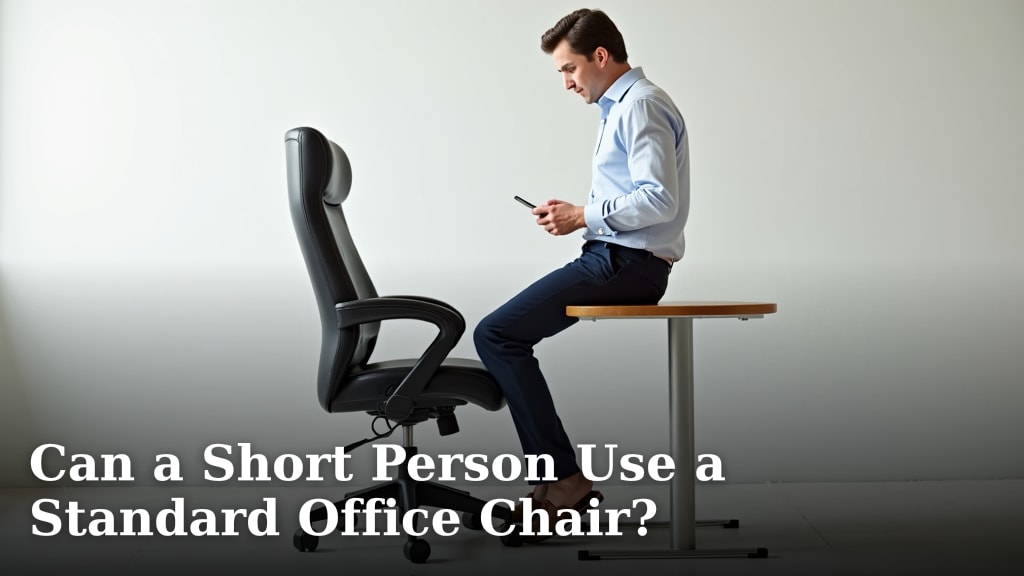
Yes, a short person can absolutely use a standard office chair, but it may require some adjustments to ensure comfort and proper ergonomics. While standard chairs are designed for the average user, many come with features like adjustable height, armrests, and lumbar support that can help shorter individuals find a good fit. You just need to know what to look for and how to use those adjustments.
Finding the right office chair is key for your health and productivity, especially if you don’t fit the “average” mold. We’ve researched common issues and found that a standard chair can work for shorter folks with the right knowledge. It’s all about making the chair work for your body, not the other way around. This can prevent common aches and pains.
- Standard office chairs can work for short people.
- Look for adjustable height and armrests.
- Proper adjustments prevent discomfort and back pain.
- A footrest might be necessary for perfect support.
- Consider chairs designed specifically for petite users if needed.
Let’s break down what makes a standard office chair work for shorter individuals, and what you can do to make it a perfect fit for you.
Making a Standard Office Chair Work for Shorter Individuals
So, you’re on the shorter side and wondering if that standard office chair will ever feel just right. The good news is, yes, it absolutely can. While most chairs are built with an “average” person in mind, a little know-how can help you tailor a standard chair to your body. We’ve found that with the right adjustments and maybe a small accessory or two, you can achieve a comfortable and supportive setup. It’s all about making the chair fit you.
Understanding the Core Ergonomic Principles
Before we dive into adjustments, let’s quickly touch on why ergonomics matters so much for shorter folks. Good ergonomics aims to reduce strain and improve posture. For shorter individuals, this often means ensuring your feet are flat on the floor and your knees are at a 90-degree angle. It also means your arms should be supported at a similar angle, allowing your shoulders to relax. When these points aren’t met, you can experience discomfort and even pain over time. We found that many common aches, like lower back pain or wrist strain, can be traced back to poor seating posture (Cleveland Clinic).
Key Adjustments on a Standard Office Chair
Most standard office chairs offer a few key adjustments. Mastering these is your first step to a comfortable workday. Let’s break down the most important ones for shorter users.
Seat Height: The Foundation of Good Posture
This is probably the most critical adjustment for anyone of shorter stature. Your goal is to have your feet flat on the floor with your knees bent at roughly a 90-degree angle. When you sit, your thighs should be roughly parallel to the floor. If the chair goes too low, your feet might not reach. If it doesn’t go low enough, your thighs might angle downwards, putting pressure on the back of your knees.
Many chairs have a pneumatic lever under the seat. Pull it up while seated to lower the chair, or pull it up while standing with minimal weight on the seat to raise it. We recommend adjusting this while you are sitting in the chair. Experiment until your feet are comfortably flat and your knees are at that ideal angle. If your feet still don’t quite reach, don’t worry; we have solutions for that later!
Armrest Adjustments: Supporting Your Shoulders
Properly adjusted armrests can take a load off your shoulders and neck. The ideal position is where your elbows can rest at about a 90-degree angle when your arms are relaxed at your sides. Your shoulders should feel level, not bunched up towards your ears.
Some armrests adjust up and down, some slide in and out, and others pivot. For shorter individuals, it’s often important that the armrests aren’t too high, forcing your shoulders up. If your chair’s armrests only go up, and they are too high even at their lowest setting, you might consider removing them. While not ideal, it’s better than having them cause strain. We found that some users with very short torsos find fixed armrests get in the way.
Backrest and Lumbar Support: The Spine’s Best Friend
The backrest should support the natural curve of your spine, especially the lower back (lumbar region). Many chairs have an adjustable lumbar support, which can often be moved up, down, or in and out.
For shorter users, ensure the lumbar support hits the curve in your lower back, not in the middle of your back. If your chair’s lumbar support is too high or doesn’t adjust enough, you might need to get creative. Some people use a rolled-up towel or a small cushion to achieve the right support. This provides a customized fit that the fixed design of the chair might not offer on its own.
Seat Depth Adjustment: A Crucial Detail
This feature isn’t on every standard chair, but if yours has it, it’s a game-changer for shorter legs. Seat depth adjustment allows you to slide the seat pan forward or backward. The goal is to have two to three fingers’ width between the back of your knees and the edge of the seat.
If the seat is too deep, it can cut off circulation to your legs or push you into an awkward, unsupported posture. If it’s too shallow, you won’t have enough thigh support. We found that this adjustment is often overlooked, but it’s incredibly important for ensuring proper leg and back alignment. If your chair lacks this, you might need to adjust your sitting posture slightly forward to avoid pressure on your knees.
When Standard Adjustments Aren’t Enough: Helpful Accessories
Sometimes, even with all the adjustments your chair offers, you might still feel like something is missing. This is where a few well-chosen accessories can make a big difference. Think of them as your ergonomic support squad!
The Humble Footrest: Your New Best Friend
If you’ve adjusted your chair to the lowest possible height, and your feet still don’t rest comfortably flat on the floor, a footrest is your solution. This isn’t just for comfort; it’s about proper posture. When your feet are unsupported, you might find yourself slouching or crossing your legs, which is bad for your back.
A good footrest allows you to achieve that 90-degree knee bend even if your chair can’t go low enough. Look for one that is sturdy and has an adjustable angle or height. Some even have a textured surface for a gentle foot massage. We found that even a small, stable footstool can work in a pinch! It helps maintain healthy circulation and prevents strain on your lower back by keeping your pelvis in a neutral position (CDC).
Seat Cushions and Back Supports: Customizing Your Comfort
While you aim for proper adjustments, sometimes a chair’s cushioning might be lacking, or the built-in lumbar support just isn’t hitting the right spot. Adding a seat cushion can sometimes help you sit a bit higher, allowing your feet to reach the floor better if your chair is only slightly too tall. However, be cautious: a cushion that’s too thick can make your seat too high or change your hip angle uncomfortably. Adding a seat cushion can sometimes help you sit a bit higher.
More commonly, a lumbar support pillow can be a lifesaver. These are often more adjustable than the built-in kind. You can position them exactly where you need them to support the natural curve of your lower back. We found that a good quality, firm pillow can make a standard chair feel custom-made for your spine.
Considering Chairs Designed for Petite Users
While we’ve focused on making standard chairs work, it’s worth noting that options exist for those who consistently struggle. Some manufacturers specifically design chairs for petite users. These often have a shorter seat depth, a lower minimum seat height, and a more compact backrest.
These chairs are built from the ground up to accommodate smaller frames. If you’ve tried all the adjustments and accessories on a standard chair and are still experiencing discomfort, researching chairs labeled for “petite” or “small users” might be your next best step. We found that while they can be an investment, they often provide superior ergonomic support for those who fall outside the average size range.
Quick Checklist for a Shorter User’s Chair Setup
Let’s recap what you should aim for to ensure your standard office chair is working for you:
- Feet Flat: Can you rest both feet flat on the floor or a footrest?
- Knee Angle: Are your knees bent at about 90 degrees?
- Thigh Position: Are your thighs roughly parallel to the floor?
- Seat Edge Clearance: Is there 2-3 fingers’ width between the back of your knees and the seat edge?
- Armrest Support: Do your elbows rest comfortably at about 90 degrees without shoulder strain?
- Lumbar Support: Does the chair’s backrest comfortably support the curve of your lower back?

Conclusion
You absolutely can find comfort and support in a standard office chair, even if you’re on the shorter side. It’s all about understanding your body’s needs and knowing how to use your chair’s adjustments effectively. We’ve seen that by focusing on seat height, armrest position, and lumbar support, you can create an ergonomic setup. Don’t forget that accessories like footrests can bridge any gaps. Your next step is to apply these tips to your current chair and see how much better your workday can feel.
Frequently Asked Questions
What if my feet still don’t touch the floor after lowering the chair all the way?
If your feet can’t reach the floor even at the lowest setting, a footrest is your best friend. This accessory helps you achieve the proper 90-degree knee bend, which is vital for good posture and circulation. Look for one that’s adjustable so you can find the perfect height.
Can armrests actually cause problems for shorter people?
Yes, they can if they’re set too high. If the lowest setting for your armrests still forces your shoulders to hunch up, it can lead to neck and shoulder pain. In such cases, we’ve found that removing the armrests is often a better solution than forcing yourself to use them.
My chair’s lumbar support doesn’t feel right. What can I do?
Built-in lumbar support isn’t always positioned perfectly for everyone. If yours feels too high or just doesn’t hit the curve of your lower back, try using a small rolled towel or a dedicated lumbar support pillow. You can adjust these to your exact needs for customized back support.
Is seat depth adjustment really that important for shorter individuals?
Absolutely. Seat depth adjustment lets you control how far the seat extends. For shorter legs, it’s key to ensure there’s 2-3 fingers’ width between the back of your knees and the seat edge. This prevents pressure on your legs and ensures proper back support.
When should I consider a chair specifically designed for petite users?
If you’ve tried all the adjustments and accessories on standard chairs and are still experiencing persistent discomfort or poor posture, it might be time to look at petite-specific chairs. These are designed with shorter seat depths and lower heights from the start, which can offer superior ergonomic benefits.
