
Can You Use a Footrest without a Special Desk?
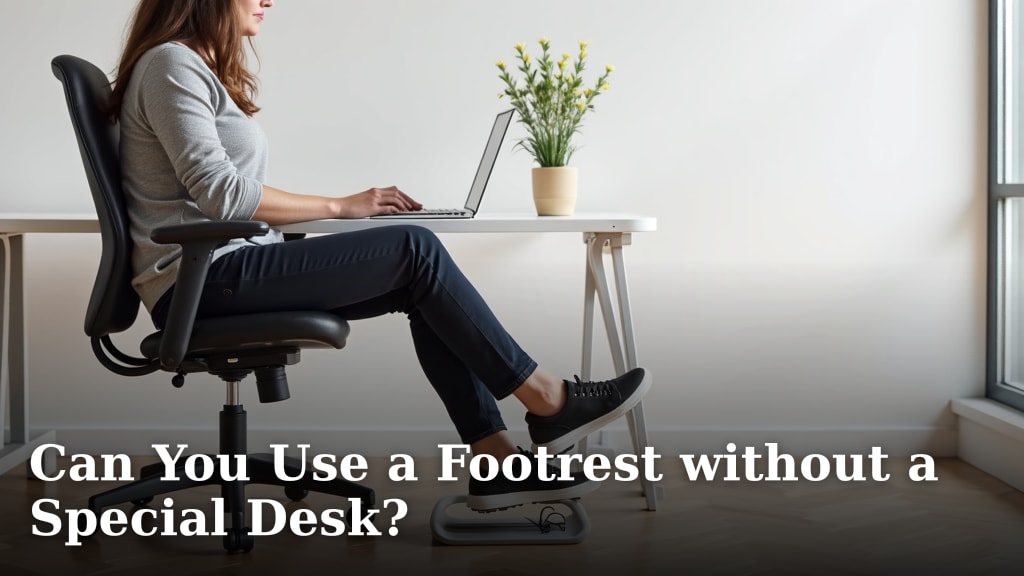
Yes, you can absolutely use a footrest without a special desk! In fact, a good footrest can be a fantastic addition to almost any workspace. It’s all about finding the right one to support your legs and improve your posture, even if you have a standard table or desk. You don’t need fancy equipment to get some ergonomic benefits.
Many people think footrests are only for adjustable desks. But research and user feedback show they offer comfort and better alignment for a wide range of users. It helps relieve pressure on your back and improves circulation, making long sitting periods more bearable. Think of it as a simple upgrade for your everyday setup.
- A footrest works with most desks, not just special ones.
- It helps improve posture and comfort while sitting.
- Look for one that fits your height and leg position.
- It’s an easy way to boost your workspace ergonomics.
Ready to find out how to pick the perfect footrest and make it work for you? Let’s walk through exactly what you need to know to get started.
Using a Footrest When You Don’t Have a Special Desk
Absolutely! You can definitely use a footrest even if your desk isn’t a fancy adjustable model. Think of your current desk or table as the perfect canvas. A footrest is like a helpful accessory that can make that canvas work much better for your body. You don’t need to buy a whole new setup to feel more comfortable. It’s all about how you position yourself and the tools you use.
Research and countless user experiences show that footrests offer real benefits for many people. They help with posture, blood flow, and reducing strain on your back and legs. It’s a simple yet effective way to improve your sitting experience, whether you’re at home or in the office.
Why a Footrest is More Than Just a Foot Holder
Many people see footrests as just a place to park their feet. But their purpose goes much deeper than that. When you sit for long periods, your legs and feet can get tired. They might hang awkwardly or put pressure on your lower back. A footrest helps to correct these issues and create a more balanced posture.
Improving Your Sitting Posture
When your feet can rest comfortably on a surface at the right height, your whole body tends to align better. Your knees will likely be at a 90-degree angle or slightly more. This position helps to take pressure off your spine. Your hamstrings also relax, which can prevent tightness. Proper posture means less strain on your muscles and joints throughout the day. Proper posture means less strain on your muscles and joints throughout the day.
Boosting Circulation and Comfort
Letting your feet hang can restrict blood flow. A footrest provides a surface to support your legs. This support can help improve circulation from your legs back to your heart. Many users report feeling less tired and experiencing fewer aches. It’s a small change that can make a big difference in your overall comfort level during a long workday.
Reducing Lower Back Pain
Research suggests that prolonged sitting, especially with poor posture, is linked to lower back pain (CDC). When your feet aren’t supported, you might lean forward or slouch. This can put extra stress on your lower back. A footrest encourages a more upright sitting position. It helps your back maintain its natural curve, which is key to reducing pain.
Choosing the Right Footrest for Your Non-Special Desk
The good news is, there are many types of footrests available. They are designed to work with all sorts of desk setups. You don’t need a height-adjustable desk to benefit. The trick is finding one that matches your needs and your current workspace.
Understanding Different Footrest Types
Footrests come in various styles. Some are simple, angled platforms. Others are designed with massage rollers or adjustable heights. Some even have a rocking feature to encourage movement.
- Adjustable Footrests: These are great because you can set the exact angle and height. This is ideal if you or others might use it, or if your needs change.
- Fixed-Angle Footrests: These offer a set incline. They are often simpler and more affordable.
- Massage Footrests: These have rollers or bumps to gently massage your feet while you work.
- Under-Desk Pedals: Some designs are like small bike pedals you can use while sitting.
When you’re looking, think about your workspace. Do you have a lot of legroom under your desk? What kind of flooring do you have? Some footrests have rubber feet to prevent slipping, which is important on hard floors. On carpet, you might want a footrest with a firmer base.
What to Look for in a Footrest
Here’s what we found to be important:
- Adjustability: If possible, choose one you can adjust. This lets you fine-tune the height and angle for your comfort.
- Surface Texture: You want a surface that offers a bit of grip. You don’t want your feet sliding off unexpectedly.
- Size and Shape: Make sure it’s large enough to comfortably rest your feet, but not so big it gets in the way.
- Stability: It should stay put. A wobbly footrest is more annoying than helpful.
- Material: Some are made of plastic, others of wood or metal. Consider durability and ease of cleaning.
Positioning Your Footrest Correctly
The best footrest setup is one where your feet are flat and comfortable. Your knees should be roughly at a 90-degree angle. Your feet should not be pressing against the bottom of your desk. You want enough space to move your feet slightly. If your desk is very low, you might need a lower footrest. If your chair is high, you might need a taller one.
Experiment with the distance. It should be close enough so you don’t have to stretch awkwardly. It should be far enough so your legs aren’t crammed. The goal is a relaxed and supported position.
Making Your Standard Desk Work with a Footrest
You might be wondering how a footrest fits into your existing setup. It’s simpler than you think. Your standard desk or table is just the surface you work on. The footrest addresses what happens below your knees.
The Importance of Chair Height
Your chair height plays a big role. You want to adjust your chair so your feet can rest naturally on the footrest. If your chair is too low, your feet might not reach the footrest comfortably. If it’s too high, you might feel like you’re perching. Aim for that 90-degree angle at your knees.
Using a Footrest with Different Desk Depths
Desk depth is usually not a major issue. Most standard desks have enough space underneath for a footrest. If you have a particularly shallow desk, you might choose a more compact footrest. This ensures it doesn’t interfere with your chair’s position or your leg movement.
Can You Use It With a Standard Office Chair?
Yes, absolutely! A standard office chair, even one without all the bells and whistles, works perfectly with a footrest. The footrest acts as an extension of your chair’s support system. It helps create the ergonomic triangle: feet on the footrest, thighs parallel to the floor, and a comfortable back support from your chair.
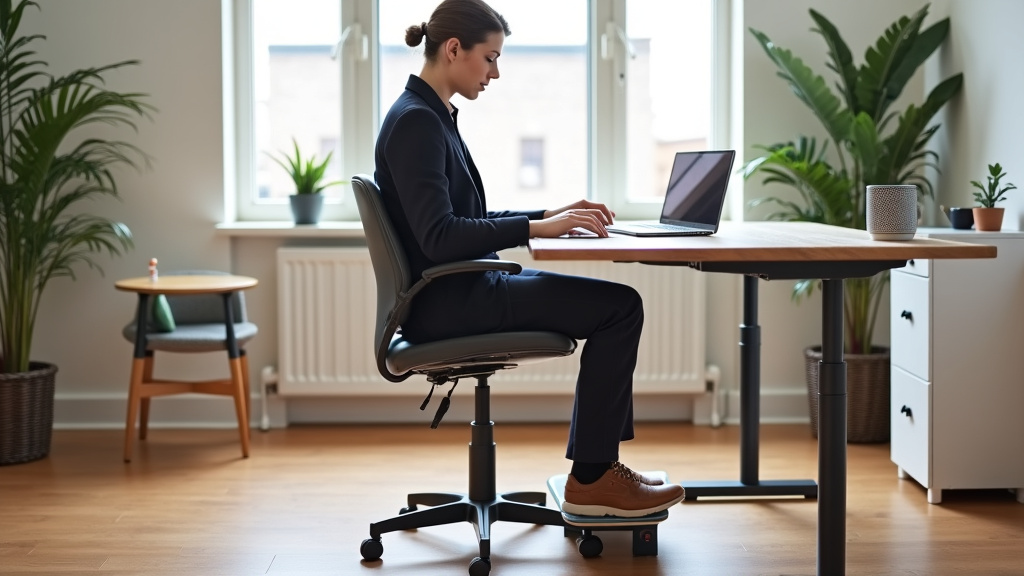
Common Questions About Footrests and Standard Desks
It’s natural to have questions when trying something new. We’ve gathered some common ones to help you out.
Will it get in the way?
A well-chosen footrest shouldn’t get in the way. The best ones are designed to fit neatly under a desk. You should still have room to move your legs and feet freely. If it feels cramped, it might be too big or positioned incorrectly. Many people find it actually improves their legroom by giving their feet a defined, comfortable space.
Is it awkward to use?
It can feel a little unusual at first, especially if you’re used to your feet flat on the floor. However, most users find they adapt very quickly. The comfort benefits usually outweigh any initial awkwardness. If it feels awkward, try adjusting the height or angle. Small changes can make a big difference.
Do I need a special mat under it?
Not usually. Most footrests have non-slip bottoms. If you have a very smooth floor or are concerned about scratching, you might use a thin mat or rug. However, for most standard setups, it’s not necessary. The footrest should stay in place on its own. Check the product description for its anti-slip features.
Quick Checklist for Footrest Success
Ready to make the leap? Here’s a quick rundown to ensure you get the most out of your footrest:
- Check Your Chair Height: Can you adjust your chair so your knees are at about 90 degrees?
- Measure Your Space: Ensure there’s enough room under your desk for the footrest and your feet.
- Consider the Angle: Think about what angle feels most comfortable for your legs. Adjustable is often best.
- Think About Surface: Will it be stable on your floor type (carpet, tile, wood)?
- Test It Out (if possible): If you can try one before buying, that’s ideal!
- Adjust and Adapt: Be prepared to make small adjustments to chair height and footrest position.
Conclusion
You’ve learned that a footrest is a simple yet powerful tool for comfort, even without a special desk. It’s all about improving your posture, boosting circulation, and reducing back strain.
By choosing the right footrest and positioning it correctly with your chair, you can transform your standard workspace. Don’t let the idea of a “special desk” hold you back. Take the first step towards a more comfortable workday today by measuring your space and considering an adjustable model that fits your needs.
Frequently Asked Questions
How do I know if my current chair height is correct for a footrest?
Your chair should allow your knees to bend at roughly a 90-degree angle when your feet are resting comfortably on the footrest. If your feet dangle or you have to strain to reach it, adjust your chair height accordingly. This ensures a relaxed and supported sitting position.
What if I have very little legroom under my desk?
Look for a more compact or minimalist footrest design. Some are quite narrow and might even have a steeper angle. You can also consider models that attach to the desk legs rather than sitting freely on the floor. This preserves more open space for your legs.
Can a footrest help with standing desk converters that don’t have built-in footrests?
Yes, absolutely! If your standing desk converter doesn’t have an integrated footrest or you find its built-in option uncomfortable, a separate footrest can be a great addition. It helps maintain good posture and comfort when you’re in the sitting position, complementing your converter.
Is a footrest useful if I only sit for short periods?
Even for shorter sitting durations, a footrest can offer comfort and support. It encourages better alignment from the start, preventing any minor discomfort from building up. For those who shift positions frequently, a stable footrest provides a consistent point of contact and support.
What’s the main difference between a footrest and just putting my feet on a box?
While a box might offer some height, a footrest is designed with ergonomics in mind. They typically have a specific angle to promote better leg and back alignment. Many also feature non-slip surfaces and are built for stability, offering a more comfortable and secure experience than an improvised solution.
