Why Are Office Chair Wheels Tilted?
Office chair wheels are tilted because each caster is designed to angle slightly as it rolls and turns. A wheel that leans sharply, drags, or sits unevenly may have a bent stem, damaged socket, or worn caster.
On this page (11 sections)
- Why are office chair wheels tilted during normal use?
- When does a tilted wheel signal a problem?
- How do you check an office chair wheel and socket?
- How do you fix an office chair wheel that is tilted?
- What if the chair base socket is damaged?
- How do you install replacement office chair wheels?
- What size office chair wheels do you need?
- Could a gas cylinder make the chair look uneven?
- How can you prevent office chair wheels from tilting?
- Does an Aeron chair use the same caster checks?
- What should you do about tilted office chair wheels?
Office chair wheels are tilted because caster housings are made to pivot and angle the wheels as the chair turns. A small, matching tilt is normal, but one wheel that leans sharply or drags can point to a bent stem, damaged socket, loose fitting, or worn caster.
The wheel itself is only one part of the caster. Each caster usually has a wheel, axle, housing, and stem that fits into a socket under the chair base.
When you push the chair, the housing swivels so the wheel follows the direction of travel.
Why are office chair wheels tilted during normal use?
Normal caster tilt helps the chair turn and roll smoothly. The wheel changes angle as the housing swivels, so it can follow a new direction instead of scraping sideways across the floor.
Check all 5 casters while the chair is on a flat surface. If they show a similar angle and the chair rolls normally, the tilt is probably part of the design.
A caster may look more tilted when the chair is turning, when your weight is shifted to one side, or when one wheel is resting at a different angle. Test the chair while unloaded, then roll it slowly in a straight line.
When does a tilted wheel signal a problem?
A wheel is more likely damaged when its angle is different from the others or it affects how the chair moves. Watch for dragging, scraping, wobbling, uneven height, sudden stops, or a chair that pulls to one side.
Lift the chair so the casters hang freely. Compare the affected wheel with a nearby caster and look at the stem, socket, housing, axle, and wheel tread.
Common warning signs include:
- The metal stem is visibly bent.
- The socket under the base is cracked or loose.
- The caster housing twists farther than the others.
- The wheel rubs against the housing.
- The wheel does not spin when you turn it by hand.
- The chair rocks because one caster sits higher or lower.
- The wheel falls out or will not stay seated.
Do not try to straighten a bent stem while it is installed. A forced repair can damage the socket or leave the caster unstable.
How do you check an office chair wheel and socket?
Turn the chair over and inspect the caster connection before buying replacement parts. Use a clear floor or a folded blanket to protect the chair and surface while you work.
First, remove hair, thread, tape, and other debris from the wheel and axle. Debris can make a healthy caster look crooked or prevent the wheel from turning freely.
Next, check whether the stem is centered in the socket. A push-in caster may have a grip ring that holds the stem in place.
If the stem is partly out, the wheel can sit at an odd angle even when the caster is undamaged.
Look for cracks around the chair base. A replacement wheel will not correct a damaged socket, and a loose socket can let a new caster lean again.
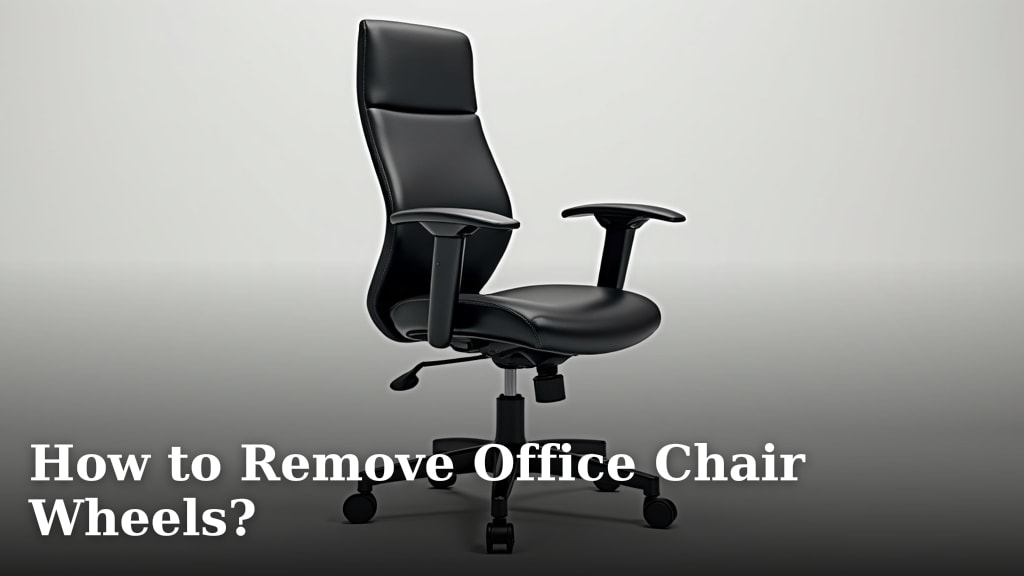
If you need to remove the caster, follow this guide to How to Remove Office Chair Wheels?. Keep the old caster nearby so you can compare its stem shape and connection with a replacement.
How do you fix an office chair wheel that is tilted?
Start with cleaning and reseating, then replace the caster if the stem, housing, or wheel is damaged. Work with the chair unloaded and keep your fingers away from the wheel while checking its movement.
Clean the axle and socket opening. Then press the stem fully into the socket if the connection is designed for push-in installation.
Do not hammer the caster into place or force a stem into a socket with a different shape.
If the wheel still leans, remove it and inspect the stem. A bent stem, cracked housing, or wheel that rubs the frame usually calls for a new caster.
Read How to Fix Office Chair Wheels Not Rolling? if the main symptom is resistance rather than a visible lean. That problem may come from debris, a seized axle, a damaged wheel, or floor contact.
Can a replacement caster solve the problem?
A replacement caster can solve the problem when the wheel or caster housing is damaged but the chair base and socket remain sound. Match the stem connection and check the available clearance before ordering.
The replacement should sit at the same height as the other casters. A different wheel size or stem length can change the chair's height, balance, or contact with the floor.
See Can You Fix a Broken Office Chair Wheel? for a repair-or-replace check. A wheel with a cracked frame is usually not worth forcing back into service.
What if the chair base socket is damaged?
Replace or repair the chair base when the socket is cracked, pulled out, or no longer holds the stem securely. A new caster cannot make a damaged mounting point safe.
Inspect the area around the socket for spreading cracks or deformation. Put the chair on a flat surface and check whether the base itself flexes when you apply light pressure.
Do not rely on glue to hold a load-bearing caster socket. The chair transfers your weight through the base, socket, stem, and wheel, so a weak connection can fail without much warning.
If the base is sound but the gas cylinder is sinking, that is a separate problem from a tilted caster. The Office Oasis replacement includes a chair cylinder, removal tool, gloves, and installation instructions for a sinking chair.
Its title gives a 1-1/8 in piston shaft, a 2 in column, Class 4 construction, and a universal-fit claim for desk and gaming chairs. The title also identifies a black pneumatic gas lift piston, while the specifications identify alloy steel, a 4.75 in extended length, and a 1-count package.
How do you install replacement office chair wheels?
Install a replacement caster only after checking that the stem matches the chair socket and the base is intact. Push-in casters should seat firmly without excessive force or side-to-side looseness.
Clean the socket before installation. Align the stem vertically, press the caster into place, and check that the grip ring or retaining feature is fully inside the socket.
After installing the wheel, turn the chair upright and sit down carefully. Roll it forward, backward, and sideways on the intended floor surface.
Stop if the caster pulls out, the chair rocks, or the wheel rubs.
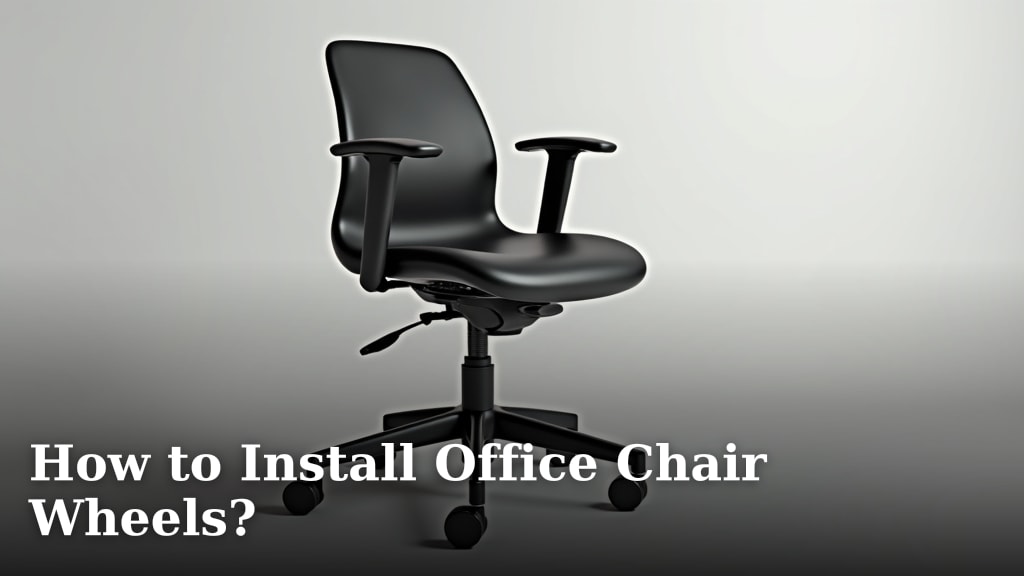
Use How to Install Office Chair Wheels? for the full installation sequence. If you are changing all the casters, compare the height and movement of the complete set before regular use.
What size office chair wheels do you need?
Choose a replacement by matching the stem, wheel size, and chair clearance, not by appearance alone. Measure the old caster and inspect how its stem enters the base.
Wheel diameter affects how the chair moves over seams and small floor transitions. A larger wheel may need more clearance under the chair base, while a smaller wheel can change the seat height.
The stem must also match. Push-in stems, threaded stems, and other mounting styles are not interchangeable just because the wheel looks similar.
Use What Size Office Chair Wheels Do I Need? before ordering. Measure the existing part and check the space around the wheel so the new caster does not hit the chair base.
Could a gas cylinder make the chair look uneven?
A failing gas cylinder can change the chair's height, but it usually does not cause one caster to tilt by itself. If the chair sinks evenly, inspect the cylinder; if one corner leans, inspect the caster and base first.
The Omyoffice 5.5 Inch Office Chair Gas Lift has a 5.5 in adjustable range. Its fully compressed height is 11.4 in and its fully expanded height is 16.9 in, so measure the chair before choosing a higher cylinder.
The title identifies a black replacement cylinder for office chairs. Its specifications identify alloy steel, a 2.36 x 2.36 x 12.59 in size, a 16 oz weight, and a 1-count component.
The Omyoffice Class 4 replacement also has a 5.5 in adjustable range, with a fully expanded height of 16.9 in and a minimum length of 11.4 in. Its title identifies a Class 4 piston and its data gives a 50 mm outer cylinder diameter and a 28 mm inner cylinder diameter.
Its data identifies alloy steel and aluminum in the frame material field, a black finish, a 16 oz weight, and a 350 lb maximum weight recommendation. The product description also states a 1,000 lb load-bearing claim, so confirm the intended limit before use.
How can you prevent office chair wheels from tilting?
Keep the casters clean, avoid side-loading the chair, and check the sockets when a wheel starts to wobble. Hair and thread around the axle can increase drag, while sharp sideways impacts can stress the stem and base.
Roll the chair over a suitable surface and avoid dropping it from a step or threshold. Do not drag it with the wheels locked against a wall or furniture leg.
If you use a mat, choose one that lies flat. A curled edge can catch a caster and put extra force on the wheel housing.
You can also read How to Lock Office Chair Wheels? if you need the chair to stay in place. Locking a wheel should not be used to hide a caster that is already bent or unstable.
Does an Aeron chair use the same caster checks?
The same basic inspection applies to a Herman Miller Aeron: check the wheel, stem, socket, and base for damage. The exact replacement part still needs to match the chair and caster connection.
Avoid assuming that a universal-fit claim guarantees a match for every chair. Compare dimensions, mounting style, and clearance before installing a replacement.
For operating and adjusting that chair, see how to use herman miller aeron. That guide is separate from diagnosing a caster that leans.
What should you do about tilted office chair wheels?
A small, even tilt is normal when the caster swivels. Clean and reseat a loose caster, replace a bent wheel or stem, and address a cracked socket or base before using the chair again.
Choose the Office Oasis cylinder when the chair is sinking and you want a removal tool included. Choose either Omyoffice cylinder when you need a 5.5 in adjustable replacement, after comparing the dimensions and weight limits with your chair.
If the chair still wobbles after a caster replacement, stop using it and inspect the base and cylinder. A stable wheel connection matters more than making every caster look perfectly straight.
Frequently asked questions
Why are office chair wheels tilted?
Office chair wheels are tilted because caster housings pivot and angle the wheels during movement. A small, even angle is normal.
A wheel that leans sharply, rubs the frame, or causes the chair to wobble may have a bent stem, damaged socket, loose fitting, or worn caster.
Should office chair wheels be straight?
Office chair wheels don't need to stay perfectly straight while the chair moves. Their caster housings turn to follow the direction of travel.
They should sit evenly when the chair is unloaded and roll without dragging, scraping, sudden stops, or a strong lean to one side.
Can a tilted office chair wheel be repaired?
A tilted office chair wheel can sometimes be repaired by removing debris, reseating the stem, or replacing the damaged caster. If the socket in the chair base is cracked or the metal stem is bent, replace the affected part instead of forcing it back into alignment.
How do I know if an office chair wheel is damaged?
Lift the chair and compare the caster with the others. Look for a bent stem, cracked socket, loose mounting point, uneven wheel spacing, damaged tread, or debris around the axle.
After reinstalling or replacing it, check that the chair rolls and sits level on the floor.