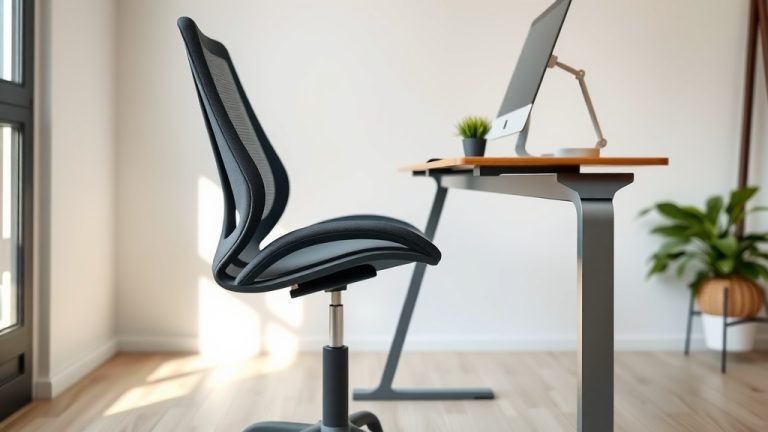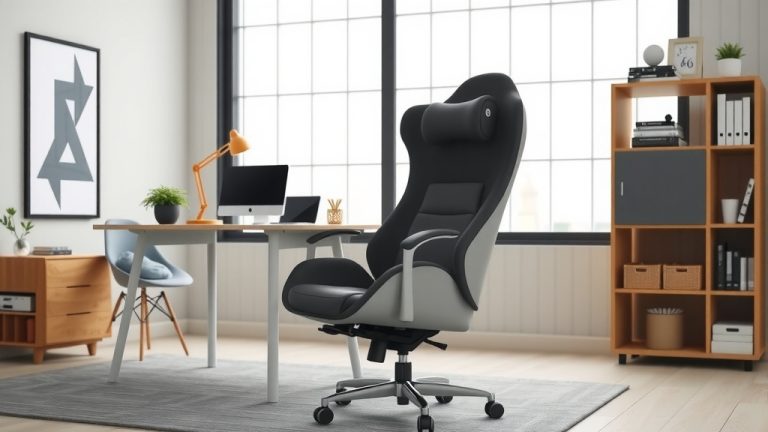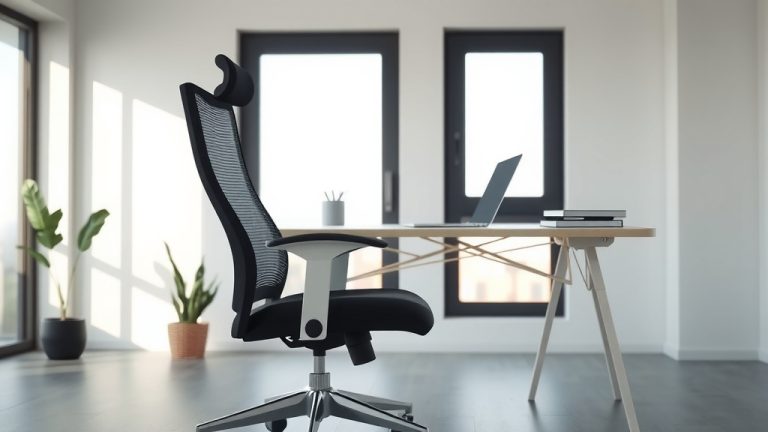
Can an Office Chair Cause Neck Pain?

Yes, an office chair can absolutely cause neck pain. Sitting in a chair that doesn’t fit you well, or using it incorrectly, often leads to poor posture. This puts extra stress on your neck and shoulders, creating discomfort over time.
When your chair doesn’t offer proper support, your body tries to compensate. This compensation often means your neck muscles work overtime, leading to stiffness and aches. We found that even a seemingly small issue with your setup can have a big impact on your comfort.
- Office chairs can cause neck pain.
- Poor posture is often the main reason.
- Incorrect chair setup strains neck muscles.
- Good ergonomics can prevent discomfort.
- Small changes make a big difference.
Ready to figure out what’s causing your neck pain and how to fix it? Let’s explore how your office chair might be part of the problem and what you can do.
How Your Office Chair Can Lead to Neck Pain
You might be wondering exactly how your chair causes that nagging pain. It often comes down to how your chair interacts with your body. We found that the main culprits are often poor support and incorrect adjustments.
Think of your spine as a delicate stack of blocks. If the base isn’t stable, the top blocks will wobble. Your office chair should provide that stable base for your entire spine, including your neck.
The Posture Problem: A Chain Reaction
Poor posture is the biggest link between your chair and neck pain. When your chair doesn’t encourage good alignment, your body compensates. This creates a chain reaction of stress on your muscles and joints.
Slouching forward is a common posture issue. This puts your head in front of your shoulders. We found this position significantly increases the load on your neck muscles (Journal of Physical Therapy Science).
Another common mistake is leaning back too far without proper lumbar support. This can also cause your head to jut forward. Your neck muscles then work harder just to keep your head upright.
The “Tech Neck” Phenomenon
Have you heard of “tech neck”? It’s not just from looking at phones. Staring at a computer screen that’s too low often forces your head down. This forward head posture is a major contributor to neck pain.
Each inch your head moves forward adds about 10 pounds of pressure to your neck. Imagine carrying a bowling ball on your neck all day. That’s what it feels like to your muscles.
Lack of Proper Support Features
Not all chairs are created equal. Some simply lack the features needed to support good posture. This can leave your neck vulnerable to strain.
A good office chair should support the natural curve of your spine. This includes your lower back, but also extends up to your neck and shoulders.
Missing or Misaligned Headrest
A headrest can be helpful, but only if it’s used correctly. If your chair lacks a headrest, your neck has no place to rest. Your muscles work continuously.
Many people misuse headrests. They might use them to slouch back or tilt their head at an awkward angle. The headrest should gently support your head and neck, not push it forward.
Inadequate Lumbar Support
While not directly for the neck, poor lumbar support has a ripple effect. If your lower back isn’t supported, your pelvis can tilt incorrectly. This pushes your whole spine out of alignment.
When your spine is misaligned, your neck has to work harder. It tries to balance your head on top of an unstable foundation. This extra effort leads to tension and pain.
Incorrect Chair Adjustments
Even the best ergonomic chair can cause pain if it’s not adjusted correctly. We often see people with high-end chairs still suffering. The problem isn’t the chair; it’s the setup.
Knowing how to adjust your chair is as important as having the right features. Think of it like driving a car; you wouldn’t drive with the seat too far back to reach the pedals.
Chair Height and Monitor Placement
Your chair height directly impacts your monitor view. If your chair is too low, you’ll crane your neck up. If it’s too high, you might hunch your shoulders.
Your monitor should be at eye level. The top of your screen should be even with your eyes. This keeps your head in a neutral, comfortable position (Occupational Safety and Health Administration).
Armrest Position Matters More Than You Think
Armrests are there to support your arms and shoulders. If they are too high, they can push your shoulders up. This creates tension in your neck and upper back.
If armrests are too low or too far apart, you’ll slump your shoulders. This also puts stress on your neck. Your armrests should allow your arms to rest comfortably at a 90-degree angle at your elbows.
How to Spot if Your Chair is the Culprit
Are you still wondering if your chair is the main problem? Look for these signs. Your body often gives clues that something is wrong with your setup.
Pay attention to when your pain appears. Does it get worse as the day goes on? Does it improve when you step away from your desk?
| Symptom Type | How It Feels | Likely Chair Connection |
|---|---|---|
| Neck Pain | Dull ache, stiffness, sharp pain | Poor posture, lack of head/neck support |
| Headaches | Tension headaches starting at the base of the skull | Forward head posture, muscle strain |
| Shoulder Pain | Soreness, tightness in upper shoulders | Hunched shoulders, incorrect armrest height |
| Arm/Hand Numbness | Tingling, numbness in hands or fingers | Nerve compression from poor posture/shoulder position |
| Fatigue | General tiredness, especially in upper body | Muscles working overtime to maintain posture |
Beyond the Chair: Other Contributing Factors
While your chair plays a huge role, it’s rarely the only factor. Your daily habits and other environmental elements also contribute to neck pain.
It’s important to look at the bigger picture. Are you taking breaks? How stressed are you? These questions can help you find solutions.
Workstation Ergonomics (Beyond Just the Chair)
Your entire workstation needs to be set up correctly. This includes your monitor, keyboard, and mouse. Each piece affects your posture.
Make sure your keyboard and mouse are close enough. You shouldn’t have to reach for them. This keeps your shoulders relaxed.
Lack of Movement and Breaks
Sitting for long periods is bad for your body, even in a perfect chair. Your muscles need movement to stay healthy and flexible.
We found that regular breaks can significantly reduce discomfort (Ergonomics Journal). Aim for a short break every 30-60 minutes.
During these breaks, stand up, stretch, and walk around. Even a few minutes can make a big difference for your neck.
Your Action Plan: Fixing the Problem
Don’t worry, you’re not doomed to neck pain forever. There are concrete steps you can take to alleviate and prevent it. Start with adjustments, then consider upgrades.
Small changes often yield big results. Be patient with yourself as you find what works best for your body.
Here’s a quick checklist to get you started:
- Adjust your chair height so your feet are flat on the floor.
- Ensure your monitor is at eye level, about an arm’s length away.
- Set armrests to support your elbows at a 90-degree angle.
- Make sure your lower back is supported by the chair’s lumbar support.
- Take short, regular breaks to stand and stretch every hour.
- Practice good posture even when away from your desk.
When to Consider a New Chair
Sometimes, no amount of adjustment can fix a truly unsupportive chair. If you’ve tried everything and still have pain, it might be time for an upgrade.
A new ergonomic chair is an investment in your health. It can prevent long-term pain and increase your productivity. Look for features like adjustability, good lumbar support, and a supportive headrest.

Conclusion
As you’ve seen, your office chair can definitely contribute to neck pain. It often boils down to poor posture, lack of support, or incorrect adjustments. We’ve explored how issues like “tech neck” and inadequate lumbar support can strain your muscles and lead to discomfort. Remember, your body is an interconnected system, and a problem in one area, like your chair setup, can create a ripple effect.
The good news is that you have the power to make changes. Start by assessing your current setup and making those crucial adjustments. Invest in your health, listen to your body, and don’t hesitate to upgrade your chair if needed. Your neck will thank you.
Frequently Asked Questions
Can a gaming chair help with neck pain?
A good gaming chair can help if it promotes proper posture and offers adequate adjustability. Look for features like adjustable lumbar support and a supportive headrest. Avoid chairs that encourage slouching or forward head posture.
How often should I get up from my office chair to prevent neck pain?
Aim to take short breaks every 30 to 60 minutes. Stand up, stretch your neck and shoulders, and walk around briefly. Regular movement prevents muscles from stiffening and reduces strain.
Is it better to have a headrest or not on an office chair for neck pain?
A headrest can be beneficial if used correctly. It should gently support the natural curve of your neck, not push your head forward. If it encourages poor posture, it might be better without one, or ensure it’s removed or properly adjusted.
Can stress make my chair-related neck pain worse?
Absolutely. Stress often causes people to tense their shoulder and neck muscles. This muscle tension can exacerbate existing neck pain caused by poor chair ergonomics. Practicing relaxation techniques can help.
What kind of pillow should I use if I have neck pain from my office chair?
When sleeping, use a pillow that supports the natural curve of your neck. It should keep your head in line with your spine, whether you sleep on your back or side. Avoid pillows that are too high or too flat.