Desk Organizers and Accessories: The Complete Buying Guide
The best desk organizers and accessories match the storage type to the supplies you reach for most. Start with a tray or pen holder for daily items, then add drawers, shelves or a docking station only for the clutter you actually have.
On this page (13 sections)
- What types of desk organizers and accessories should you compare first?
- How do you size desk organizers for a small desk?
- Which desk organizer tray works best for paper and daily supplies?
- How do pen holders and drawer organizers keep small supplies in order?
- What should you know about desk organizer accessories for cables and charging?
- Which desk storage organizers add drawers, shelves or vertical space?
- How do you choose a desk organizer for a dorm, gaming setup or office?
- What are the best desk organizers and accessories for everyday office supplies?
- How should you set up desk organizer office accessories for daily use?
- What desk organizer accessories make good gifts and how do you pick one?
- How do you compare desktop storage types for everyday office supplies and clutter?
- How we research desk organizers and accessories
- What should you buy first among desk organizers and accessories?
The best desk organizers and accessories are the ones that give each supply a set place without taking over your work surface. A tray, pen holder or docking station should hold what you use every day, while drawers and shelves hold the rest.
You do not need a full set on day one. Start with the items that pile up most, such as pens, paper, cables, keys or a phone.
Add storage in small steps so each piece earns its space.
The point is not to buy more by default. It is to stop the small pile that forms beside your keyboard each morning.
A single holder can fix that pile if it holds the right items.
Think about a typical day at your desk. You reach for a pen, set down a key, slide a phone into charge and stack a note.
Each of those acts needs a spot that is close.
Our score weighs specs, features and buyer feedback against what you are shopping for. We compared the types below by capacity, footprint, access and care.
Capacity tells you what fits inside a tray, cup, drawer or valet. Footprint tells you how much desk you give up to gain that space.
Access tells you how fast you can get an item back out.
Care matters more than it sounds. A resin piece, a wood valet and a plastic tray each need a different wipe and a different level of caution.
The right choice fits your habit.
Extra depth comes from where you place the piece, not only what it is. A pen holder near the notebook works better than one across the desk.
A docking station near the door works better than one hidden behind books.
Start small, use one piece for a week and notice what still lands in the wrong place. That gap will point to the next type you actually need.
What types of desk organizers and accessories should you compare first?
Compare organizers by how you reach the items, not by looks alone. Visible storage suits daily supplies, while hidden storage suits backups and private items.
A tray keeps paper and small tools in view. A pen holder keeps writing tools upright and easy to grab.
A drawer unit keeps clutter out of sight but slows access.
Shelves and risers add height when desk space is tight. Docking stations group a phone, keys, wallet and watch in one valet spot.
Cable tools keep cords off the surface.
You can mix types if each one has a clear job. One tray for paper, one holder for pens and one drawer for backups is easier to use than one large unit with mixed compartments.
If you want a matched group, read our guide to the best desk organizers and accessories set. A set can save guesswork when the pieces are sized to work together.
How do you size desk organizers for a small desk?
Size the organizer to the clear space you have left after your keyboard, monitor and notebook are placed. Measure width, depth and height before you buy.
A small desk needs a low profile and a narrow footprint. Tall shelves can block light or crowd a monitor.
Deep trays can push your notebook out of reach.
Check the height too. A 7 in organizer may fit under a shelf, but a 10 in unit may not.
Leave room for your hands to place and remove items.
Our best desk organizer for small desk picks focus on compact shapes. Our best small desk organizer tray guide helps when paper is your main clutter.
For desk drawers, measure the drawer inside rather than the desk size. A mini drawer organizer for desk can split one drawer into small zones for clips, batteries and tools.
Which desk organizer tray works best for paper and daily supplies?
A desk organizer tray works best when it matches the paper or supply you actually stack. Letter paper, notebooks and folders need different widths and heights.
Open trays give fast access and let you see what is on top. Stacking trays add capacity without adding footprint.
Drawers in a tray unit hide loose items while keeping them close.
A low tray suits a shared desk because it does not block your view. A taller tray suits a single desk where you want more layers for papers in progress.
Our best desk organizer tray roundup compares shapes for paper use. For a paper only setup, see the best desk organizer paper tray picks.
If files are the problem, a vertical file section may suit you better than a flat tray. Our best desk organizer for files guide covers that different shape.
Keep one tray for incoming paper and one for work in progress. That simple split stops a single tray from becoming a pile you never sort.
How do pen holders and drawer organizers keep small supplies in order?
Pen holders work best for writing tools you grab without thinking. A deep holder keeps pens upright, sorted by type and ready to use.
Small supplies need smaller zones. Clips, pins, tape and batteries get lost in one big cup or drawer.
Dividers and small drawers give each item a home.
Our best desk organizer for pens guide focuses on cups and holders for writing tools. Our best desk drawer organizers guide covers inserts for drawers.
Pick a holder with fewer divisions if you use many pens. Pick one with more zones if you use a few pens plus scissors, rulers and sticky notes.
A drawer organizer suits items you use weekly but do not want to see every day. It also keeps a desk looking calm when guests or video calls are part of your routine.
Depth matters in a pen holder because tall tools need support. A shallow cup lets long pens lean and fall.
A deeper cup keeps them upright and easier to pull out one by one.
Width matters too. A narrow holder suits a small desk and a few daily tools.
A wider holder suits markers, rulers and scissors without forcing you to cram them in.
For drawers, measure the inside space before you choose an insert. Note the width, depth and height of the drawer itself.
An insert that is too tall will stop the drawer from closing.
Group small items by type rather than by size. Keep clips with pins, tape with scissors and batteries with chargers.
That grouping makes the drawer faster to search.
Set up the main holder where your hand lands naturally. Keep backup pens in a drawer so the main cup does not overflow.
Empty and dust both spots on a regular schedule.
If you share a desk, clear sightlines matter. A low holder will not block your view of a monitor or another person.
A closed drawer keeps shared space looking tidy between uses.
What should you know about desk organizer accessories for cables and charging?
Cable and charging accessories work best when you plan the cord path before you place the organizer. A tray that fights your cable will not stay tidy for long.
Route each cable to its device once, then leave slack for movement. Keep plugs where you can reach them without moving the whole desk setup.
Our best desk organizer with charging station guide covers units that combine storage and charging. Our best cable management box guide covers boxes that hide power strips and plugs.
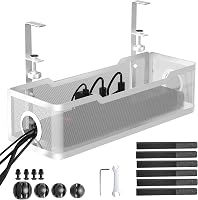
For cords under the desk, a tray can lift them off the floor and reduce tangles. Our best under desk cable management tray guide explains that setup.
A phone stand helps when you read, record or follow a list while you work. Our best desk organizer with phone stand picks show that combined shape.
Do not store a phone in a closed drawer if you need alerts from it. Put charging items where you can see the screen and reach the cable.
Which desk storage organizers add drawers, shelves or vertical space?
Drawers and shelves work best when your desk surface is already full but your supplies still need homes. They use vertical space or drawer space instead of more desk area.
A drawer unit hides supplies and keeps the top clear. A shelf adds a second level for books, boxes or a printer.
A riser lifts a monitor and creates storage below it.
Our best desk storage organizer with drawers guide covers drawer units for the desk top. Our best wooden desk organizer with drawers guide covers wood styles with drawer storage.
A shelf suits items you use less often, such as reference books or spare boxes. Our best desk organizer shelf guide helps you compare that shape.
If you need storage below the desk, an under desk drawer or tray may free the top. Our best under desk drawer guide covers that option.
Vertical storage only helps if you can reach the items without stacking them out of sight. Keep daily supplies at eye or hand level and backups higher or lower.
How do you choose a desk organizer for a dorm, gaming setup or office?
Choose by the work you do at the desk and the space you share. A dorm desk, a gaming desk and a professional office desk have different needs.
A dorm desk is often short and shared with sleep and study space. Compact trays, hanging pockets and small drawers work well there.
Our best dorm desk organizer guide covers those tight spaces.
A gaming setup needs room for a monitor, keyboard, mouse and headset. Low trays and under desk storage keep the main surface clear.
Our best gaming desk organizer guide covers that layout.
A hanging organizer suits a desk near a wall or shelf where surface space is scarce. Our best hanging desk organizer guide covers that wall based shape.
Your chair and desk height also matter. If your chair is wrong for your desk, storage will not fix the discomfort.
Compare our Best Desk Chair for Home Office guide and our Best Office Chair For Home Office guide before you add tall storage.
What are the best desk organizers and accessories for everyday office supplies?
The picks below cover four common needs: pens, phone and pocket items, a drawer for valuables, and a simpler wood valet. Each one solves a different clutter spot, so choose by the items you carry.
Choices & Change Vintage Typewriter Pencil Holder for Desk
This resin typewriter holder suits writers and vintage fans who want a pen holder with character. It holds 30 or more pens, pencils and markers in one deep compartment.
The stated footprint is compact for a desk, but the resin build is heavy at 0.67 kg. That weight helps it stay put when you pull pens out through the day.
It has one compartment, so it works best for a single type of supply. Mixed items such as clips and tape will need a drawer or tray beside it.
Buy it for a personal desk where decor matters as much as storage. Skip it if you need divided zones or a low, plain holder for shared space.
TESLYAR Wood Phone Docking Station for Men
This wood docking station suits a desk or nightstand where a phone, wallet, keys, glasses and watch land together. TESLYAR says the slot fits most smartphones, even with a case.
It measures 10 x 6 x 7.3 inches and needs about 5 minutes to assemble. The maker says a screwdriver is included, and cables are not included.
The top bar holds a watch or smartwatch, and a tray holds keys, earbuds and rings. That layout helps you leave with nothing forgotten.
Choose it when pocket clutter is your main problem. Skip it if you need a closed drawer for cash, cards or private items.
TESLYAR Wood Phone Docking Station with Drawer
This version adds a felt lined drawer below the same valet top. TESLYAR says the drawer has a divider and a magnetic latch for cash and cards.
The footprint is 10.4 x 5.5 inches, with a height of 9.9 inches. Screws and a screwdriver are included for assembly.
Hidden slots suit your own phone cable and Apple Watch charger. The maker says self adhesive silicone pads help keep the base steady when you open the drawer.
Choose it if you want phone docking plus private drawer storage in one piece. Skip it if your desk cannot spare the taller height.
Iswabard Gifts for Men Wood Phone Docking
This pine wood docking station is a simpler valet for phone, wallet, glasses, watch and keys. It lists 7 compartments and a maximum weight recommendation of 15 pounds.
Iswabard says 2 screws connect the board where glasses sit, and instructions are included. The natural pine grain will vary from piece to piece.
It suits a nightstand, entryway or office desk where you want one landing spot. It does not add a drawer, so small items stay visible.
Choose it for a straightforward wood valet at a simple layout. Skip it if you need a drawer or a dedicated Apple Watch charger slot.
How should you set up desk organizer office accessories for daily use?
Set up accessories by frequency of use, with daily items closest to you. That order keeps the desk fast to use and stop to tidy.
Put pens, notebook and phone within arm's reach. Put paper trays where you can drop sheets without standing up.
Put backups in a drawer or on a higher shelf.
Use labels for drawers and boxes that you open less often. Our best desk organizer labels guide helps you keep those zones clear.
Empty one spot at a time and notice what returns to the wrong place. That habit shows which organizer is missing rather than which one you need to buy next.
A printer stand can lift a printer and add storage below it. Our best printer stand for home office guide covers that shared setup.
For paper records, a filing cabinet may suit you better than a desk tray. Our best filing cabinets guide covers larger storage, plus how to use a filing cabinet and are file cabinets fireproof if safety is a concern.
What desk organizer accessories make good gifts and how do you pick one?
Pick a gift organizer by the recipient's daily habit, not by the occasion alone. A writer, a man who loses keys and a student all need different shapes.
The typewriter pen holder suits writers, teachers and vintage lovers. The wood docking stations suit men who empty pockets onto a desk or nightstand each night.
Our best desk organizer gifts guide helps you match the gift to the person. Check the size before you give it, since a large valet may not fit a small desk.
A gift should arrive ready to use or give. The typewriter holder comes in a white box, and the TESLYAR stations come in a rustic style gift box.
Ask what they carry every day before you choose. If they carry a phone, wallet and keys, a docking station helps.
If they carry pens and notebooks, a pen holder helps more.
Think about the room it will live in as well. A writer may want a holder that also looks good on a shelf.
A man may want a valet that fits a nightstand without crowding a lamp.
Avoid a gift that needs a whole new system to make sense. The best organizer gift solves one clear pile on day one.
That makes it useful, not just decorative.
How do you compare desktop storage types for everyday office supplies and clutter?
Compare desktop storage types by capacity, access, footprint and care. Those four checks show whether a piece will help or just add another object.
Capacity means what fits inside, not how tall the unit looks. A deep pen holder can hold more than a wide, shallow tray.
A drawer can hold more than an open valet.
Access means how fast you reach an item. Open trays and holders are fastest.
Drawers and closed boxes are slower but tidier.
Footprint means the desk area you give up. Measure the unit in place with your keyboard and notebook.
Leave space for your hands and for cables.
Care is simple for most types. Wipe resin and wood with a dry or slightly damp cloth, and empty trays and drawers to reset the zones.
Avoid soaking wood or resin pieces.
When you compare the best desk organizers and accessories, choose one type at a time and test it in your daily routine. Keep the type that holds what you reach for most, and pass on the rest.
How we research desk organizers and accessories
We compared specs, dimensions, materials and features across the picks above. We looked at what each organizer holds, how it is assembled and what is included.
We did not test these products hands on. Claims about fit, capacity and materials come from the brands and the product details we checked.
Buyers often mention sturdiness, size and ease of assembly in reviews. We used those patterns only where they match the stated specs.
We checked the stated footprint for each pick against a small desk and a nightstand. We also noted height, because a tall unit can crowd a shelf or a lamp.
We looked at material and finish for care purposes. Resin and wood need different handling, so we noted what each maker says about the build.
We checked what is in the box for assembly items. Screws, a screwdriver, instructions and gift packaging affect how ready a piece is to use or give.
We kept the comparison to facts that affect daily use. Capacity, access, included parts and dimensions matter more than vague style claims.
Where a spec was unclear, we did not fill the gap with a guess. A conservative note is better than a claim we cannot support.
What should you buy first among desk organizers and accessories?
Buy the organizer for your most common clutter first. That order gives you a tidy desk faster than buying a full set at once.
If pens pile up, start with a pen holder. If pocket items pile up, start with a docking station.
If paper piles up, start with a tray.
Add a drawer or shelf only when the first piece shows a clear gap. That gap tells you which storage type fits your desk.
Check the related guides above for the exact shape you need next. Each guide narrows the choice by size, use and storage style.
Give the first piece a full week in place. Notice what you still reach for, what you never use and what still ends up on the surface.
If paper is the gap, add a tray for incoming sheets. If small tools are the gap, add a drawer insert.
If cables are the gap, add a charging or cable solution.
Keep the second purchase tied to a real habit. That keeps the desk functional and stops storage from turning into another pile.
Measure before you add height. A shelf or drawer unit should not block light, crowd a monitor or make your chair space tight.
Buy in order, test in place and keep what earns its space. That simple order will do more for a tidy desk than a full set bought at once.
Frequently asked questions
What are the best desk organizers and accessories for a small desk?
A compact tray, pen holder or small drawer unit works best on a small desk. Measure the clear surface first and choose one organizer for daily supplies instead of several large pieces.
What is the difference between a desk organizer tray and a drawer organizer?
A tray keeps items visible on top of the desk for quick access. A drawer organizer hides supplies inside a drawer for a cleaner look, but you need to open the drawer to reach them.
How do I choose desk organizer accessories for office supplies?
Group supplies by how often you use them. Keep daily pens, notes and charging items within reach, and store backup supplies in drawers, shelves or a separate storage space.
Are wooden desk organizers practical for daily use?
Wooden organizers suit desks where appearance matters and the items are light. Check the dimensions and slots for your phone, wallet, keys or watch before you buy.