How to Correct Rounded Shoulders from Desk Work?
On this page (5 sections)
Yes, you can correct rounded shoulders caused by desk work with consistent exercises and posture adjustments. These changes help to strengthen your upper back and open up your chest. It takes time and effort, but the results are worth it for better posture and less discomfort.
Spending hours at a computer often leads to muscles in your chest and front of your shoulders tightening up. This pulls your shoulders forward, creating that rounded look. We found that by focusing on stretching tight muscles and activating weaker ones, you can reverse this common issue.
TL;DR:
- Desk work often causes rounded shoulders.
- Focus on stretching your chest.
- Strengthen your upper back muscles.
- Improve your posture throughout the day. Improving your posture throughout the day is key, and the right computer chair can aid posture correction.
- Consistency is key for lasting results.
Let’s walk through the best ways to fix those rounded shoulders and start feeling better in your body.
Let’s talk about those rounded shoulders. You know the ones – the result of leaning into your screen for hours. It’s a common problem, but the good news is, you can absolutely work to correct them. We’ve gathered effective strategies to help you stand taller and feel more comfortable.
Fixing Forward-Leaning Shoulders from Your Desk Setup
Your daily grind at the computer can unknowingly train your body into a hunched-over posture. This happens because your chest muscles get tight. They pull your shoulders forward. Your upper back muscles often get weak. This imbalance is the main culprit. We found that by targeting both issues, you can make real progress. It’s about creating balance again.
Understanding the “Desk Slouch”
Think of your body like a well-balanced system. When one part pulls too hard, the rest has to adjust. In this case, your chest and the front of your shoulders become like overstretched rubber bands. They pull your shoulder blades inward and downward. This forces your upper back to round out. We found that many people don’t even realize how much their posture is changing. It becomes the norm.
The Muscle Imbalance Explained
Your chest muscles (like the pectorals) are often short and tight. They dominate. Meanwhile, the muscles between your shoulder blades (like the rhomboids and trapezius) become weak. They aren’t strong enough to pull your shoulders back into a neutral position. Many experts say this imbalance is the primary driver of rounded shoulders (American Physical Therapy Association).
Setting Up Your Workspace for Success
Before we even get to exercises, let’s look at your desk. Is it helping or hurting? A few simple adjustments can make a big difference. We found that small changes can prevent a lot of future pain.
Ergonomic Basics You Can Do Now
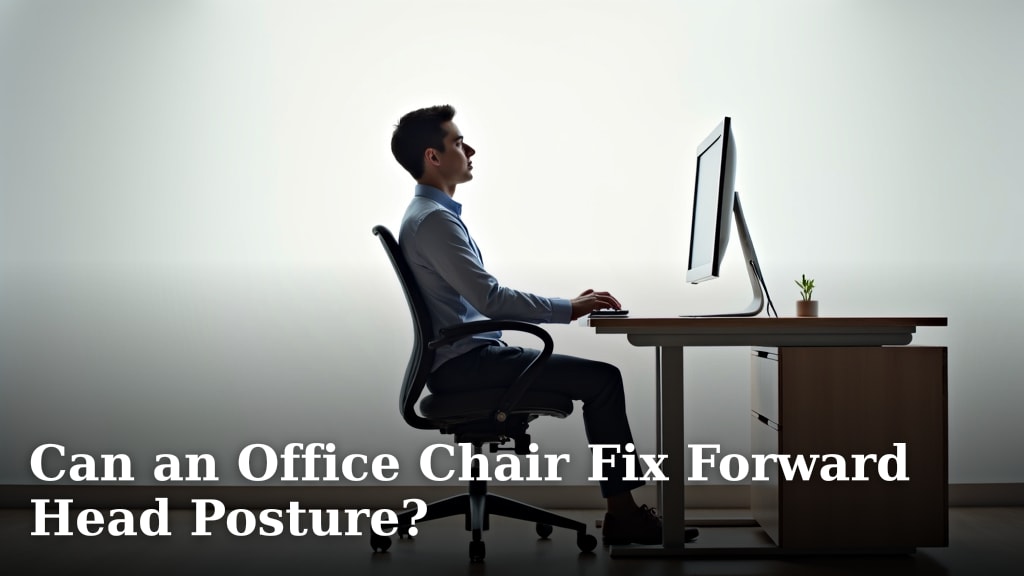
Your monitor should be at eye level. This stops you from craning your neck down. Your keyboard and mouse should be close. Your elbows should be bent at about 90 degrees. Your feet should be flat on the floor or a footrest. This helps maintain a neutral spine alignment. We found that even using a stack of books can raise your monitor if needed.
The Importance of Chair Support
Your chair should support your lower back. This is called lumbar support. It helps maintain the natural curve of your spine. If your chair doesn’t have good support, a small rolled-up towel or a cushion can help. We found that many office chairs can be adjusted. Take a moment to explore your chair’s features. Your chair should provide good lumbar support; our guide to the best desk chairs for lower back pain explains why.
Exercises to Reverse Rounded Shoulders
Now for the active part! These exercises focus on stretching the tight muscles and strengthening the weak ones. Consistency is your best friend here. Aim to do these regularly. We found that a little bit each day adds up significantly.
Stretching Out Your Tight Chest Muscles
We need to open up that chest. Tight chest muscles are like a vice grip, pulling you forward. Releasing this tension is key. We found that gentle stretching can provide immediate relief.
The Doorway Chest Stretch
Stand in a doorway. Place your forearms on the doorframe. Your elbows should be slightly below shoulder height. Step forward gently until you feel a stretch across your chest. Hold for 20-30 seconds. Breathe deeply. Repeat 2-3 times. We found this is a simple yet effective way to counter chest tightness.
Wall Angels
Stand with your back against a wall. Your feet should be a few inches away. Try to keep your lower back, upper back, and head touching the wall. Bend your knees slightly. Raise your arms out to the sides and bend your elbows to 90 degrees, like a goalpost. Slide your arms up the wall as high as you can while keeping your back, arms, and wrists against the wall. Slowly slide them back down. This is surprisingly challenging! We found this exercise helps with both mobility and posture.
Strengthening Your Upper Back Muscles
This is where we build the support system. Stronger upper back muscles will act like a natural corset, pulling your shoulders back into place. We found that focusing on these muscles is critical for long-term improvement.
Scapular Retractions (Shoulder Blade Squeezes)
Sit or stand tall. Imagine you are trying to squeeze a pencil between your shoulder blades. Gently pull your shoulder blades together. Hold for 5 seconds. Then relax. Make sure you are not shrugging your shoulders up. This is a subtle movement, but very powerful. We found that doing 10-15 repetitions throughout the day can make a big difference.
Band Pull-Aparts
Hold a resistance band with an overhand grip. Your hands should be about shoulder-width apart. Keep your arms mostly straight in front of you, with a slight bend in the elbows. Keeping your arms at chest height, pull the band apart, squeezing your shoulder blades together. Slowly return to the starting position. Aim for 10-15 repetitions. We found that starting with a lighter band is best to ensure proper form.
Rowing Variations (with bands or light weights)
You can do seated rows with a resistance band or perform dumbbell rows. For seated rows, anchor the band in front of you. Sit with your legs extended. Pull the band towards your torso, squeezing your shoulder blades. For dumbbell rows, hinge at your hips with a flat back. Let the weight hang. Pull the dumbbell up towards your chest, squeezing your shoulder blades. Lower with control. We found that focusing on the squeeze between your shoulder blades is more important than the weight lifted.
Improving Your Posture Throughout the Day
Exercise is great, but what about all those hours you’re not exercising? You need to be mindful of your posture constantly. We found that developing better habits is the glue that holds everything together.
The “String Pulling You Up” Visualization
Imagine a string attached to the crown of your head. This string is gently pulling you upwards. Your spine should feel elongated. Your shoulders should be relaxed and back. Your chin should be slightly tucked. We found that this simple mental image can help you correct your posture in real-time.
Set Posture Reminders
Your phone or computer can be your friend here. Set hourly reminders to check your posture. Simply stand up, do a quick stretch, and resettle into a better position. We found that even a small reminder can help retrain your brain and body.
Take Frequent Breaks
Don’t stay locked in one position for too long. Get up and move every 30-60 minutes. Walk around, stretch, or just look out a window. This breaks up the static posture and allows your muscles to reset. The benefits of movement are well-documented for overall health and posture (Centers for Disease Control and Prevention).

Your Rounded Shoulder Correction Checklist
Ready to put this into action? Here’s a quick checklist to keep you on track:
- Adjust your workspace for better ergonomics.
- Perform doorway chest stretches daily.
- Do shoulder blade squeezes throughout the day.
- Incorporate band pull-aparts 3-4 times a week.
- Set hourly reminders to check and correct your posture.
- Take short movement breaks every hour.
It takes time and effort, but correcting rounded shoulders is entirely achievable. By combining ergonomic adjustments, targeted exercises, and mindful posture habits, you can stand taller and feel the difference.
Conclusion
You’ve learned how to tackle those rounded shoulders from desk work. Remember, it’s about creating balance. You’ll stretch your chest and strengthen your upper back. Small ergonomic tweaks and regular posture checks make a big difference. It takes consistent effort, but you can achieve better posture and comfort. Start by setting up your workspace mindfully and integrating just one new exercise this week. You’ve got this!
Frequently Asked Questions
How long does it take to correct rounded shoulders?
Correcting rounded shoulders is a gradual process. You’ll likely start noticing improvements in a few weeks with consistent effort. However, significant changes and long-term correction can take several months. Patience and regular practice are key to seeing lasting results.
Can I correct rounded shoulders without exercises?
While exercises are highly effective, you can make progress with posture awareness and ergonomic adjustments alone. Regularly checking your posture and adjusting your workspace helps prevent further rounding. However, adding strengthening and stretching exercises will speed up the correction process significantly.
Are rounded shoulders permanent?
Rounded shoulders are generally not permanent, especially when caused by lifestyle habits like desk work. With dedicated effort in stretching tight muscles, strengthening weak ones, and improving your daily posture, you can reverse this tendency. It requires ongoing commitment to maintain good posture.
What’s the best exercise for rounded shoulders?
There isn’t one single “best” exercise, as a combination is most effective. However, exercises that focus on squeezing your shoulder blades together, like scapular retractions and band pull-aparts, are extremely beneficial. These directly target the weak upper back muscles responsible for pulling your shoulders back.
Should I see a doctor or physical therapist for rounded shoulders?
If your rounded shoulders are causing significant pain, stiffness, or you suspect an underlying medical condition, it’s wise to consult a doctor or physical therapist. They can diagnose the issue accurately and provide personalized treatment plans tailored to your specific needs.