What Is a Waterfall Seat on an Office Chair?
A waterfall seat has a rounded front edge that slopes downward instead of ending in a hard corner. This shape can reduce pressure behind your thighs when the chair fits your leg length.
On this page (11 sections)
- How does a waterfall seat work?
- Why does the front edge matter?
- What is the right way to sit on a waterfall seat?
- Does seat depth change how the waterfall edge feels?
- Which office chairs here have useful seat-fit features?
- How can you tell if a waterfall seat fits?
- Is a waterfall seat useful for shorter users?
- Is a waterfall seat useful for taller users?
- Should you choose a waterfall seat or a boxed edge?
- What is the best way to compare waterfall office chairs?
- What is a waterfall seat on an office chair worth choosing?
A waterfall seat on an office chair has a rounded front edge that slopes downward toward your knees. The design helps spread the transition between the seat cushion and your legs, which may reduce pressure behind the thighs when the chair is the right depth.
The edge is called “waterfall” because it curves down from the main seat surface. It is a chair-fit feature, not a complete ergonomic system by itself.
Seat height, seat depth, back support, and foot position still decide whether the chair feels suitable.
How does a waterfall seat work?
A waterfall seat replaces a sharp front corner with a rounded, downward-sloping edge. Your thighs meet the cushion gradually instead of pressing against a flat vertical edge.
That shape may suit people who notice pressure behind their knees during long desk sessions. It can also help when you prefer a softer transition at the front of the seat.
The curve does not make every chair fit every body. If the seat is too deep, the waterfall edge may still reach too far behind your knees.
If the seat is too short, your thighs may lack enough support.
Why does the front edge matter?
The front edge matters because it is where the seat meets the underside of your legs. A hard or raised edge can feel more noticeable when your seat depth, chair height, or leg length does not match.
A rounded edge may reduce that concentrated contact. You should still be able to sit back against the backrest without the front edge pressing into your knees.
The best office chair with a waterfall edge is not automatically the best chair for you. Compare the edge with the full seat dimensions and the adjustments you can make.
What is the right way to sit on a waterfall seat?
Sit with your hips toward the back of the cushion and let your back meet the backrest. Keep both feet supported, then adjust the chair so your knees stay near a right angle without the seat pushing into them.
Aim for about 2–4 fingers of space behind your knees. This gap is a practical fit check, not a fixed rule for every body.
If your feet dangle, lower the chair only if your desk still works with that position. Otherwise, a footrest may help support your feet while you keep the seat at a workable height.
Does seat depth change how the waterfall edge feels?
Yes. Seat depth changes where the rounded edge lands on your legs.
A deep seat can place even a well-shaped edge too close to the backs of your knees.
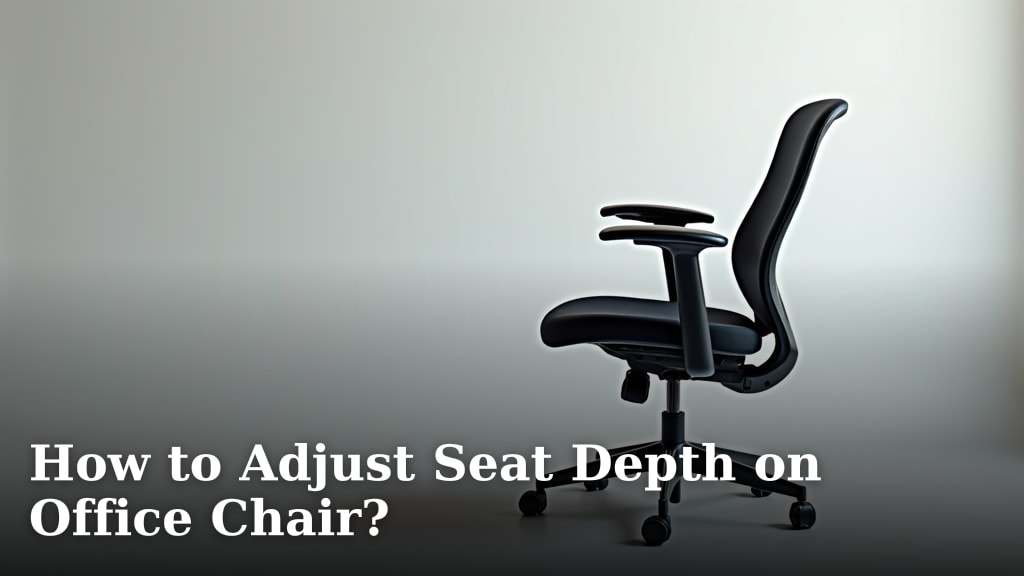
If you cannot sit back without the edge pressing into your thighs, look for a shorter seat or a chair with seat-depth adjustment. Our guide to How to Adjust Seat Depth on Office Chair? explains the basic fit checks.
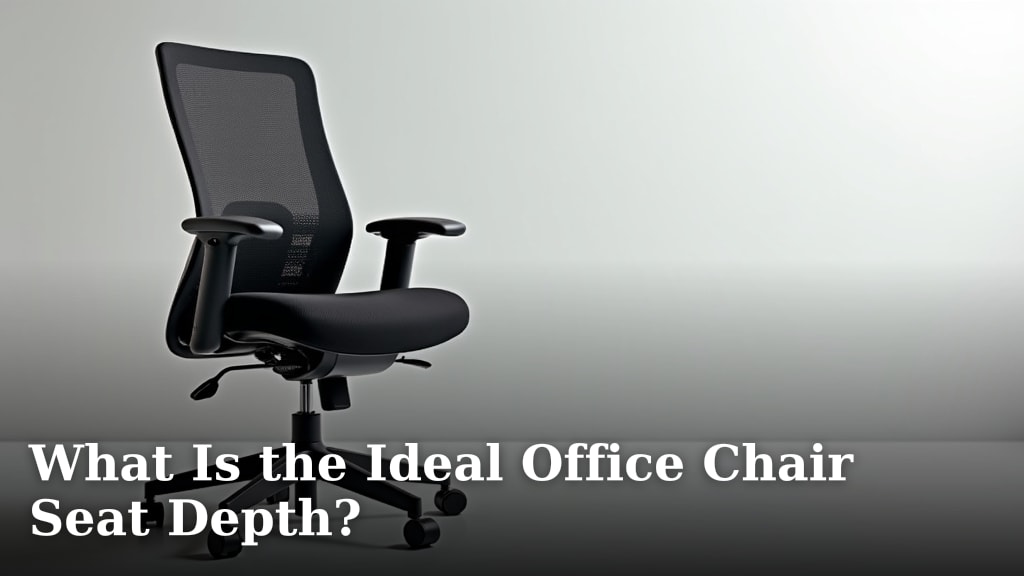
For a broader size guide, see What Is the Ideal Office Chair Seat Depth?. The useful measurement is the distance from the backrest area to the front edge, not just the overall chair depth.
Which chair features should you check with a waterfall edge?
Check seat depth, seat height, cushion shape, back support, and armrest position together. A waterfall edge can help at the front of the seat, but it cannot correct a backrest that sits too far away or armrests that prevent you from getting close to the desk.
An adjustable seat height can help you place your feet and knees more comfortably. Compare Best Office Chair With Adjustable Seat Height if height adjustment is your main concern.
A waterfall edge also does not tell you whether the cushion is firm or soft. If you are comparing cushion materials, Is Gel Seat Better Than Foam for Office Chair? covers a separate seat-comfort question.
Which office chairs here have useful seat-fit features?
The three chairs below offer different combinations of seat shape, body-size guidance, and adjustment. They are included because those details help you compare how a waterfall-style front edge may work in daily desk use.
SIHOO M18 Ergonomic Office Chair
The SIHOO M18 is designed for people 5 ft 6 in to 6 ft 2 in and includes seat-height adjustment, headrest adjustment, lumbar support, and back-support adjustment. Its breathable mesh back and sponge fill give you different materials at the back and seat.
The chair has a 20.47 in backrest width, a swivel base, adjustable recliner function, and 2D armrests. SIHOO lists support up to 150 kg and describes assembly in 8 steps.
Choose it when multiple adjustment points matter more than a clearly stated waterfall-edge seat. Check the front edge and seat depth before ordering if pressure behind your knees is your main concern.
GABRYLLY Ergonomic Office Chair
The GABRYLLY chair has a wide cushion with a waterfall edge, which makes its seat shape directly relevant to this question. Its seat measures 20.5 in wide by 20 in deep, and the chair is recommended for users about 5 ft 2 in to 6 ft 1 in.
It also has a mesh seat, mesh back, adjustable headrest, flip-up arms, and a 90–120° recline range. The arms can fold upward by 45°, which may help you move the chair under a desk when it is not in use.
Choose it when the waterfall edge and wide seat are your first priorities. Measure your available desk space and compare your leg length with the recommended height range before you decide.
Marsail Ergonomic Office Chair
The Marsail chair combines a high-back mesh design with adjustable lumbar support, a 2D headrest, a 90–120° recline range, and 3D armrests. Its seat uses 3.14 in thick high-density foam and has a wider seat for a larger load-bearing area.
Its lumbar support adjusts 1.18 in forward and backward and 2.16 in up and down. The rounded armrests can also flip up, while the mesh back is designed to promote airflow.
Marsail identifies the cushion as having a boxed edge rather than a waterfall edge. Choose it when lumbar and armrest adjustment matter more than a sloping front seat.
How can you tell if a waterfall seat fits?
A waterfall seat fits when you can sit back, keep your feet supported, and feel no sharp pressure behind your knees. The front edge should support your thighs without reaching into the bend of your legs.
Use this quick check:
- Sit with your hips toward the backrest.
- Keep your feet flat on the floor or on a suitable footrest.
- Check for a small gap behind both knees.
- Make sure the front edge does not press into one thigh more than the other.
- Adjust seat height and depth before judging the cushion.
If the seat feels too deep, changing the chair height alone may not solve the problem. Your knees can rise or your feet can lose support while the front edge still stays too close.
Is a waterfall seat useful for shorter users?
A waterfall seat can be useful for shorter users, but seat depth is usually the deciding factor. A rounded edge cannot make a deep seat shorter.
Look for a seat that lets you sit fully back while keeping a small space behind your knees. A shorter seat, sliding seat pan, or seat-depth adjustment may be more useful than the edge shape alone.
The GABRYLLY chair is listed for users about 5 ft 2 in to 6 ft 1 in and has a 20 in deep seat. The SIHOO M18 is listed for users 5 ft 6 in to 6 ft 2 in, so the stated height ranges point to different intended fits.
Is a waterfall seat useful for taller users?
A waterfall seat can suit taller users when the cushion is deep enough to support the thighs without forcing the knees against the front edge. A very short seat may leave too much of the thighs unsupported.
Taller users should compare seat depth, backrest position, and chair height. A chair with more adjustments may be easier to fit than one with the right edge shape but limited controls.
The SIHOO M18 is listed for users 5 ft 6 in to 6 ft 2 in. Marsail provides adjustable lumbar, headrest, backrest, and armrest features, but the chair information here does not state a user-height range.
Should you choose a waterfall seat or a boxed edge?
Choose a waterfall seat if you want a sloping front edge that may reduce concentrated pressure behind your thighs. Choose a boxed edge if its cushion, depth, and adjustment range fit your body better.
The GABRYLLY chair has a waterfall edge. The Marsail chair has a boxed edge and a 3.14 in thick high-density foam seat, so the two designs give you a clear shape comparison.
Neither edge style wins for every user. Your sitting position, leg length, chair height, and preferred cushion feel matter more than the name of the edge alone.
What is the best way to compare waterfall office chairs?
Start with the seat depth and your knee clearance, then check the edge shape. After that, compare height adjustment, lumbar movement, armrest position, backrest support, and the stated user-height range.
For a focused comparison, see Best Office Chairs with Waterfall Seats. If you need a broader chair search with adjustable seat pans, use Best Home Office Chair with Seat Depth Adjustment.
The GABRYLLY is the clearest match for a stated waterfall edge. The SIHOO M18 suits users in its stated height range who want several support adjustments, while the Marsail suits readers who value adjustable lumbar and 3D armrests with a boxed-edge foam seat.
What is a waterfall seat on an office chair worth choosing?
A waterfall seat is worth choosing when its rounded edge leaves your knees clear while the cushion supports your thighs. Treat the edge as one part of chair fit, not as proof that the entire chair will feel comfortable.
Pick the GABRYLLY if the waterfall edge and 20 in seat depth are central to your search. Pick the SIHOO M18 if its stated height range and support adjustments fit you.
Pick the Marsail if adjustable lumbar, 3D armrests, and a thick foam cushion matter more than a waterfall edge.
Frequently asked questions
What is a waterfall seat on an office chair?
A waterfall seat has a rounded front edge that slopes down toward your knees. Instead of pressing into the underside of your thighs like a sharp seat edge can, the curve leaves a gentler transition.
It works best when the chair also supports your back and leaves space behind your knees.
Is a waterfall seat better for your legs?
A waterfall seat may feel better for your legs because its rounded edge can reduce concentrated pressure behind the thighs. It does not fix poor seat depth or an incorrect chair height.
Your feet should rest on the floor, and the seat should end a short distance before your knees.
How much space should be behind your knees?
Leave about 2–4 fingers of space between the front edge of the seat and the back of your knees. This gives your legs room without making the seat too short to support your thighs.
Adjust the seat depth if the chair offers that control.
Do all ergonomic office chairs have waterfall seats?
No. Ergonomic office chairs use different seat shapes and materials.
Some have a clear rounded waterfall edge, while others use a boxed edge or a flatter cushion.
Check the seat profile, depth, and front-edge shape together instead of assuming that every ergonomic chair has the same design.