8 Best Left Handed Mice (November 2026)
The best left handed mice include the エレコム(ELECOM) ELECOM EX-G Left Handed Trackball Mouse for precise cursor control, the エレコム(ELECOM) ELECOM EX-G Left Handed Thumb Control for wireless trackball work, and the Logitech Left Handed Lift Vertical Ergonomic Wireless for small to medium left hands.
On this page (4 sections)
The best left handed mouse for most desk users is the ELECOM EX-G Left Handed Trackball Mouse because its thumb trackball, 6 buttons and switchable DPI cut broad hand movement. It suits long sessions selecting text, switching windows and scrolling documents.
Left-handed users need more than a right-handed mouse moved to the left side. A dedicated design puts the thumb rest, buttons and grip where the left hand can rest naturally without twisting.
Fit matters beyond the left-handed label alone. Buttons should sit under your fingers, the grip should support your palm, and scrolling should work without shifting your hand.
This roundup compares dedicated left-handed, vertical and trackball models. We checked features, dimensions, connection types and hand-size guidance to help match a model to your desk and hand.
Scores weigh specs, features and buyer feedback. They are a guide to comparison, not a promise that one shape will suit every hand or task.
A trackball changes pointing. You roll the ball with your thumb while your hand stays in place, which suits crowded desks and small movements.
A vertical mouse changes how your hand rests. Its raised handshake angle differs from a flat mouse and may suit people who prefer that position for office work.
Connection choice shapes daily use. A 2.4 GHz USB receiver is simple to set up, while Bluetooth can save a laptop port.
Rechargeable power removes disposable batteries. AA power is easy to replace away from home, which can suit travel or shared workstations.
DPI changes pointer speed. A lower setting gives more control for careful selection, while a higher setting travels farther for the same hand motion.
Start at a middle DPI setting and adjust after real use. Also check battery needs, hand-size guidance and system compatibility.
For a wider look at desk pointing devices, read our guide to an ergonomic keyboard and mouse. If gaming is the priority, compare our best left handed gaming mouse picks.
Check dimensions against your current mouse before ordering. That step can prevent many fit problems and returns.
Our picks at a glance
-
1
 Best for precise cursor control
エレコム(ELECOM) ELECOM EX-G Left Handed Trackball Mouse
9.7/10 our score
See it on Amazon -
2
 Best for wireless trackball work
エレコム(ELECOM) ELECOM EX-G Left Handed Thumb Control
9.6/10 our score
See it on Amazon -
3
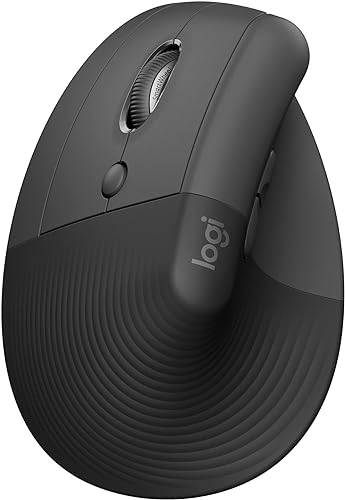 Best for small to medium left hands
Logitech Left Handed Lift Vertical Ergonomic Wireless
9.5/10 our score
See it on Amazon
The best left handed mice for different work styles
The best left handed mouse depends on how you move the pointer and how your hand rests. ELECOM leads for trackball control, Logitech leads for a small to medium vertical fit, and Perixx offers a compact quiet option.
エレコム(ELECOM) ELECOM EX-G Left Handed Trackball Mouse: Best for precise cursor control
- Thumb-operated trackball
- 6 physical buttons
- 750/1500 DPI switch
- 2.4 GHz USB wireless
The thumb trackball keeps cursor movement in a compact area, while 6 buttons and 2 DPI settings support detailed desk work.
Pros
- Precise trackball control
- 6 buttons
- Switchable DPI
Cons
- Trackball operation takes adjustment
- Uses a 2.4 GHz USB receiver
The エレコム(ELECOM) ELECOM EX-G Left Handed Trackball Mouse is the top pick for users who want precise cursor control without moving a conventional mouse across a large desk area. Its thumb-operated trackball is designed for left-handed use and works with optical tracking.
Six physical buttons give you more controls than a basic two-button mouse. The scroll wheel tilts for horizontal scrolling, and ELECOM Mouse Assistant software can customize button functions.
The DPI button switches between 750 and 1500 DPI. Use the lower setting for slower pointer movement and the higher setting when you need to cross a larger screen with less thumb movement.
This model uses 2.4 GHz wireless connectivity and includes an AA battery, receiver, Japanese manual and trackball mouse. Its 4.9 x 3.7 x 1.9 in body needs desk space, but cursor control stays centered under your hand.
Choose it if you want a left-handed trackball and programmable controls. The unusual ball movement may take time to feel natural, so it is less suitable if you want the same motion as a standard mouse.
エレコム(ELECOM) ELECOM EX-G Left Handed Thumb Control: Best for wireless trackball work
- Red optical tracking ball
- 6 programmable buttons
- 750/1500 DPI
- 2.4 GHz wireless
This ELECOM trackball combines thumb control, programmable buttons and wireless operation for users who want less arm movement.
Pros
- 6 programmable buttons
- Included AA battery
- Wireless range up to 5 meters
Cons
- Trackball feel needs a learning period
- Not a vertical mouse
The エレコム(ELECOM) ELECOM EX-G Left Handed Thumb Control is another strong trackball choice, with a red tracking ball, 6 buttons and wireless operation. Its thumb-control layout is made for left-handed users who prefer to keep cursor movement under the thumb.
The DPI button offers 750 or 1500 DPI. Six buttons can be assigned through ELECOM Mouse Assistant software, which gives office users a way to put common commands closer to the hand.
Wireless operation uses 2.4 GHz technology with a stated range of 5 meters. One AA battery is included, and a battery remaining light helps you notice power status.
The 4.9 x 3.7 x 1.9 in shape is similar to a traditional mouse, even though the trackball changes how you move the pointer. That can make the transition easier for some users, but trackball control still feels different from sliding a mouse.
Pick this model for wireless thumb control with programmable buttons. Choose a vertical mouse instead if your main goal is changing the angle of your wrist.
Logitech Left Handed Lift Vertical Ergonomic Wireless: Best for small to medium left hands
- 57-degree vertical shape
- Bluetooth and Logi Bolt USB
- Customizable buttons
- Up to 2 years battery life
The 57-degree shape and left-hand thumb rest suit small to medium hands that prefer a raised grip for daily desk work.
Pros
- Vertical left-handed design
- Bluetooth or Logi Bolt connection
- Long stated battery life
Cons
- May feel small for large hands
- Uses one AA battery
The Logitech Left Handed Lift Vertical Ergonomic Wireless is the best fit here for small to medium left hands that prefer a raised grip. Its 57-degree vertical shape, softly textured grip and left-hand thumb rest support a different hand position from a flat mouse.
Logitech gives you Bluetooth Low Energy or Logi Bolt USB connectivity. It works with Windows, macOS, iPadOS, Chrome OS and Linux, so it can fit a mixed-device desk.
The mouse includes customizable buttons and a SmartWheel for scrolling. One AA battery powers it for up to 2 years according to the stated battery life, which reduces battery changes during a normal work routine.
Its size is 4.3 x 2.7 in and its weight is 125 g. Logitech positions Lift for small to medium left hands, so users with broad or long hands should compare the dimensions with their current mouse.
Choose Lift for a polished vertical wireless setup and broad operating-system support. If you need a larger left-handed body, our guide to the best large left handed mouse covers a more suitable size group.
Perixx Perimice-719L: Best for small hands and quiet work

- Small vertical shape
- 3 DPI levels
- Silent-click buttons
- 2.4 GHz wireless
The compact vertical body and silent clicks make this a practical left-handed mouse for small hands, laptops and quiet shared spaces.
Pros
- Portable size
- Silent clicks
- 3 DPI settings
Cons
- Windows requirements are listed
- Battery life is limited compared with some picks
The Perixx Perimice-719L suits small-handed users who want a portable vertical mouse with quieter clicks. Its dimensions are 105 x 67 x 58 mm, and the design is described for small hands and laptop use.
A built-in DPI switch gives you 800, 1200 or 1600 DPI. The 2.4 GHz wireless connection uses a nano USB receiver and has a stated operating range of 10 meters.
The 6-button design adds controls beyond the main clicks, while silent-click buttons can be useful in a shared office, library or bedroom workspace. The vertical handshake shape may feel unfamiliar at first.
Windows 7, 8 and 10 are listed as system requirements. The package includes the PERIMICE-719 and receiver, so check your computer's available USB ports before choosing a receiver-based mouse.
Pick Perixx when compact size and quiet clicks matter more than Bluetooth. For another compact pointing option, compare our best left handed trackball mouse guide.
MEETION Left-Handed Wireless Ergonomic Vertical Mouse: Best for rechargeable multi-device use

- Bluetooth 5.0 and 3.0
- 2.4G wireless
- Rechargeable battery
- 1200/1600/2400/3200 DPI
MEETION gives left-handed users rechargeable power, two wireless connection types and 4 DPI settings in a vertical shape.
Pros
- Rechargeable
- Bluetooth and 2.4G options
- 4 DPI settings
Cons
- Not compatible with Android TV or older Linux systems
- Comfort depends on hand size
The MEETION Left-Handed Wireless Ergonomic Vertical Mouse is the best rechargeable option in this group. Its vertical shape is recommended for users with a hand length of 6.7 to 7.1 in, giving you a clear starting point for fit.
MEETION supports Bluetooth 5.0 and 3.0 plus 2.4G wireless connections. It works with Windows 10 and 11 and macOS 10.15 or later, while older Linux systems and Android TV are not compatible.
Four DPI settings run from 1200 to 3200. Forward and backward buttons help with web pages and documents, and RGB lighting adds a visible design feature without changing the main pointer controls.
The rechargeable battery removes the need for disposable batteries. The package includes the mouse, USB-A receiver, Type-C charging cable and user manual.
Choose MEETION if you want rechargeable power and more than one wireless connection method. Its recommended hand length makes fit especially important, so compare your hand before ordering.
SUNGI Left-Handed Mouse: Best for simple plug-and-play setup

- Vertical left-handed shape
- 800/1200/1600 DPI
- 2.4 GHz USB receiver
- Automatic sleep after 10 minutes
SUNGI keeps setup simple with a USB receiver, no extra software and 3 DPI choices for small to medium left hands.
Pros
- Simple receiver setup
- Automatic sleep mode
- Forward and back buttons
Cons
- Requires 2 AAA batteries
- No Bluetooth connection
The SUNGI Left-Handed Mouse is a straightforward choice for small to medium left hands. Its vertical shape uses a 2.4 GHz USB receiver, and no extra software is needed for the stated plug-and-play setup.
You can switch between 800, 1200 and 1600 DPI. Forward and backward buttons help with web browsing, while automatic sleep begins after 10 minutes of inactivity and resumes when you click a button.
SUNGI is not Bluetooth and is not rechargeable. It requires 2 AAA batteries, which are not included, so plan for battery changes as part of normal use.
The mouse includes a wireless ergonomic mouse and USB receiver. Compatibility includes Windows versions, Android and Linux, but the stated system information includes older versions, so check your computer before buying.
Pick SUNGI when you want a basic left handed mouse with a vertical grip and receiver setup. If you need a cordless model with more connection choices, see our best left handed mouse wireless guide.
Lekvey Left Handed Mouse: Best for medium and large hands

- Vertical left-handed shape
- 1000/1200/1600 DPI
- Quiet clicks
- Forward and back buttons
The larger vertical body gives medium and large left hands more room, with quiet clicks and plug-and-play 2.4G USB wireless.
Pros
- Large-hand fit
- Quiet clicks
- 10 m wireless range
Cons
- No Bluetooth or USB-C support
- Requires 2 AAA batteries
The Lekvey Left Handed Mouse is aimed at medium and large hands that need more room than compact vertical mice provide. Its stated size is 5 x 2.5 in, and the maker recommends it for medium and large hands.
Three DPI settings give you 1000, 1200 or 1600 DPI. Forward and back buttons support web browsing, and quiet left and right clicks make it a better fit for shared work areas.
The 2.4 GHz USB wireless connection reaches up to 10 meters. The receiver stores in the bottom of the mouse, and setup does not require pairing or extra drivers.
Lekvey uses 2 AAA batteries, which are not included. Bluetooth and USB-C are not supported, so this model needs a compatible USB-A connection through its receiver.
Choose Lekvey for a larger vertical shape, quiet clicks and simple wireless setup. If a child needs a smaller fit, compare our best left handed mouse for kids guide instead.
KUNSI Left Handed Mouse: Best for basic vertical value

- Left-handed vertical design
- 800/1200/1600 DPI
- 2.4 GHz USB wireless
- Forward and previous buttons
KUNSI covers the main left-handed vertical mouse needs with 3 DPI choices, USB wireless and browsing buttons.
Pros
- Simple vertical grip
- 10 m range
- 3 DPI settings
Cons
- Forward and back buttons unavailable on Mac OS
- Batteries are not included
The KUNSI Left Handed Mouse covers the main features needed for basic left-handed office work: a vertical grip, 2.4 GHz USB wireless connection and 3 DPI choices. It suits users who want a straightforward setup without Bluetooth or charging.
The DPI button switches between 800, 1200 and 1600. Lower settings suit careful selection in documents, while higher settings help you cross a larger screen with less hand movement.
Forward and previous buttons help with web browsing, but those buttons are unavailable on Mac OS systems. That limits browsing shortcuts for Mac users, even though the mouse is listed for Windows and MacOS.
Its wireless range is stated as 10 meters. The package includes one wireless vertical ergonomic mouse and one 2.4G USB receiver stored in the bottom of the mouse.
Storing the receiver in the mouse helps when you carry it between desk and bag. Keep it there when not in use so it does not get lost in a drawer or laptop pocket.
KUNSI needs 2 AAA batteries, which are not included. Budget for those batteries and keep spares handy if you use the mouse for long daily sessions.
It is a simple choice for Windows or MacOS users who want a left-handed vertical design without Bluetooth or rechargeable charging. Check that a USB port is free before you buy.
Choose it when the basic grip and receiver connection match your desk. For a cable-based setup, compare the best wired left handed mouse options.
How to choose a left handed mouse
The right left handed mouse should match your hand size, preferred grip, connection needs and pointer habits. Start with those four checks before comparing button counts or appearance.
Which left handed mouse shape fits your hand?
Vertical mice suit users who prefer a raised handshake grip. Logitech Lift is aimed at small to medium hands, Perixx is described as a small-hand option, MEETION recommends a 6.7 to 7.1 in hand length, and Lekvey is recommended for medium and large hands.
Trackballs use a different movement pattern. ELECOM's thumb-control models keep the ball under your thumb, so your hand can stay in one area while the pointer moves.
If your hand is large, compare the mouse dimensions with a model you already use. A vertical shape is not automatically comfortable if your fingers extend beyond the buttons or your palm lacks support.
How many buttons do you need?
Most picks here have 6 buttons, but the useful functions differ. ELECOM offers programmable button assignments, while MEETION and the vertical models use forward and backward buttons for page movement.
Extra buttons help when you repeat commands during office work, browsing or editing. They can also add clutter if you mainly use primary clicks, a scroll wheel and keyboard shortcuts.
For specialized controls, see our guide to the best left handed mouse with side buttons and the best left handed mouse with programmable buttons.
Should you buy Bluetooth or USB wireless?
USB receiver models are often simple to start because you plug the receiver into the computer. SUNGI, Lekvey and KUNSI use receiver-based wireless, while ELECOM uses 2.4 GHz USB wireless.
Bluetooth can save a USB port and suit devices that support it. Logitech Lift supports Bluetooth Low Energy or Logi Bolt USB, and MEETION supports Bluetooth plus 2.4G wireless.
Check your computer before choosing. A receiver needs a suitable USB connection, while Bluetooth requires compatible wireless support.
MEETION also includes a Type-C charging cable, but its wireless receiver is USB-A.
What DPI setting should you use?
DPI changes how far the pointer moves for the same physical hand motion. Lower settings can feel easier for controlled selection, while higher settings can reduce the amount of desk movement needed.
The ELECOM models use 750 and 1500 DPI. Perixx and several vertical models offer 800, 1200 and 1600 DPI, while MEETION reaches 3200 DPI.
Start at the middle setting, then adjust after using the mouse for regular tasks. A higher number is not automatically better because pointer speed also depends on your operating-system settings and screen layout.
How should you set up a left handed mouse?
Place the mouse beside the left side of the keyboard so your elbow stays close to your body. Keep the pointer surface clear, and set the chair and desk height so your forearm can rest without a sharp wrist bend.
For a vertical mouse, use a relaxed grip rather than squeezing the sides. For a trackball, let the thumb make small movements and allow your hand to stay supported.
If your setup is shared, our guide to the best office chair adjustable for multiple users can help you match chair settings to different people. Stop and reassess if work causes ongoing pain.
How to care for a left handed mouse
Keep the tracking area free of dust and crumbs so optical sensors and trackballs work consistently. Small debris can change pointer response, so a quick check before work is worthwhile.
Wipe the outer surface with a dry or lightly damp cloth. Keep liquid away from openings and do not spray cleaner directly onto buttons, seams or the scroll wheel.
ELECOM trackball models let you remove the ball through the bottom opening for cleaning. Pressing it out from below is easier than prying it from the top.
Refit the ball only after the contact area is dry. A ball that is not seated properly can affect how smoothly it rolls.
Clean the three ball bearings carefully when the ball is out. They support the ball and help it move, so gentle wiping handles normal dust and light buildup.
Do not use harsh tools on the bearings or the ball. Scraping can damage the surfaces the trackball needs for smooth tracking.
For wireless models, store the USB receiver in its designated location when possible. Models that store it in the bottom are easier to carry without losing it.
Replace batteries when pointer response becomes unreliable. Sluggish scrolling, missed clicks or a weak connection can signal low power.
Keep spare batteries with the mouse if you depend on it for work. That avoids a dead battery stopping an important task.
Charge rechargeable models before the battery is empty. Keep the charging cable with the mouse or in a known desk drawer.
Do not force buttons or scroll wheels. Pressing harder will not fix a sticky control and can make the problem worse.
If a button sticks, clean around it carefully and follow the maker instructions.
Wash and dry your hands before long sessions when possible. Skin oils and lotion can build up on grips and buttons over time.
Avoid eating directly over the mouse when you can.
If you share the mouse, clean grip and buttons between users. That keeps surfaces and controls in good condition for the next person.
Store the mouse in a dry place when you travel. A padded pocket or case protects it from knocks and pressure in a bag.
Inspect receiver and cable occasionally for damage. A worn connector or bent receiver can create connection problems that look like a mouse fault.
Simple care protects tracking and comfort. A clean, dry and well powered mouse is easier to use and more likely to avoid preventable problems.
Verdict: which best left handed mouse should you buy?
The ELECOM EX-G Left Handed Trackball Mouse is the best left handed mouse here for precise thumb control, 6 buttons and switchable DPI. It is the clearest pick if you want cursor movement without sliding a mouse across the desk.
Pick Logitech Lift if you want a vertical shape for small to medium hands. Its raised grip and Bluetooth or Logi Bolt options suit a mixed-device desk.
Pick Perixx for a compact quiet design. Its small vertical body and silent-click buttons suit small hands, laptop use and shared spaces.
Pick MEETION for rechargeable multi-device wireless use. Bluetooth and 2.4G connections, plus 4 DPI settings, give flexibility for people who switch between computers.
Choose Lekvey when you need a larger vertical body. It is recommended for medium and large hands and uses quiet clicks for shared work areas.
Choose SUNGI or KUNSI when you want a simple USB receiver and standard DPI choices. Both use AAA batteries, so plan for replacements as part of normal use.
Think about your hand first. A model aimed at small hands may feel cramped for a larger hand, while a larger body may be awkward for a smaller hand.
Think about movement next. A trackball keeps your hand in one area, while a vertical mouse changes the angle of your hand and wrist.
Think about connection and power before you order. Bluetooth saves a USB port, a receiver is simple to set up, rechargeable power avoids disposables, and AA power is easy to replace.
Check compatibility for your actual computer. Some models list specific Windows or macOS versions, and some browsing buttons have limits on certain systems.
Start with a middle DPI setting and adjust after real use. Pointer speed depends on both the mouse setting and your operating system settings.
Give a new shape a fair adjustment period. Neither a trackball nor a vertical grip feels like a standard mouse on the first day.
If you prefer a vertical design with a stronger wrist-angle focus, compare the best left handed vertical mouse guide before deciding.
Our top 3 picks at a glance
-
1
Best for precise cursor control
エレコム(ELECOM) ELECOM EX-G Left Handed Trackball Mouse
9.7/10 our score
See it on Amazon -
2
Best for wireless trackball work
エレコム(ELECOM) ELECOM EX-G Left Handed Thumb Control
9.6/10 our score
See it on Amazon -
3
Best for small to medium left hands
Logitech Left Handed Lift Vertical Ergonomic Wireless
9.5/10 our score
See it on Amazon
Frequently asked questions
What is the best left handed mouse for office work?
The ELECOM EX-G Left Handed Trackball Mouse is the strongest office choice here because its thumb trackball limits broad arm movement and its 6 buttons support shortcuts. Logitech Lift is a better fit if you prefer a vertical grip, while Perixx suits smaller hands and quiet rooms.
Are left handed vertical mice better for wrist comfort?
A left handed vertical mouse places your hand in a raised handshake position, which some users may find more comfortable than a flat mouse. Fit still matters.
Compare the stated hand-size guidance, mouse dimensions and your grip before choosing, and take breaks during long work sessions.
Should I choose a trackball or a regular left handed mouse?
Choose a trackball if you want cursor control with less hand travel across the desk. Choose a regular optical mouse if you prefer familiar movement and a simple setup.
Trackballs can take time to learn, while vertical mice change the angle of your hand and may also need an adjustment period.
What DPI should a left handed mouse use?
Start with the lowest setting that lets you reach across your screen without repeated lifts. The picks here range from 750 DPI to 3200 DPI.
Lower settings favor slower, controlled movement, while higher settings move the pointer farther with less physical motion.
Do left handed wireless mice need Bluetooth?
No. Several picks use a 2.4 GHz USB receiver instead of Bluetooth.
Receiver models are often simple to set up, but they need an available USB port.
Bluetooth models such as Logitech Lift and MEETION can suit devices where wireless USB ports are limited.


