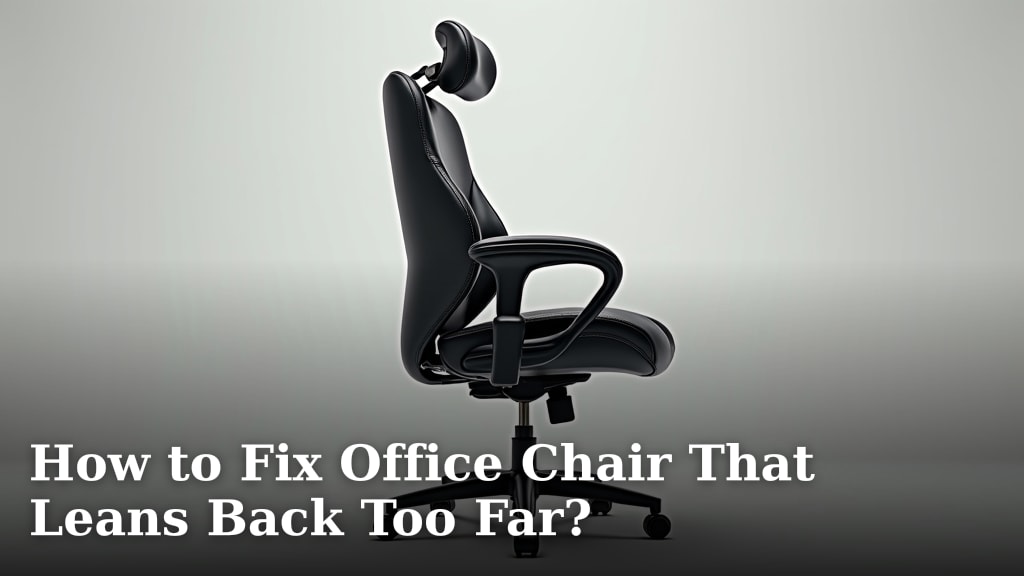
How to Fix a VIDITA Chair That Leans Back Too Far
If your VIDITA chair leans too far back, check its recline lock and tilt tension first, then inspect the assembly and stop using it if parts are loose or damaged. A gas lift cylinder usually affects seat height, not the recline angle.
On this page (6 sections)
If your VIDITA chair leans too far back, check the recline lock and tilt tension first, then inspect the assembly against the chair manual. A gas lift cylinder usually changes seat height, not recline travel, so replacing it is unlikely to solve an angle problem.
Make adjustments in small steps and test them while seated, with your feet on the floor. Stop if the chair shifts, drops, or has a loose or damaged part.
Why does a VIDITA chair lean back too far?
A chair may feel too loose because its recline lock is disengaged or its tilt tension is low. A loose or incorrectly assembled mechanism can also affect how the chair moves.
Identify which movement is the problem: does the backrest recline farther than you want, does the whole seat tilt, or does the seat drop in height? If the seat pan itself tilts backward, see broken office chair seat pan.
These symptoms point to different parts, so don't replace a component until you know what it controls.
If the problem seems to be the recline mechanism, use this broader guide to fix an office chair recline mechanism. Follow your VIDITA manual for the names and locations of the controls on your model.
How can you check the recline lock and tension?
Engage the recline lock and increase tilt tension gradually, if your VIDITA model has those controls. Test each change separately so you can tell what helped.
- Sit with your feet flat on the floor.
- Find the recline lock and tilt-tension control using the chair manual.
- Engage the lock, then gently test whether the backrest still moves.
- If it remains unprotected, adjust tension in a small increment.
- Test again before making another adjustment.
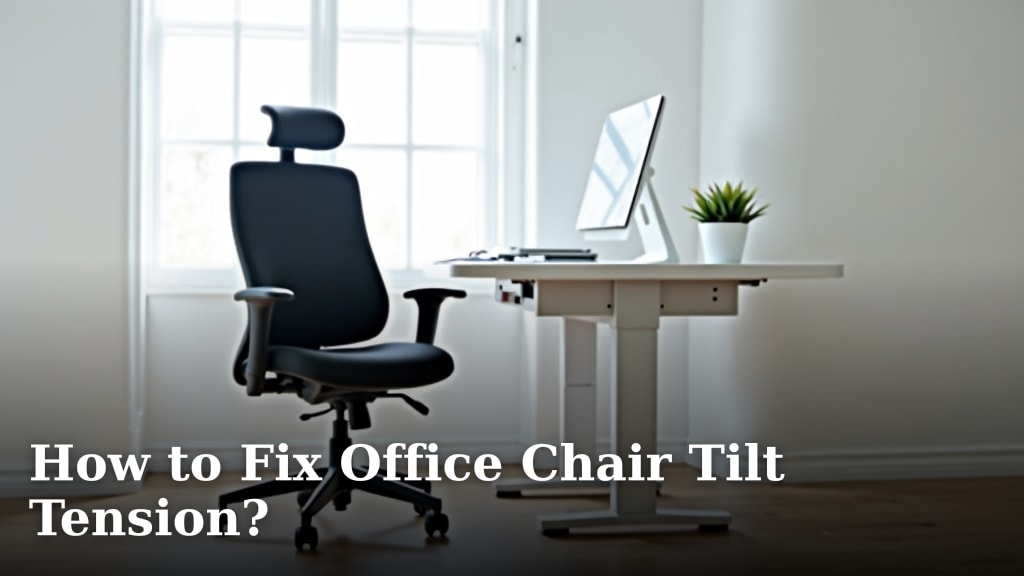
A tension control changes how much effort leaning back takes; it may not limit the backrest's maximum travel. For more detail on that adjustment, see how to fix office chair tilt tension.
If the chair won't stay locked or the control turns without changing anything, don't force it. The lock, cable, or tilt mechanism may need service.
What if the chair will not lock upright?
If the lock won't hold, stop leaning against the backrest and check the manual for your model's control steps. A chair that cannot hold its position may need a repair rather than more tension adjustment.
Make sure nothing is blocking the lever or control. Don't remove covers or reach into the mechanism while someone is sitting in the chair.
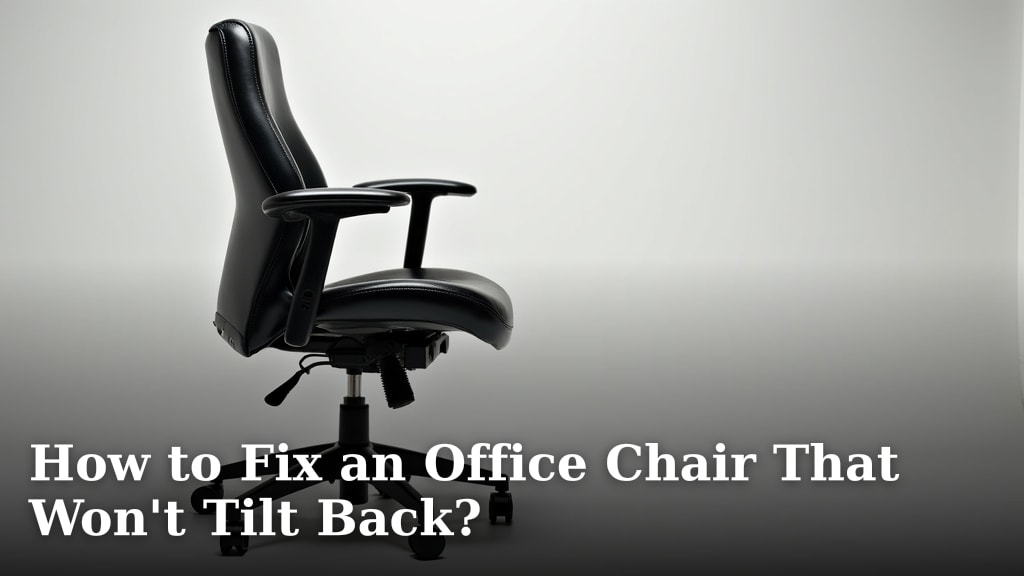
A chair that refuses to recline is a different issue from one that reclines too far. Use this guide to fix an office chair that won't tilt back if the backrest stops moving when you expect it to recline.
How do you inspect assembly and visible parts?
Check the chair's visible fasteners and connections against the assembly instructions. A loose connection can make movement feel uneven, but don't tighten parts beyond the manual's directions.
With the chair unoccupied, look for a tilted seat, an uneven base, loose-looking fasteners, cracked plastic, or a control that moves freely. Don't put your fingers near moving joints while testing the recline.
If you recently assembled or moved the chair, confirm that its parts are in the correct positions. Avoid guessing which bolt or adjustment to change when the manual doesn't identify it.
Stop using the chair if you see a crack, a bent part, sudden movement, or a mechanism that won't stay in position. Contact VIDITA support with the model information and a clear description of what happens.
Does a gas lift cylinder control the recline angle?
A gas lift cylinder primarily adjusts seat height, so it usually won't correct excessive backrest travel. Consider replacing it only when the seat sinks, won't hold its height, or the chair manual identifies the cylinder as the cause.
The Office Oasis cylinder replacement includes a removal tool, gloves, and installation instructions. Its stated dimensions are a 1-1/8 in piston shaft and a 2 in column, so compare those with your chair before choosing a replacement.
Omyoffice describes this gas lift as having a 5.5 in adjustable height range and a 11.4 in compressed height. Check your chair's measurements and compatibility before choosing it.
The other Omyoffice cylinder also has a 5.5 in adjustable height range, with a 2 in outer cylinder diameter and 28 mm inner cylinder diameter. Those measurements can help you compare it with the part you need to replace.
These cylinders address seat height, not a recline lock or tilt mechanism. Use the chair manual to identify the faulty part, and confirm measurements before ordering.
When should you stop adjusting the chair?
Stop and contact VIDITA support if the chair drops, shifts sharply, or has a cracked or loose part. Don't keep testing recline when the chair feels unstable.
A new squeak alone doesn't identify the cause, but a sound paired with sudden movement deserves attention. This guide explains why an office chair may squeak when you lean back.
If the chair feels stable but simply reclines more than you prefer, first use its lock or tension control as directed. For a chair that still leans too far after those checks, see how to fix an office chair that leans back too far.
What should you do if the chair still leans too far?
If the lock and tension settings don't help, stop adjusting and ask VIDITA support to identify the correct repair for your model. Tell them whether the chair reclines freely, fails to lock, or moves unexpectedly.
Use the manual to confirm the chair's assembly and control names before contacting support. Choose a gas cylinder only when the issue is seat height and its dimensions match the replacement part.
For a stable chair that reclines too freely, check the tension and lock first. For sinking or failed height adjustment, investigate the cylinder.
For loose, damaged, or unpredictable movement, stop using the chair and get model-specific repair advice.
Frequently asked questions
Why does my VIDITA chair lean back too far?
A recline lock that is off, low tilt tension, or a loose or incorrectly assembled part can make a chair feel as if it leans too far. Check the controls and assembly against the chair manual.
If the mechanism is damaged or the cause is unclear, stop using the recline and contact VIDITA support.
Can I tighten a VIDITA chair so it reclines less?
If your chair has a tilt-tension control, adjust it in small steps while seated with your feet on the floor, following the manual. More tension can make leaning back take more effort, but it may not limit the recline angle.
Use the recline lock if the chair has one.
Will replacing the gas cylinder stop my chair from leaning back?
Usually, a gas lift cylinder controls seat height, while the recline mechanism controls the backrest movement. Replace a cylinder only if the seat sinks, height adjustment fails, or the manual identifies it as the problem.
Check the chair's fit and measurements before choosing a replacement.
Is it safe to keep using a chair that leans back too far?
Stop reclining if the chair suddenly drops, shifts, makes a new grinding sound, or has loose or cracked parts. Keep the chair on a level floor and follow its manual while checking visible fasteners.
If the mechanism feels unstable or the cause is uncertain, contact VIDITA support before using it again.